Back to blog
Article
Vacuum Accumulation Portable Toilet
Admin October 10, 2026
The vacuum accumulation portable toilet is a water-saving sanitary facility that utilizes vacuum negative pressure principles to suck waste into a piping system through air pressure differences.
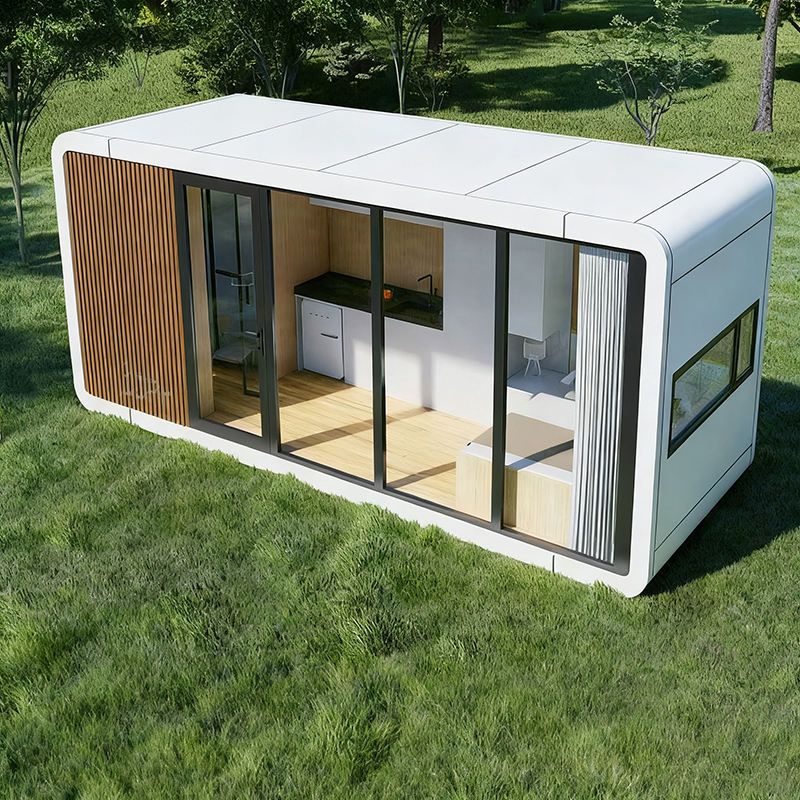
I. Structural Features
- Compact Space: The product dimensions are flexible. For example, some models have an overall width of 1.15 meters, depth of 2.45 meters, and height of 2 meters, or a width of 1.5 meters and height of 2 meters, making them suitable for spaces with limited room.
- Aesthetic Design: The appearance is simple, with a compact and intelligent design that combines practicality and aesthetics.
- High Intelligence: The interior is equipped with integrated toilet systems, sinks, smart mirrors, ambient lighting, and other devices to enhance the user experience.
II. Functional Advantages
- Outstanding Water Efficiency: The flushing process is completed through high-pressure gas flushing and negative pressure suction, consuming only 0.5-1 liters of water per flush, which is about 80% less than traditional toilets, significantly reducing water consumption.
- Efficient Waste Transport: Waste is transported through a closed piping system with a diameter approximately one-third that of traditional systems, making it less prone to blockages and supporting same-floor discharge, effectively controlling odor diffusion and maintaining a clean environment.
- Easy Installation: After being prefabricated in the factory, the toilet can be transported to the site by truck and installed directly without complex construction, shortening the deployment cycle.
III. Core Components
- Vacuum Toilet: Utilizes negative pressure principles to quickly suck waste in, reducing residue.
- Piping System: Features a closed design with a small diameter and resistance to blockages, ensuring smooth waste transport.
- Vacuum Pump: Provides negative pressure power to maintain stable system operation.
- Fecal Storage Tank: Concentrates waste storage for subsequent treatment or transfer.
IV. Application Scenarios
- Water-Scarce Environments: Initially applied in scenarios with stringent water and space requirements, such as high-speed trains, airplanes, and cruise ships.
- Civilian Use: Gradually expanded to residential areas, hotels, and rural regions to meet diverse needs.
- Public Places: Adopted in parks, scenic spots, and other densely populated areas to improve sanitary conditions and reduce maintenance costs.
This facility achieves the goals of water conservation, efficiency, and intelligence through technological innovation, becoming an important development direction for modern sanitary facilities.
Related