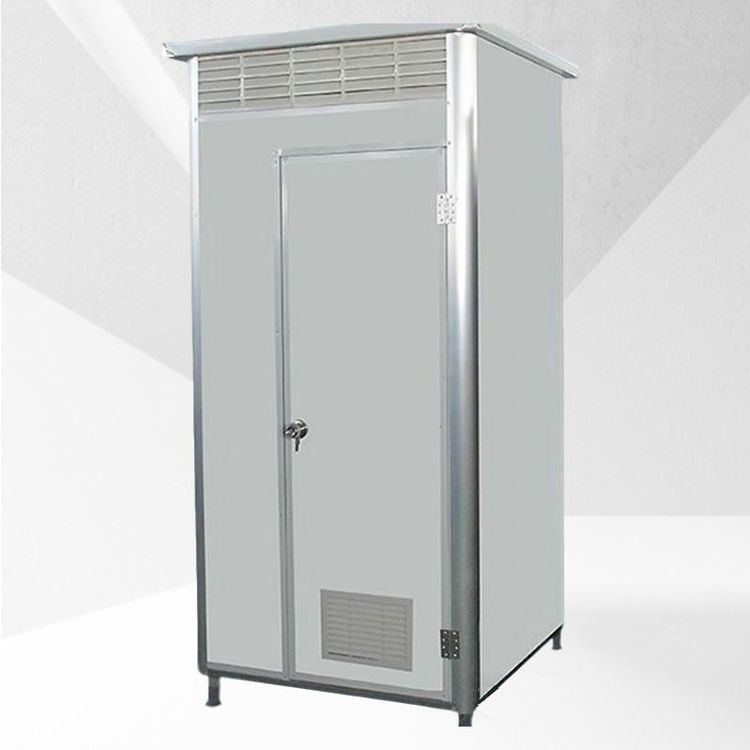
Mobile Toilets in Urban Villages
Mobile toilets in urban villages can serve as an effective solution for temporary toilet needs, but currently, there is a lack of targeted renovation plans, requiring flexible application based on actual scenarios.

Urban villages generally face issues such as high residential density, cramped self-built housing spaces, and a lack of or poor-conditioned independent bathrooms. For example, some self-built houses are not equipped with independent bathrooms, and residents need to cross courtyards or corridors to reach public toilets at night, facing challenges such as cold in winter, mosquito infestations in summer, and slippery roads on rainy days. Due to their small size, mobility, and lack of complex installation requirements, mobile toilets can be placed in spaces such as bedrooms or corridors, cleaned the next day after nighttime use, significantly improving living convenience, especially for the elderly, children, and those with mobility issues.
From an industry application perspective, the "no civil engineering required, rent-on-demand, and full-cycle operation and maintenance" model of mobile toilets has been maturely applied in scenarios such as construction sites, large-scale exhibitions, and marathon events. For instance, construction sites meet workers' short-term needs by renting mobile toilets, avoiding the high costs and long cycles associated with traditional public toilet construction. Large-scale events deploy mobile toilets in a modular fashion to quickly respond to the toilet demands during peak visitor flows. The successful experiences in these scenarios indicate that the flexibility and adaptability of mobile toilets can be partially transferred to urban village renovations, serving as temporary facilities during demolition transition periods or old house renovation stages, or providing supplementary solutions for households without independent bathrooms.
However, it should be noted that urban village scenarios have their particularities:
- Space constraints: The floor height and corridor width of self-built houses may affect the placement of mobile toilets, necessitating the selection of compact and height-appropriate models;
- Sewage disposal: Some urban villages lack centralized sewage pipelines, requiring the selection of mobile toilets with built-in fecal storage tanks or those that can be connected to septic tanks, along with clarifying the cleaning cycle and responsible party;
- Cost-sharing: If deployed uniformly at the community level, it is necessary to coordinate with residents to share rental or purchase costs, avoiding the shelving of plans due to cost issues.
Currently, there are no specialized renovation plans for mobile toilets in urban villages, but the operation and maintenance models from construction sites or event support can be referenced, with customized adjustments made based on residents' actual needs. For example, collaborating with mobile toilet rental companies to provide "on-demand rental + regular maintenance" services, or having the government subsidize part of the costs to promote plan implementation.