Principles of Urban Mobile Toilets
The principles of urban mobile toilets vary depending on their types, mainly divided into traditional water-flushing and waterless-flushing types, in addition to the special structural principles of integrated mobile toilets.

Traditional Water-flushing Mobile Toilets
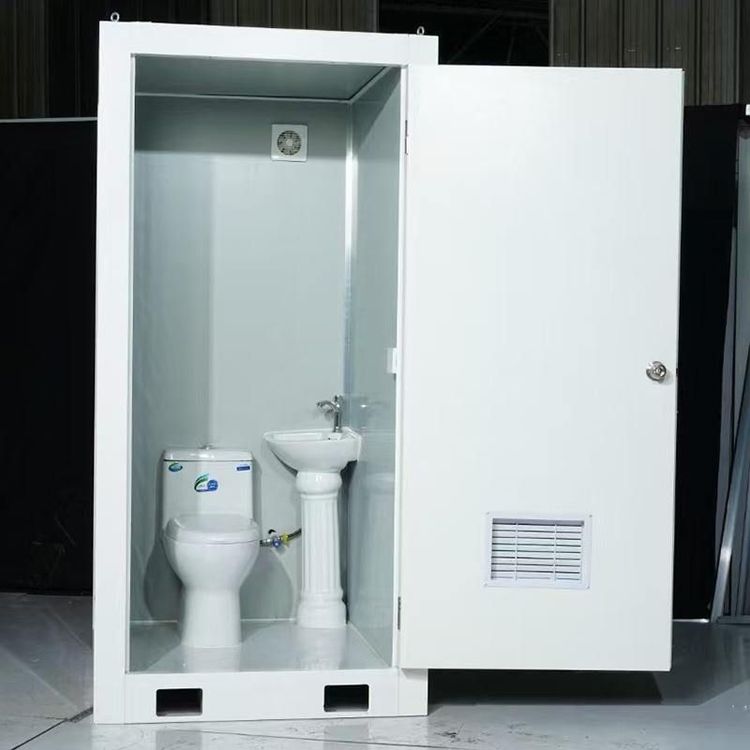
The water injection and flushing principles of traditional water-flushing mobile toilets are relatively straightforward. The hand-washing tank is usually located on the left side of the toilet. Users inject water by turning on the valve and step on the pedal to release water when needed. The freshwater tank is generally located on the front right side, and water for flushing is also supplied by turning on the valve. Its flushing system mainly relies on water stored in the tank, which is connected to the toilet bowl via pipes. When flushing is required, water from the tank flows through the pipes into the toilet bowl to complete the flushing function. This type of mobile toilet requires a certain water supply and is suitable for places with a stable water supply.
Waterless-flushing Mobile Toilets
Waterless-flushing mobile toilets do not require traditional water flushing but instead treat waste through physical, biological, or chemical technologies.
- Mechanical Packaging Type: Degradable plastic bags are used to wrap waste. After the user defecates, a mechanical device automatically seals the plastic bag, and then the waste falls into the fecal storage tank. Regular arrangements are made for personnel to clean and transport the fecal storage tank.
- Microbial Degradation Type: Microorganisms are used to decompose organic matter through aerobic fermentation. The high temperatures generated during fermentation can kill pathogens, achieving harmless treatment of waste.
- Foam Sealing Type: An air pump mixes air with foaming liquid to form a layer of foam on the surface of the squat toilet. This foam layer can cover waste, prevent odor emission, and at the same time, excreta will slide into the pipes along the foam.
- Vacuum Suction Type: A vacuum pump creates negative pressure, and the strong suction force of the negative pressure instantly sucks waste into the treatment tank, resulting in high treatment efficiency.
- Chemical Agent Type: Chemical agents are added to the fecal storage tank. These chemical agents can decompose excreta while inhibiting odor and bacterial proliferation, maintaining hygiene in the toilet.
Integrated Mobile Toilets
Integrated mobile toilets are a common type in cities. They integrate toilet functional units into a box body and adopt a modular design, including a steel structure skeleton and composite panel cladding. Their water supply system relies on an external water source or a built-in water tank. Waste disposal methods are divided into direct discharge and collection types. The direct discharge type is connected to the municipal sewer network, directly discharging sewage into municipal pipelines; the collection type is equipped with a sewage storage tank to collect sewage for regular treatment.