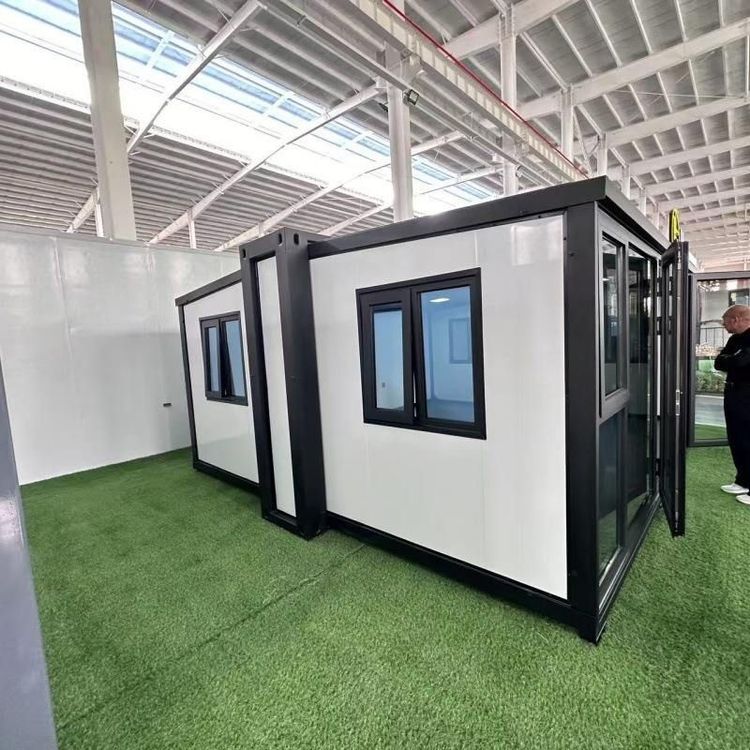
Urban Mobile Toilet
Urban mobile toilets are facilities that can be moved as a whole and set up in fixed or temporary locations to provide public toilet services.

I. Basic Composition
Urban mobile toilets generally consist of fecal sewage storage tanks (or disposal units), floor slabs, sanitary ware, walls, washing equipment, water tanks, roofs, and mobile devices. They come in various structural forms, classified by structure into single-unit and composite structures; by mobility into hoisting and handling types, and powered towing types; and by sewage treatment methods, including water-flush and waterless suction types, circulating water-flush types, and dry-packing types. For example, the dry-packing type collects feces using biodegradable packaging bags, requiring no water flushing, and is suitable for water-scarce or environmentally demanding scenarios.
II. Functional Characteristics
Mobile toilets are designed to address temporary needs in specific settings, such as large events, construction sites, or areas with insufficient urban public toilet layouts. Take mobile eco-friendly public toilets as an example; they employ new materials and water-saving technologies, automatically collecting hand-washing water and adding special agents to achieve a flushing effect with only 0.46 liters of water per person, significantly reducing water consumption. Internally, they are equipped with independent toilet pit partitioned treatment systems, with urine channels utilizing gravity flow and feces channels cleaned by piston-type scraper mechanical devices. They also feature non-slip floors, automatic flushing toilet bowls, and ventilation and lighting systems to ensure hygiene and comfort. Their frames are welded from national standard steel, with surfaces covered with anti-corrosion and fire-resistant materials like color-coated steel plates or carved panels, offering a service life of over 20 years and complying with the GBLT18091-92 standard.
III. Application Scenarios and Price Differences
Mobile toilets are widely used in scenarios such as supplementing urban public toilets, tourist attractions, and transportation hubs. Due to the shortage in the number and layout of urban public toilets, governments often deploy them in areas where fixed public toilet construction is difficult to make up for the supply shortage. Prices vary significantly depending on the region, manufacturer, and configuration. For example, prices for mobile toilets in Chengdu range from 159.6 yuan to 646.0 yuan, while in Beijing, they range from 760.0 yuan to 27,000 yuan. High-end models may integrate more intelligent functions or eco-friendly technologies, resulting in higher costs.
IV. Environmental Significance
Mobile toilets effectively alleviate issues such as long construction periods and site selection limitations of traditional public toilets through modular design and flexible deployment. Meanwhile, they reduce environmental impact through water-saving and anti-pollution technologies, representing an important aspect of the modernization of urban public sanitation facilities.