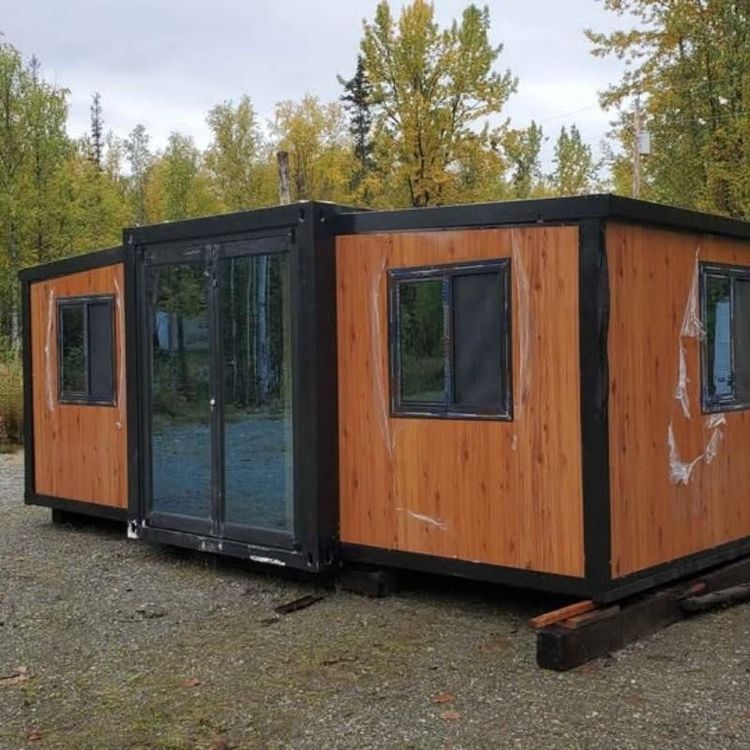
Urban Container House Images
Currently, it is not possible to directly provide images of urban container houses, but their appearance and form can be described in words.

Container Houses at the 2026 Nagoya Asian Games in Japan
At the 2026 Nagoya Asian Games in Japan, container houses were used to form the Athletes' Village, serving as temporary accommodation for athletes. From the outside, they retain the basic form of common containers. Containers were originally large metal boxes used for cargo transportation, with a regular cuboid shape. They usually have a relatively sturdy outer shell, with a texture mostly made of metal material on the surface, and their colors may mainly be common industrial color schemes, such as gray and blue. After being transformed into habitable architectural forms, their overall outlines still show the original characteristics of containers, but corresponding openings and installations have been made in areas such as doors and windows to meet the needs of lighting, ventilation, and entry and exit for living.
Container Homestays in Shanting District, Zaozhuang City, Shandong Province, China
In Shanting District, Zaozhuang City, Shandong Province, China, there is a characteristic homestay scenic spot built using container houses. One of the container-transformed residences has a unique design. It is assembled from three containers. Two standard containers are stacked vertically, which gives the building a sense of hierarchy in the vertical direction. One side is cantilevered, adding a three-dimensional and dynamic feel to the building and breaking the relatively regular form of traditional buildings. At the bottom lies a customized widened container as the main body of the first floor, which not only serves as a structural support but also cleverly builds a staircase leading to the second floor, facilitating movement between different floors. At the same time, this customized container is filled with large observation windows. The shapes of these observation windows may vary according to design requirements, possibly being rectangular or other irregular shapes. They not only provide sufficient natural light for the interior but also allow residents to better appreciate the surrounding scenery, organically integrating indoor and outdoor spaces.