
Underwater House Container
Currently, underwater house containers are mostly conceptual designs or specific project cases, and have not yet achieved large-scale standardized applications. Their realization requires a combination of container modification technology and underwater construction technology. The following is an analysis from three aspects: technical feasibility, existing cases, challenges, and prospects.
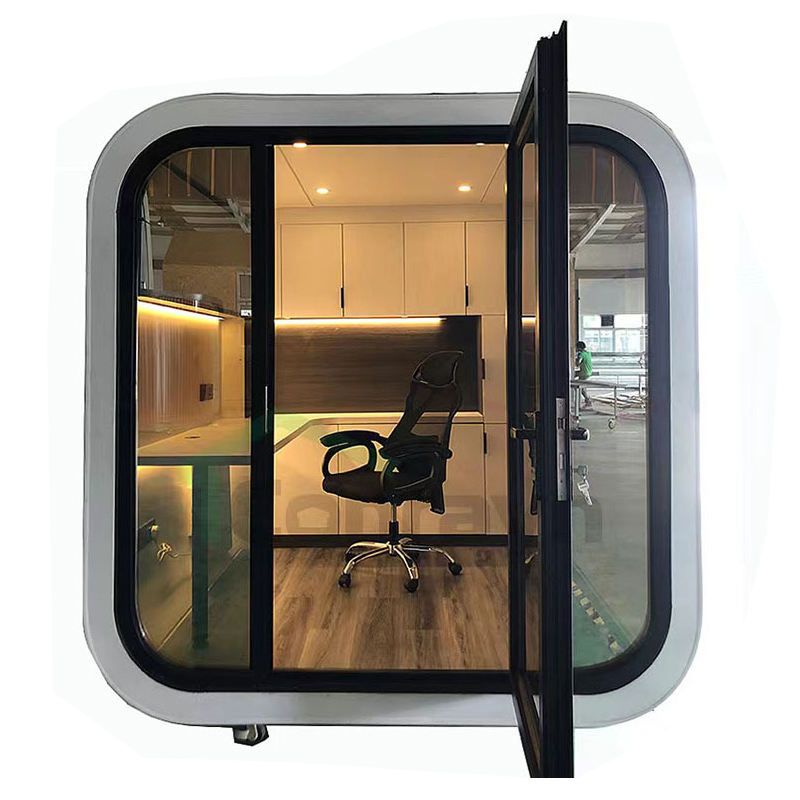
Technical Feasibility: Combining Container Modification with Underwater Construction Technology
Containers inherently possess characteristics such as modularity, standardization, and structural robustness, enabling them to be modified to meet underwater living requirements. Key modification technologies include:
- Waterproofing and Pressure Resistance: Containers need to be sealed, reinforced with high-strength materials (such as steel), and equipped with pressure balance systems to cope with underwater pressure changes.
- Life Support Systems: Integration of oxygen supply, air purification, temperature regulation, and other equipment to ensure a suitable underwater environment for human survival.
- Transparent Viewing Design: Some cases use transparent glass or acrylic materials to replace parts of the container body, enabling underwater viewing functions, but require solutions for material pressure resistance and sealing issues.
Existing Cases: From Concept to Practice
- Dubai's 'Floating Seahorse' Floating Villa:
Although not entirely underwater, part of the bedroom is located underwater, with viewing achieved through transparent glass. The project uses a hull structure floating on the water surface, with the underwater section requiring solutions for waterproofing and structural stability, providing design references for underwater house containers. - Hardcore DIY Underwater Residential Modification:
In a Weibo case, an individual modified a container to achieve underwater living. Although small in scale, it verified the feasibility of modifying containers into underwater living spaces, with a focus on sealing and life support system design. - Extension of Modular Construction Technology:
China's modular construction (such as steel structure modular intelligent production lines) has achieved high-precision, large-scale production. If combined with underwater construction technology, it can promote the standardization and industrialization of underwater house containers.
Challenges and Prospects: Balancing Technology, Cost, and Environment
- Technical Challenges:
The underwater environment is complex, requiring solutions for long-term waterproofing, pressure resistance, corrosion resistance, and ensuring the stability and safety of life support systems. - Cost Issues:
The modification and maintenance costs of underwater house containers are high, necessitating large-scale production to reduce unit costs and exploring sustainable materials to minimize long-term operating costs. - Application Prospects:
With climate change leading to rising sea levels, underwater living may become one of the solutions for coastal areas to cope with flooding. Additionally, the demand for underwater spaces in tourism, scientific research, and other fields (such as underwater hotels and laboratories) may also drive technological development.
In the future, underwater house containers need to overcome technical bottlenecks, reduce costs, and establish relevant standards and norms to transition from concepts to large-scale applications.



