
Underwater Container House Construction
Underwater container house construction requires the integration of modular building technology, structural mechanics principles, and specialized underwater construction techniques to achieve efficient construction through steps such as factory prefabrication, maritime transportation, and precise underwater installation.
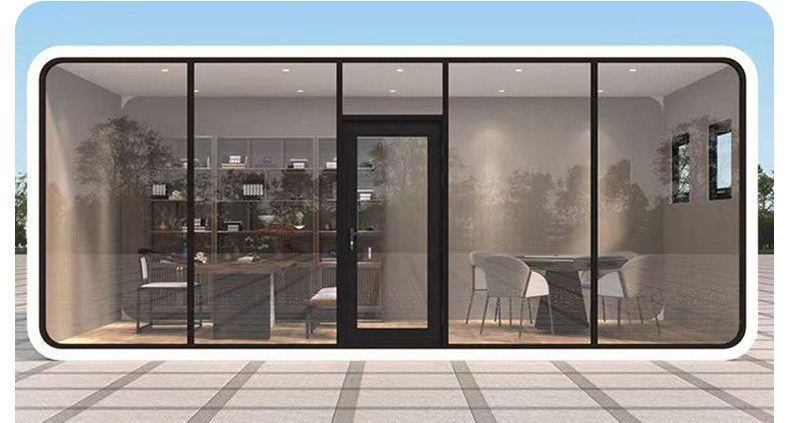
1. Factory Prefabrication Stage
The core of modular container house construction lies in factory prefabrication. The house is divided into bottom, top, and four side components, which are produced simultaneously on intelligent production lines. For example, a domestic steel structure modular intelligent production line can produce 50 modules per day, with manufacturing precision maintained at 1-2 millimeters. The modules integrate the main structure, water and electricity pipelines, sanitary equipment, and interior decoration to form complete living units. Key technologies include:
- Lightweight Structural Design: Using 6-millimeter steel plate bending instead of traditional heavy square tubes reduces steel usage by more than 30% while enhancing structural stability.
- Waterproof and Anti-Corrosion Process: The box surface is treated with hot-dip galvanization, extending the anti-corrosion lifespan to over 20 years; an internal drainage system guides accumulated water out, addressing leakage issues.
- Integrated Interior Decoration: Walls, floors, ceilings, and pipelines are pre-installed in the factory, reducing on-site construction work.
2. Maritime Transportation Stage
Prefabricated modules are transported by sea to their destination. Key transportation considerations include:
- Module Fixation: Special lifting fixtures are used to secure the modules, preventing damage from movement during transportation.
- Moisture Protection: A moisture-proof film is laid inside the modules to prevent seawater erosion.
- Stacking Optimization: Stacking plans are designed based on module dimensions to maximize transportation space utilization.
3. Underwater Installation Stage
Underwater installation requires solving alignment, leveling, and stabilization challenges. A typical case is the caisson installation at Pinglu Canal Anchorage No. 1:
- Special Lifting Fixtures and Crane Vessel: Two sets of custom lifting fixtures were developed, paired with a 2,600-ton crane vessel, enabling the safe lifting of a 1,540-ton irregular caisson.
- Intelligent Positioning System: A GNSS split-type intelligent positioning and guidance system was introduced to collect component coordinates in real-time, dynamically correcting the posture to ensure installation precision.
- Construction Organization Optimization: A 24-hour shift system was implemented, taking advantage of tidal periods to accelerate progress, completing the installation of 75 caissons in two months.
4. On-Site Assembly and Inspection
After transportation to the site, modules are assembled through lifting, inter-layer connections, and electromechanical integration. Inspection criteria include:
- Structural Stability: Check the tightness of connection nodes to ensure overall wind and earthquake resistance.
- Waterproof Performance: Conduct water spray tests to verify the waterproofing effectiveness of the roof and walls.
- Functional Testing: Power and water are supplied to test whether the equipment operates normally.



