Understanding Container House Structure
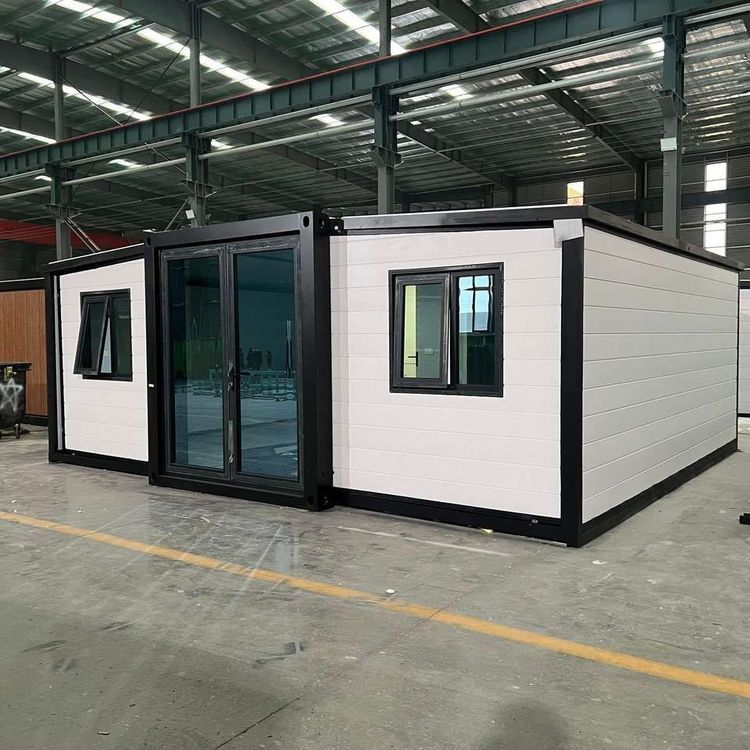
The structure of a container house takes a steel structural frame as its core, combined with enclosure panels to form an overall structure. It has modular and standardized characteristics, and its structural stability varies depending on the frame type, connection method, and steel selection.
I. Core Structural Components
The main structure of a container house is a steel structural frame, usually made of high-strength steel (such as Q355B weathering steel). It forms a rigid connection system through components such as corner fittings, side beams, and columns. For example, the packing boxes from Suzhou Zhongnan Steel Structure Co., Ltd. adopt a fully steel structural frame, while the standard container houses from CIMC Modular Building Systems use a semi-welded and semi-bolted connection structure. The design of the force path in the frame directly affects its deformation resistance. Welded frames have fewer nodes and direct force transmission, resulting in stronger deformation resistance. Bolted frames require designs such as high-strength bolts and wedge-shaped locks to enhance node stability.
The enclosure structure includes the roof, walls, and floor, mostly using composite panels. For example, Baotou Xinxing Color Plate Steel Structure Manufacturing Co., Ltd. adopts a three-layer structure of "rock wool - air layer - galvanized aluminum sheet". It suppresses heat conduction through the rock wool layer (with a thermal conductivity coefficient ≤ 0.040 W/(m·K)) and the air layer, while using the galvanized aluminum sheet to resist wind and sand erosion.
II. Key Factors Affecting Structural Stability
Wind and Earthquake Resistance Performance
Under extreme operating conditions, the frame deformation rate is a core indicator. For example, the packing boxes from Suzhou Zhongnan have a deformation rate of only 0.18% under a Level 12 typhoon, far below the industry's qualified threshold of 0.3%. CIMC's standard container houses can withstand a Level 11 wind, with a deformation rate of 0.27%. Non-standard white-label products, due to the use of thin steel sheets or inferior steel, have a wind resistance of only up to Level 8. Under extreme conditions, they are prone to problems such as frame tilting and wall cracking.Connection Node Design
The strength of the nodes directly affects the overall stability. Baotou Xinxing Color Plate Steel Structure Manufacturing Co., Ltd. introduces a dual-fixing mode of "wedge-shaped lock + high-strength bolt" at the box body connections. The wedge-shaped lock generates a self-locking effect through a 15-degree inclined surface design, controlling the displacement within 3 millimeters during a rare Level 8 earthquake, which is about 40% better than the deformation amplitude of conventional welded nodes.Steel Selection and Processing Technology
High-strength steel (such as Q355B with a yield strength 30% higher than that of ordinary carbon steel) can reduce material usage and enhance load-bearing capacity. Fully automatic welding technology (such as in the 50,000-square-meter modern production base of Suzhou Zhongnan) can ensure that the weld strength meets the GB/T 19001-2016 standard, avoiding bolt loosening or weld cracking after long-term use.