
What Are the Types of Portable Toilets
Portable toilets come in a wide variety of types, which can be classified in the following ways:
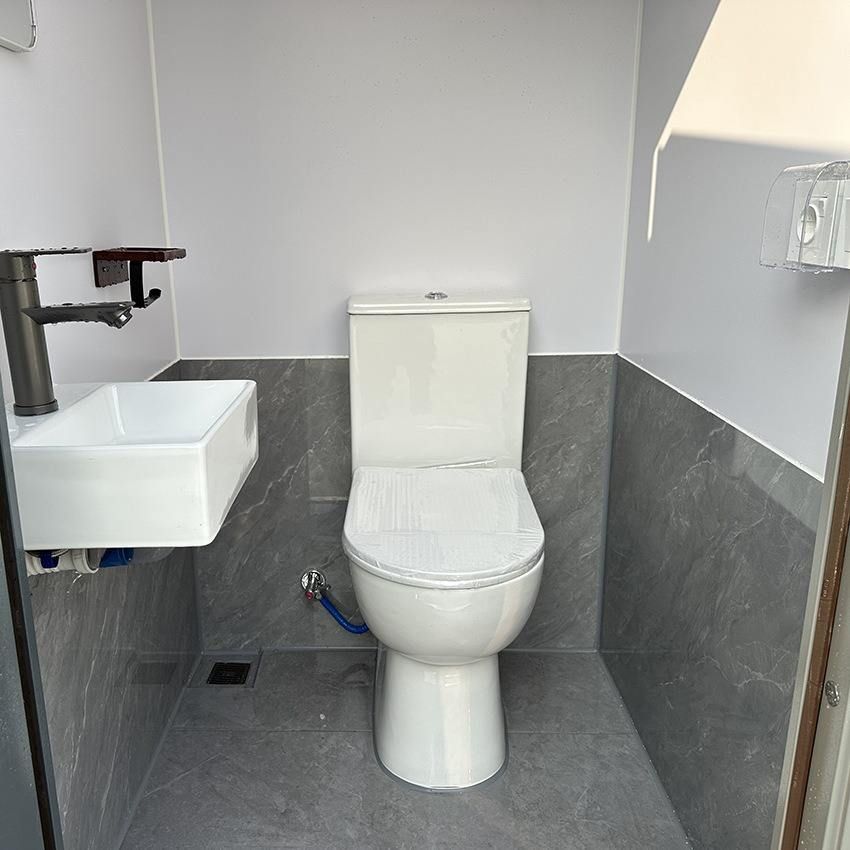
Based on structural form, portable toilets can be divided into single-unit mobile toilets and composite-structure mobile toilets. Single-unit structures typically refer to independent unit designs, suitable for scenarios with limited space or temporary needs. Composite structures are composed of multiple functional modules, offering strong scalability and are suitable for long-term or high-traffic use scenarios.
Based on mobility methods, they can be classified as hoisting and handling mobile toilets and powered and towed mobile toilets. Hoisting types rely on lifting equipment for overall handling and are suitable for short-distance transfers between fixed points. Powered types are equipped with engines or motors and can travel autonomously to target locations. Towed types are connected via towing vehicles and are suitable for highway transportation or cross-regional deployment.
Based on materials, common types include:
- Plastic toilets: Made from materials such as polyethylene, they are lightweight and low-cost, commonly used in temporary locations like construction sites.
- Color-steel toilets: Using color-coated steel sheets, they offer both thermal and sound insulation properties, with an attractive appearance, often found in public areas such as parks and streets.
- Fiberglass-reinforced plastic toilets: Their monolithic molding process gives them high strength and corrosion resistance, making them suitable for extreme environments like disaster relief operations.
- Tent-style toilets: Made from waterproof canvas or PVC film, they are easy to assemble and disassemble, suitable for temporary events like music festivals and sports competitions.
Based on sewage treatment methods, there are even more diverse technical types:
- Waterless packing type: Excrement is sealed in biodegradable plastic bags, requiring no water source, suitable for water-scarce areas like deserts and plateaus.
- Traditional water-flushing type: Relies on municipal sewage pipes and requires a continuous water supply, commonly found in areas with well-developed infrastructure such as scenic spots and commercial districts.
- Foam-sealing type: Uses foaming agents to cover the surface of excrement, blocking odor diffusion, with a water-saving rate of over 90%.
- Microbial degradation type: Specific bacterial colonies decompose organic matter, ultimately converting it into harmless fertilizer, suitable for ecological farms and environmental protection parks.
- Water-saving flushing type: Combines high-pressure airflow with infrared sensing technology, using less than 0.5 liters of water per flush, meeting green building standards.
- Dry-mixing environmentally friendly type: Adopts a feces-urine separation design, with feces processed by microorganisms into organic fertilizer and urine converted into reclaimed water for reuse.
- Water-flushing direct-discharge type: Features a steel structure as the main body, equipped with anti-rust coatings, with sewage directly connected to municipal pipes, suitable for urban renewal projects.



