Types of Mobile Toilets
There are various ways to classify mobile toilets, mainly including the following types:

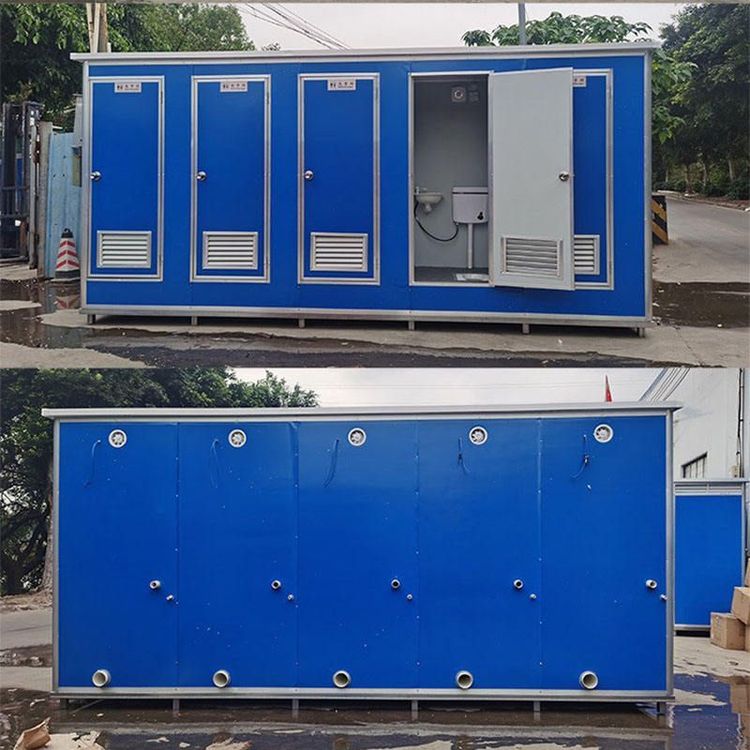
Based on structural form, mobile toilets can be divided into monolithic structures and composite structures. Monolithic mobile toilets are usually independent units, small in size and flexible in installation, suitable for scenarios with limited space. Composite structures are composed of multiple modules, highly scalable, and can meet larger-scale usage needs, commonly found in large-scale events or temporary building complexes.
In terms of mobility, mobile toilets are classified into hoisting and handling types and powered and towed types. Hoisting and handling types rely on lifting equipment or manual handling, suitable for short-term, low-frequency movement scenarios. Powered and towed types are equipped with power systems or towing devices, enabling rapid transfer through vehicle traction, more suitable for places requiring frequent position adjustments, such as tourist attractions or construction sites.
Based on materials, mobile toilets include plastic toilets, color-steel toilets, fiberglass toilets, and tent-style toilets, among others. Plastic toilets are lightweight, durable, and cost-effective. Color-steel toilets have a stable structure and strong corrosion resistance. Fiberglass toilets have excellent weather resistance and a long service life. Tent-style toilets feature foldable frames and waterproof fabrics, facilitating quick setup and dismantling, commonly used in emergency rescue or temporary events.
In terms of sewage treatment methods, mobile toilets are even more diverse, including water-flush and waterless-flush suction types, circulating water-flush types, waterless-packing types, traditional water-flush types, foam-sealing types, and microbial degradation types. Water-flush and waterless-flush suction types process excreta through vacuum or negative pressure systems. Circulating water-flush types utilize filtration technology to achieve water reuse. Waterless-packing types use degradable bags to directly collect waste. Traditional water-flush types rely on municipal water supply systems. Foam-sealing types reduce odors by covering excreta with foaming liquid. Microbial degradation types use biological flora to decompose organic matter, achieving harmless treatment.
Based on functions and applicable scenarios, mobile toilets can be divided into ordinary types, water-flush types, eco-friendly types, and smart types. Ordinary types have a simple structure, suitable for construction sites or short-term exhibitions. Water-flush types add flushing systems to meet high hygiene standards for large-scale events or music festivals. Eco-friendly types adopt water-saving technologies or renewable energy sources, suitable for eco-tourism areas. Smart types integrate automatic sensing, energy-saving control, and remote monitoring functions, commonly found in high-end commercial areas or transportation hubs.