
Back to blog
Article
Types of Mobile Toilets
Admin October 08, 2026
Mobile toilets can be classified from six dimensions: structural form, mobility method, material, sewage treatment method, usage scenario, and functional characteristics. Details are as follows:
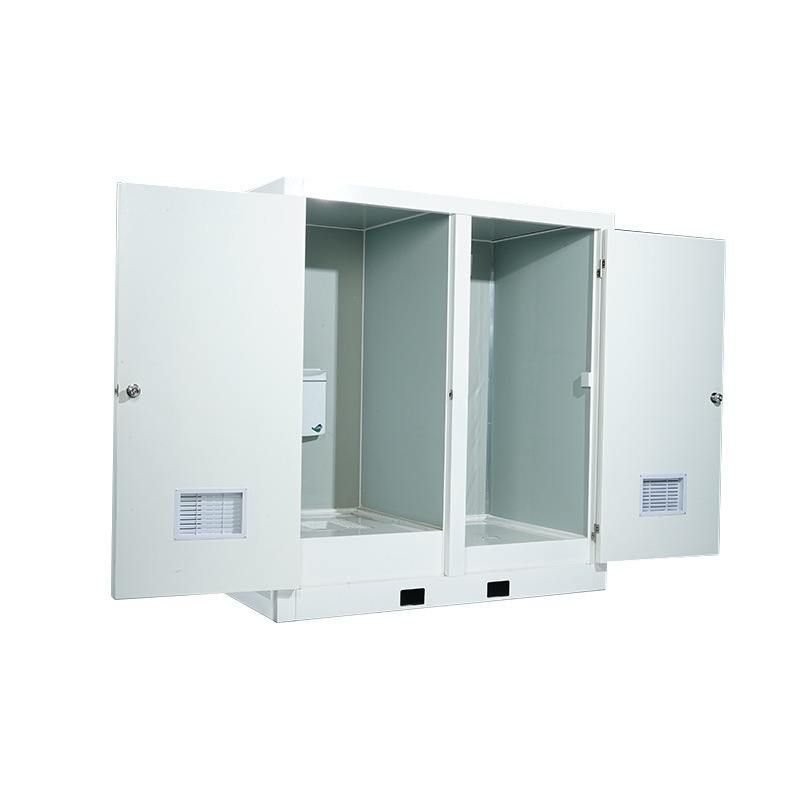
1. By structural form
They are divided into single-unit structures and composite structures. Single-unit structures are independent units suitable for space-constrained scenarios; composite structures are composed of multiple units and can be expanded into multiple toilet stalls or additional functional areas, commonly found at large events or public places.
2. By mobility method
- Hoisting and handling type: Requires lifting equipment such as cranes for overall handling, suitable for long-term use at fixed locations like construction sites.
- Powered and towed type: Equipped with a power system or wheels, can be towed by vehicles for movement, flexibly adapting to temporary scenarios such as music festivals and exhibitions.
3. By material
- Plastic toilets: Lightweight and low-cost, mostly used for short-term use at construction sites.
- Color-steel toilets: Excellent thermal and sound insulation performance, commonly found in public areas such as parks and streets.
- Fiberglass-reinforced plastic toilets: The overall molding process enhances structural strength, suitable for extreme environments such as disaster relief and emergency response.
- Tent-style toilets: Modular design facilitates quick assembly and disassembly, ideal for temporary events.
4. By sewage treatment method
- Waterless packing type: Uses sealed bags to collect excrement, requiring no water source, suitable for water-scarce environments such as desert camping.
- Traditional water-flushing type: Relies on sewage pipeline systems, requiring a配套 (should be '配套' changed to '配套's English equivalent 'supporting') water source, commonly found in areas with well-developed infrastructure such as scenic spots.
- Foam-sealing type: Reduces odor diffusion through foam coverage, offering both water-saving and environmental protection advantages.
- Microbial degradation type: Utilizes microorganisms to decompose excrement into organic fertilizer, mostly used in ecological parks.
- Recirculating water-flushing type: Achieves water resource recycling through filtration systems, reducing water consumption.
5. By usage scenario
- Scenic spot toilets: Equipped with sinks and designed with a landscape-oriented appearance, such as imitation log cabin styling.
- Construction site toilets: Use iron sheet materials with direct drainage pipes to meet basic usage needs.
- Temporary toilets for air shows: Integrated with LED lighting systems, supporting rapid setup within 1 hour.
6. By functional characteristics
- Simple type: Simple structure and low cost, suitable for temporary emergency scenarios.
- Environmentally friendly type: Integrates water-saving or excrement treatment technologies, meeting the requirements of places with high environmental protection standards.
- Luxury type: Uses exquisite decoration and high-end materials, serving high-end hotels and large exhibitions.
- Special function type: Includes barrier-free facilities,母婴 (should be '母婴' changed to its English equivalent 'mother-and-baby') dedicated rooms, or shower functions to meet the needs of specific groups.
- Hoistable type: Relatively large in size and requires hoisting equipment for movement, suitable for places that need long-term fixation but may be relocated.
Related



