Types of Mobile Toilets
Mobile toilets can be classified into the following types based on different criteria:

In terms of structural form, they can be divided into single-structure mobile toilets and composite-structure mobile toilets. Single-structure toilets are usually independent units, facilitating rapid deployment. Composite-structure toilets are composed of multiple modules, offering strong scalability and being suitable for scenarios with high capacity requirements.
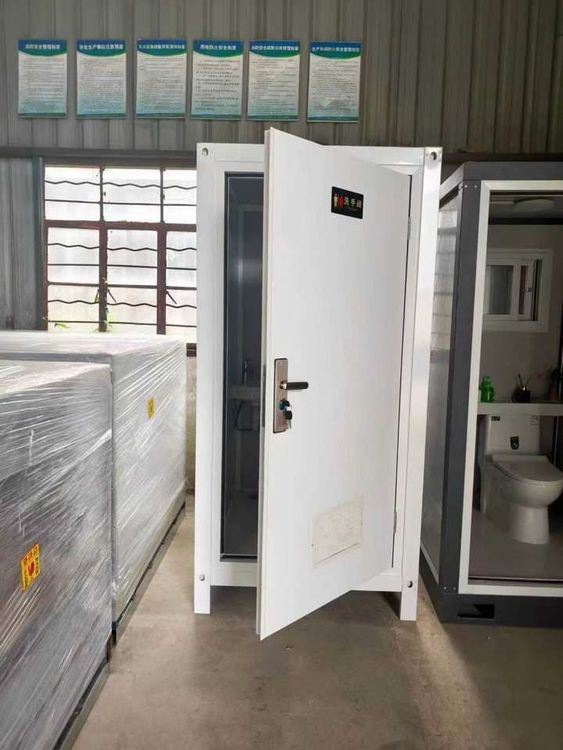
Based on materials, there are four types: Plastic toilets are lightweight and low-cost, suitable for temporary use on construction sites. Color-steel toilets have thermal and sound insulation properties and an aesthetically pleasing appearance, commonly found in public areas such as parks and streets. Fiberglass-reinforced plastic toilets are manufactured through integral molding processes, providing strong impact resistance and being suitable for extreme environments like disaster relief and rescue operations. Tent-style toilets use detachable frames and waterproof fabrics, allowing for easy assembly and disassembly, and are mostly used for temporary events or emergency scenarios.
Regarding mobility, they can be categorized as hoisting and handling types and powered and trailer types. The former rely on equipment such as cranes for handling and are suitable for long-term use at fixed locations. The latter are equipped with wheeled chassis or towing devices and can be moved by vehicles, making them suitable for highly mobile events like music festivals and sports competitions.
In terms of sewage treatment methods, there are five types: Water-flush and non-water-flush suction types include traditional water-flush toilets (requiring connection to sewage pipes and suitable for scenic spots) and waterless packing toilets (using sealed bags similar to diapers and suitable for desert camping). Recirculating water-flush toilets achieve sewage purification and reuse through biological or physical treatment technologies. Foam-sealing toilets use foaming agents to cover the surface of excreta to suppress odors, providing significant water-saving effects. Microbial degradation toilets decompose organic matter through specific microbial communities, ultimately converting it into harmless fertilizers, suitable for places with high environmental protection requirements such as ecological parks.
Based on functions and applicable scenarios, there are four types: Ordinary mobile restrooms are only equipped with basic toilet facilities and are suitable for construction sites and short-term exhibitions. Water-flush mobile restrooms add a flushing system to improve hygiene standards and are commonly seen at large-scale events. Environmentally friendly mobile restrooms adopt energy-saving technologies such as solar power and rainwater collection and are suitable for eco-tourism areas. Smart mobile restrooms integrate intelligent systems such as automatic flushing, air purification, and crowd monitoring and are mostly deployed in high-end commercial areas or transportation hubs.
Special-purpose extensions include: In emergency rescue and post-disaster reconstruction scenarios, they can be quickly set up to provide temporary sanitation services. Urban public facility supplementation relieves the pressure on fixed public toilets during peak periods through flexible deployment. Special environment-adapted types are designed for extremely cold, hot, or humid areas, featuring thermal insulation, moisture resistance, or corrosion resistance.