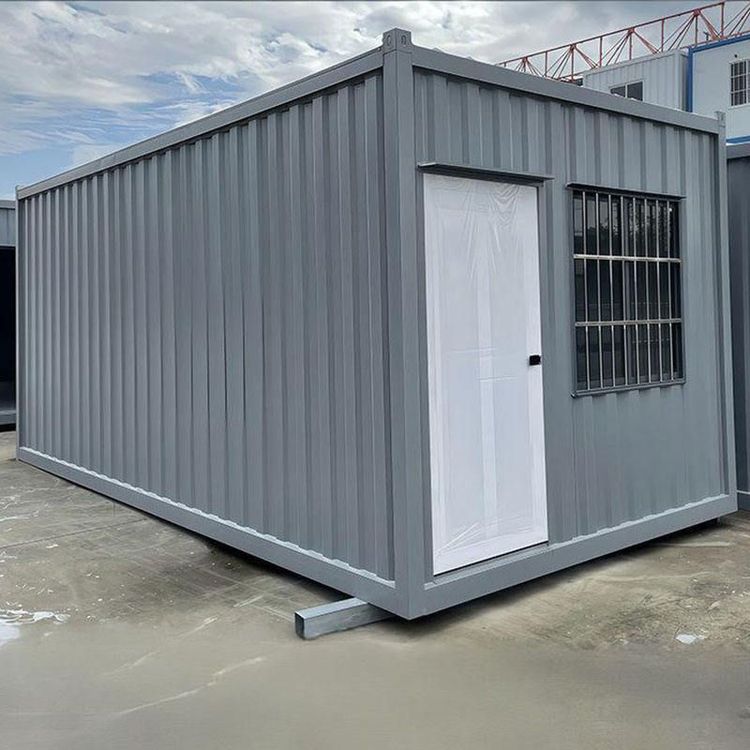
Two-Month Prefabricated House
The Sula prefabricated house takes two months to be prefabricated in Quito, while a general 100-square-meter prefabricated house may only take 1 - 2 months to complete. Prefabricated houses generally have the characteristics of rapid construction and shortened construction periods.

Prefabrication of the Sula Prefabricated House
The Sula prefabricated house is an innovative type of residence that takes two months to be prefabricated in Quito. During the prefabrication process, a large number of components are integrated, using 17,000 screws and nearly 2,000 custom-made wood, metal, aluminum, and glass products. These components are precisely processed and assembled in the factory to form various parts of the house, laying the foundation for subsequent transportation and on-site assembly.
General Characteristics of Prefabricated Houses
Prefabricated houses usually adopt a factory-based production method, where the main components of the building, such as walls, floors, and roofs, are prefabricated in the factory. This method has many advantages, with the most prominent being rapid construction and shortened construction periods. Taking a 100-square-meter prefabricated house as an example, under ideal conditions, it may only take 1 - 2 months to complete. This is because factory production is not affected by external factors such as weather, allowing for continuous component manufacturing and ensuring high production efficiency and stability. At the same time, standardized production processes and advanced production equipment in the factory can improve the manufacturing precision and quality of components, reducing errors and adjustment time during on-site construction.
Principles of Rapid Construction of Prefabricated Houses
When prefabricating components in the factory, batch production can be carried out according to design requirements, achieving economies of scale and reducing production costs. Moreover, components can be pre-assembled and debugged in the factory to identify and resolve potential issues in advance, ensuring smooth assembly when the components are transported to the construction site. On-site construction only involves the lifting and connection of components, greatly simplifying the construction process and reducing the workload and time required for on-site construction, thus achieving the goal of rapid construction and shortened construction periods.