
Building a House with Two Containers
Whether placing two containers within a factory's fence to build a house constitutes an illegal structure cannot be directly determined; it requires a comprehensive assessment based on approval procedures, purpose, and placement location. The specific analysis is as follows:
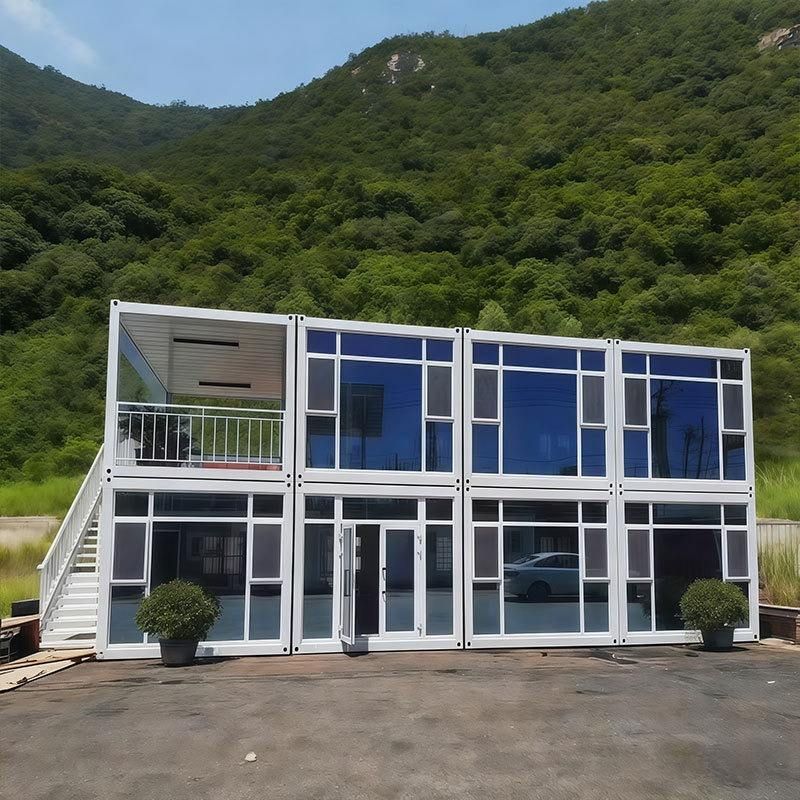
1. Legal approval procedures are the core basis for determination
According to the Urban and Rural Planning Law, any construction activity must obtain a construction project planning permit. If a factory places containers and converts them into a house within its fence without applying for and obtaining approval from the planning department, regardless of the purpose, it may be deemed an illegal structure. Even if containers are considered movable equipment, once their mobility is altered through welding, foundation fixing, or internal renovation and utility modifications, it constitutes a "new construction, renovation, or expansion" activity that requires legal approval.
2. Purpose determines the nature of the illegal structure and the severity of penalties
- Residential or business purposes: If containers are converted into non-storage uses such as employee dormitories, offices, or shops, due to the involvement of long-term human activities or commercial operations, which have high requirements for fire safety, security, and hygiene, they are usually strictly deemed illegal structures. Such actions may face orders to demolish within a specified time, restore to the original state, and impose fines of 5%-10% of the project cost (in accordance with Article 64 of the Urban and Rural Planning Law).
- Temporary storage purposes: If used solely as a temporary storage point for goods, without altering the original structure of the containers (such as not removing side panels or adding doors and windows), and in compliance with local temporary building management regulations (e.g., a duration not exceeding 2 years), the risk of being deemed an illegal structure is lower. However, it should be noted that some regions may require temporary buildings to be registered as well; otherwise, they may still be penalized.
3. Placement location must comply with planning requirements
Even with approval, the placement location of container houses must align with the factory's overall planning. For example, they must not occupy fire lanes, affect the lighting or ventilation of adjacent buildings, or violate special regulations on environmental protection and safety. If placed outside the planning red line or in public areas, even on the factory's own land, they may be deemed illegal structures for infringing on public interests.
Recommendation: If a factory needs to use containers to build a house, it should consult local planning and housing construction departments in advance to understand policies and apply for permits in accordance with the law. When the purpose is clearly for temporary storage, a written agreement should be signed specifying the duration. During the renovation process, avoid damaging the container structure and retain its mobility to reduce the risk of being deemed an illegal structure.



