
Back to blog
Article
Container Houses in Turpan Area
Admin September 17, 2026
Container houses in the Turpan area represent an innovative living concept that integrates with the local climate, offering numerous advantages.
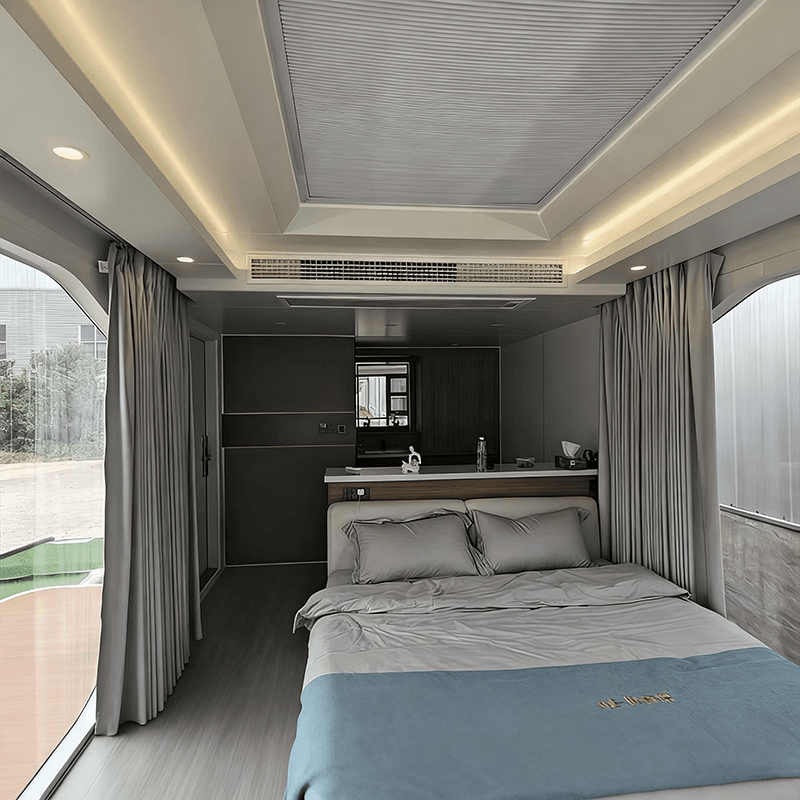
Innovative Design for Extreme Climates
- Thermal Insulation and Heat Preservation: Turpan experiences extremely high temperatures in summer, and ordinary container steel plates absorb and transfer heat quickly. Professional modifications involve adding high-efficiency thermal insulation layers inside the container, such as rock wool and polyurethane foam, and constructing air circulation layers in the walls, roof, and even the floor to create effective thermal barriers. This significantly slows down the transfer of outdoor heat into the interior and helps maintain warmth at night, balancing the day-night temperature difference.
- Ventilation and Shading Design: During renovations, windows are strategically added to form convection air channels, utilizing natural wind to promote indoor air circulation. Exterior shading awnings, vertical green walls, or specially formulated sunscreen coatings are widely used to directly block intense solar radiation and reduce heat accumulation.
- Structural Reinforcement and Durability: Turpan is known for its strong winds and sandstorms, and the robust steel structure of containers provides inherent wind resistance. After undergoing anti-rust and anti-corrosion treatments, such as sandblasting followed by the application of specialized protective paint, their durability is greatly enhanced, enabling them to withstand the dry and sandy environment.
Flexible Spatial Function Planning
- Modular Combination: A single container can serve as an independent functional unit, such as a bedroom, living room, or studio. Multiple containers can be connected horizontally or vertically to form larger composite spaces, such as suites, townhouses, or even multi-story buildings, allowing for the addition or removal of space modules based on changes in family size or functional requirements.
- Free Interior Layout: The interior is a cavity structure with almost no fixed partitions except for necessary load-bearing columns. Residents or designers can freely divide and arrange the interior space according to personal preferences and living habits.
- Rapid Deployment and Mobility: Compared to traditional brick-and-mortar buildings, container houses are easy and quick to transport, providing accommodation facilities rapidly. They can also be relatively easily disassembled, transported, and reassembled at new locations, enabling resource recycling.
Other Advantages
Container houses also offer advantages such as strong earthquake resistance and energy efficiency. They are manufactured using recyclable materials, reducing environmental impact and enabling recycling. Additionally, they can regulate indoor humidity and ensure ventilation and heat dissipation.



