
Tuokexun Container House
Tuokexun container houses are modular buildings transformed or newly constructed based on standardized containers, featuring mobility, rapid assembly, and low cost. They are widely used in temporary living, office, and commercial spaces.
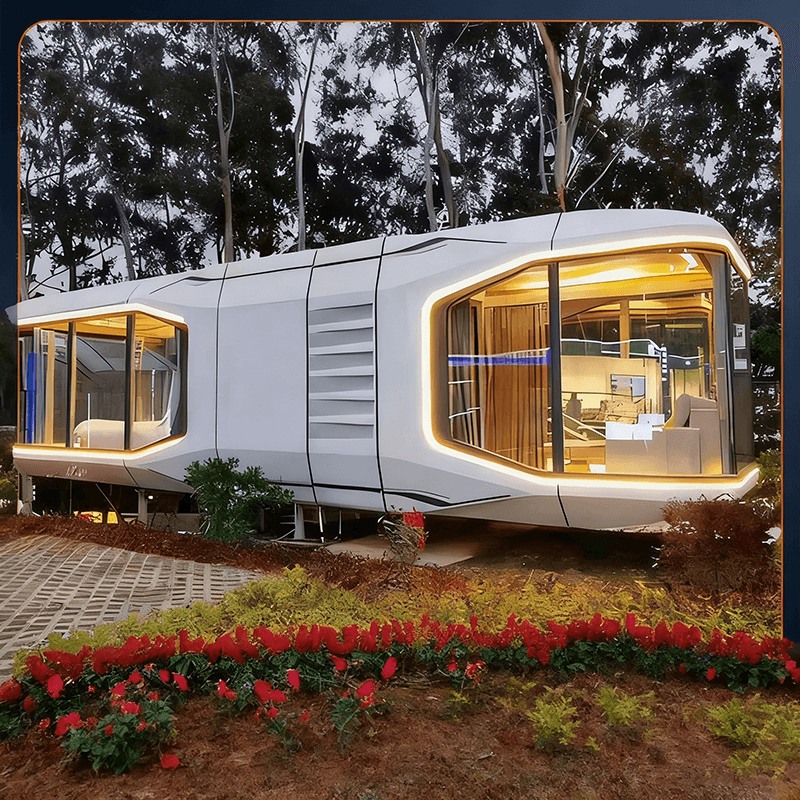
1. Structure and Materials
The core structure of container houses originates from the standardized steel frames of freight containers, offering properties such as pressure resistance, wind resistance, and corrosion resistance. The walls typically use color-steel sandwich panels filled with insulation materials (such as rock wool or polystyrene foam), balancing lightweight design with thermal insulation. Some high-end products adopt double-layer structures or special coatings to further enhance thermal insulation, sound insulation, and fire resistance. For example, container houses provided by Xinjiang Falilai feature modular designs, allowing multi-story stacking and outstanding thermal insulation, fire prevention, and moisture resistance.
2. Types and Classifications
Container houses can be categorized into three types based on purpose and configuration:
- Standard Type: Usually measuring 3 meters × 6 meters (approximately 18㎡), suitable for short-term leasing or large-scale temporary accommodations, such as construction site dormitories and emergency housing.
- Mid-Range Type: Balancing economy and comfort, often used for construction site canteens, meeting rooms, or temporary buildings for medium-to-large projects, with options to add bathrooms and electrical systems.
- High-End Type: Designed for high-quality office spaces or exhibition centers, featuring modular designs that support multi-story stacking, refined interior finishes, and equipped with air conditioning and lighting systems. Additionally, non-standard sizes (e.g., 3 meters × 7 meters, 3 meters × 8 meters) or special-function rooms (such as container villas and light-steel villas) can be customized based on demand.
3. Advantages and Application Scenarios
- Rapid Deployment: Prefabricated in factories, they only require lifting and assembly on-site, enabling use within days, suitable for emergency housing and wilderness outposts.
- Low Cost: Compared to traditional brick-and-mortar buildings, container houses have lower material costs and can be reused, reducing long-term costs.
- Flexible Mobility: Modular designs support overall relocation or reorganization without occupying permanent building quotas, ideal for temporary commercial spaces and cultural and creative camps.
- Environmental Protection and Energy Efficiency: Wall insulation materials reduce energy consumption, and some products incorporate green technologies like solar panels and rainwater collection systems.
4. Pricing and Procurement
The price of container houses varies based on size, materials, and configuration. For example, the market price for a standard type (3 meters × 6 meters) may range from several thousand to tens of thousands of yuan, with higher prices for high-end or customized models. Procurement channels include local manufacturers (with fast delivery in regions like Turpan, Shanshan County, and Tuokexun County), second-hand markets (e.g., Alibaba offers various used container houses), or leasing services (e.g., Xinjiang Falilai provides full-chain services).



