
Tumen Container Mobile Housing
There are application cases of container mobile housing in Tumen City, mainly involving two major fields: commercial operations and public services.
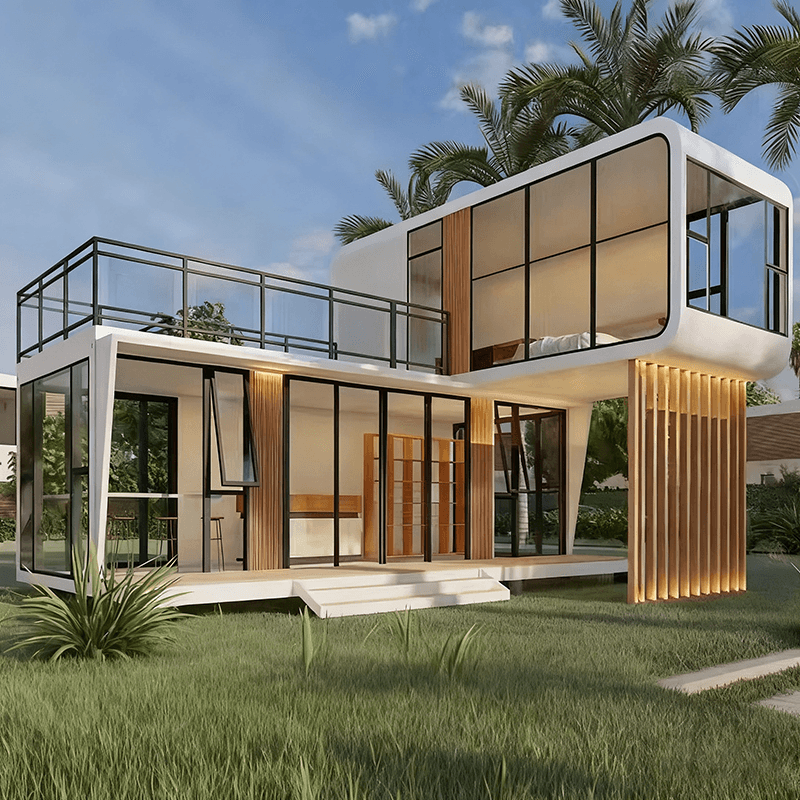
In terms of commercial operations, the Tumen River 87 Block, built along the river, has adopted a 'container + movable' model and successfully introduced 15 specialty catering and cultural and creative businesses. Through the flexible combination of modular containers, the block has constructed a comprehensive commercial space integrating culture, tourism, leisure, commerce, and the nighttime economy. The mobility of containers enables them to quickly adapt to site changes, meet the personalized needs of different businesses, and simultaneously reduce the construction costs and cycles of traditional buildings. Additionally, the industrial style of containers contrasts with the natural landscape along the river, becoming a visual highlight that attracts tourists and promotes the integration of local culture and tourism.
In the field of public services, the Tumen Repatriation Station of the National Immigration Administration has purchased mobile panel houses as functional facilities. Among them, the panel house at the exit measures 23.12 meters in length, 7.8 meters in width, and 2.8 meters in height, while the one at the entrance measures 12 meters in length, 7.8 meters in width, and 2.8 meters in height, both being single-story structures. These panel houses are equipped with living facilities such as water heaters, toilet bowls, and showers inside, meeting the needs of temporary office work and personnel accommodation. The standardized design of mobile panel houses enables rapid deployment and provides basic performance features such as wind resistance, rain resistance, and thermal insulation, making them suitable for the complex climatic conditions in border areas. Their modular structure also facilitates later maintenance and functional expansion, for example, by adjusting the space scale through the addition or removal of container units.
The commonality between the two types of cases lies in their utilization of the standardized and movable characteristics of containers, but there are differences in application scenarios and functional designs: Commercial blocks place more emphasis on appearance creativity and spatial flexibility, enhancing commercial appeal through color painting and window design; while public service facilities emphasize functionality and durability, with internal layouts focused on practicality and external structures required to comply with safety regulations. The practice in Tumen City demonstrates that container mobile housing can adapt to different scenario needs through customized designs, becoming an effective tool for urban renewal and emergency support.



