
Truck Transformation Mobile Toilet
Mobile toilets transformed from trucks can be achieved through various innovative solutions, including integrated designs based on van trucks, modular modifications of trailers, and container modifications of semi-trailers, with different solutions suitable for different scenarios.
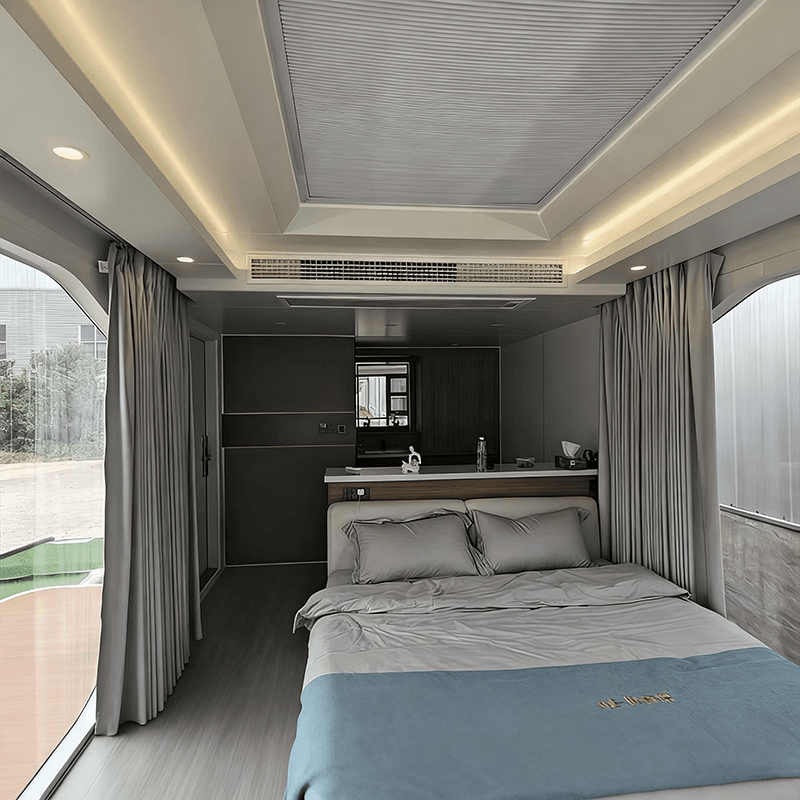
Integrated Design Based on Van Trucks
Taking the Habiton model from the Bürstner brand as an example, it is transformed from a Mercedes Sprinter van truck, achieving functional integration through space optimization. This model features a sliding toilet within a 5.93-meter cabin, adjusting the spatial layout through mechanical structures to accommodate a shower room, sink, toilet, and two single beds within the limited space. Its toilet system offers three options: chemical toilets that treat waste with decomposition fluids, suitable for short-term use; dry toilets that reduce odors using separation technology and require regular cleaning; and bagged toilets that achieve waterless treatment with biodegradable bags, facilitating waste collection. Additionally, this model is equipped with a freshwater and wastewater circulation system, extending water resource usage time through filtration devices, making it suitable for outdoor travel or emergency scenarios.
Modular Modification of Trailers
Mobile toilets mounted on trailers adopt heavy-duty truck chassis or towing designs, enhancing flexibility with modular structures. Their core configurations include independent water storage systems (with capacities ranging from 500 to 1000 liters) and sewage collection devices, with some models integrating vacuum suction technology to achieve a single flush of only 0.5 liters through negative pressure principles, significantly reducing water consumption. Structurally, they use automotive-grade steel frames and FRP composite material boxes, ensuring structural strength while achieving lightweight (usually weighing less than 3.5 tons), facilitating towing and transportation. Such designs are suitable for construction sites, large events, and other scenarios, allowing for rapid deployment and expansion of toilet numbers through multi-module combinations.
Container Modification of Semi-Trailers
The modification scheme for 13-meter mobile container semi-trailers uses standardized containers as carriers, achieving functional customization through a frame-plus-container structure. Its main body adopts a 12.45-meter frame, allowing adjustments to parameters such as axle spacing and towing neck thickness to accommodate different towing vehicle requirements, with vehicle dimensions and curb weight adjustable according to transportation regulations. The container interior can be divided into multiple independent toilet compartments, equipped with ventilation systems, lighting devices, and barrier-free facilities to meet high-flow usage demands in public places. The advantage of this scheme lies in its compatibility with the container transportation system, allowing transportation to designated locations via ordinary semi-trailers, suitable for long-term fixed but flexibly adjustable scenarios such as ports and logistics parks.
All the above solutions must consider regulatory compliance, such as vehicle gross weight limits, sewage discharge standards, and road transportation permits, while selecting waterproof and corrosion-resistant materials according to usage scenarios to enhance durability.
You may also like

Portable Toilet Rental for Construction Sites: What to Consider
Read More
Portable Toilet Rental Price Guide: Budget, Mid-Range & Premium
Read More
Portable Toilet Color Steel: A Practical Buyer's Guide
Read More