
Truck Container House Modification
It is feasible to modify truck containers into houses, and they have significant advantages in specific scenarios. The following provides a detailed explanation from aspects such as structural performance, installation efficiency, cost, and practical application cases:
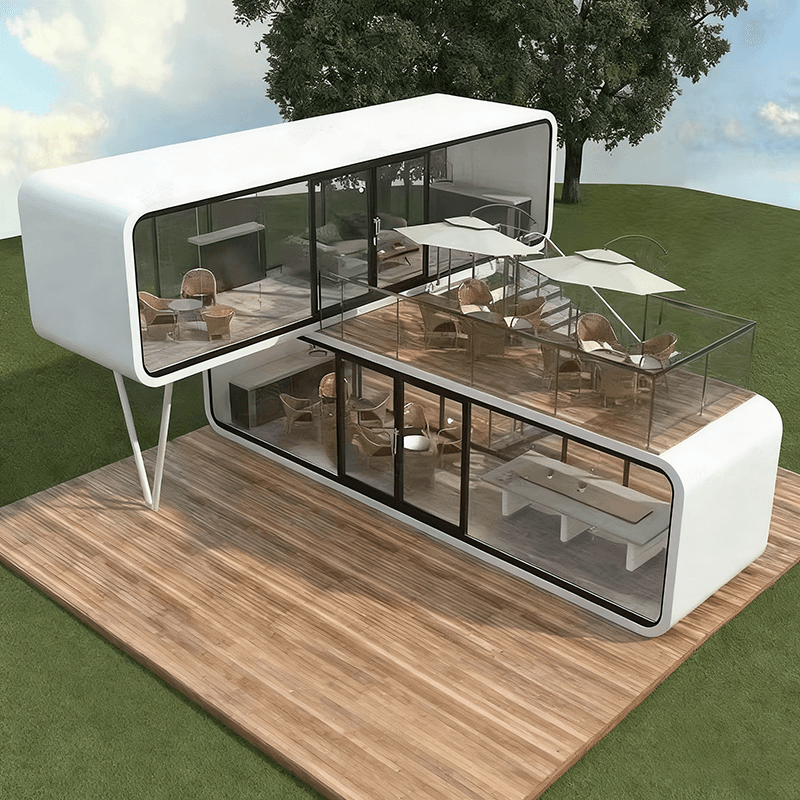
1. Structural Performance and Safety
The core advantage of container houses lies in their modular steel structure framework, which offers high wind and earthquake resistance. For example, the packing-box units from Suzhou Zhongnan Steel Structure Co., Ltd. have undergone extreme working condition tests, achieving a wind resistance rating of Level 12 and an earthquake resistance rating of Level 8, with a framework deformation rate of only 0.18%, far below the industry's qualified threshold of 0.3%. In contrast, non-standard off-brand products generally have deformation rates exceeding 1.2%, posing safety hazards such as wall cracking and framework tilting. Therefore, choosing container houses produced by compliant enterprises and verifying their wind and earthquake resistance test reports are crucial for ensuring safety.
2. Installation Efficiency and Flexibility
The modular design of container houses significantly shortens the construction period. For instance, Suzhou Zhongnan's quick-assembly containers can be installed in just 2 hours per unit, supporting on-demand splicing and combination, allowing the construction of 10 standard dormitory units within one day. Their packing-box units come pre-installed with interiors and facilities at the factory, enabling immediate use upon on-site hoisting. In contrast, the renovation period for traditional brick-and-mortar houses or shops typically spans months and requires complex civil engineering work. The 'factory prefabrication + on-site quick assembly' model of container houses is particularly suitable for scenarios such as temporary offices, accommodations, and event support facilities.
3. Cost and Environmental Advantages
The cost of container houses is significantly lower than that of traditional buildings. Taking a 15㎡ space as an example, a foreigner purchased Chinese containers and modified them himself, with a total cost of only 110,000 yuan; whereas the monthly rent for a 15㎡ traditional shop in a core business district may reach 30,000-50,000 yuan, with initial renovation costs of at least 50,000 yuan. Additionally, container houses can be relocated as a whole, avoiding construction waste generated from repeated setups and aligning with green environmental protection concepts. For users with limited budgets or those requiring frequent site changes, container houses are a highly cost-effective choice.
4. Practical Application Cases
Numerous successful cases both domestically and internationally have validated the feasibility of container houses. For example, a Danish man transformed nine containers into a family residence, incorporating large windows to introduce natural light while retaining the corrugated metal interior walls of the containers; a domestic young man created an 18㎡ minimalist villa using a single container, reasonably planning functional areas such as a living room, kitchen, and bathroom; creative modifications like mountain residences and forest mini-homes also demonstrate the potential of container houses in design diversity. These cases indicate that container houses not only meet basic living needs but also achieve a unity of aesthetics and functionality through personalized design.



