
Mobile Toilets for Tourist Scenic Spots
Mobile toilets for tourist scenic spots are designed as movable facilities to meet temporary and periodic toilet needs in places such as scenic spots.
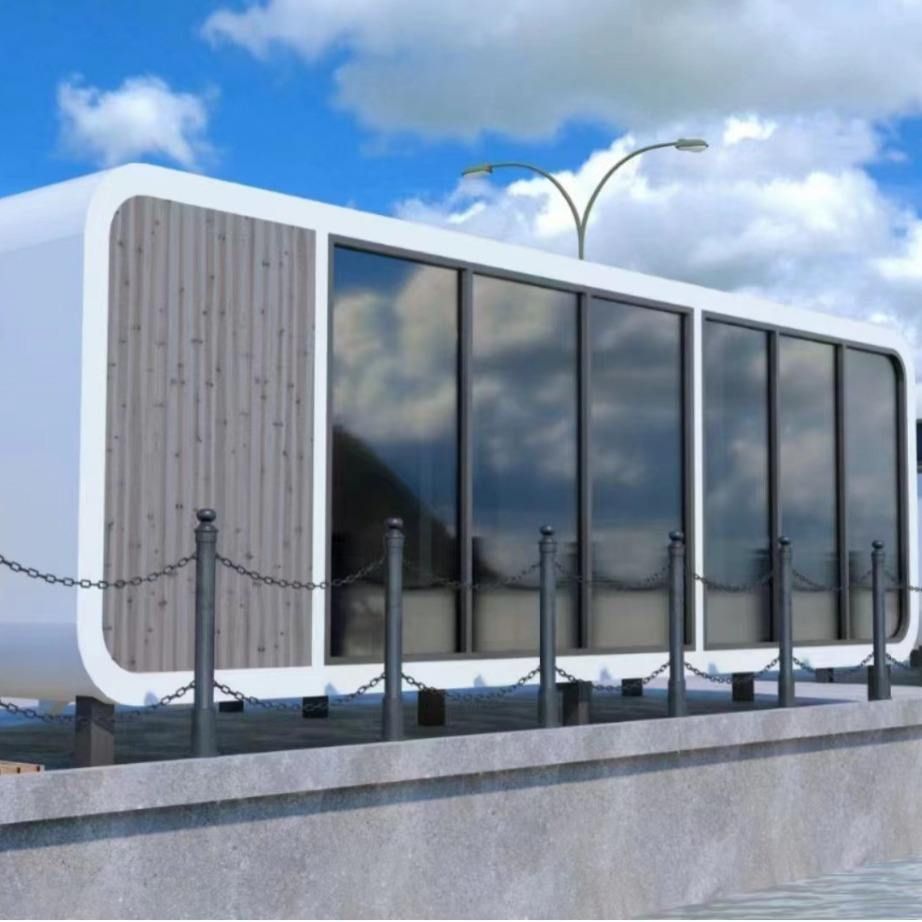
Material and Structural Features Mobile toilets come in a variety of materials. For example, the grille model from Dezhou Hongtu Metal Products Co., Ltd. features a pointed roof design, equipped with partitions and a rain-proof corridor, serving both as a toilet and a shower. The customized model produced by Taihe has a steel structure as its main body, with eye-catching colors and complete signage. Internally, it is divided into a men's toilet area (including squat toilets and urinals), a women's toilet area (including squat toilets and a mop sink), and a public hand-washing area, suitable for large-scale events or scenic spot construction sites. There is also a model with a metal carved panel for the entire exterior wall, balancing aesthetics and durability. Its core structure includes a fecal sewage storage tank (or treatment device), flooring, sanitary ware, walls, hand-washing equipment, water tanks, roofs, and moving devices. Some models also integrate auxiliary facilities such as mop sinks.
Classification and Functional Types They can be classified by structural form into single-unit structures (independent units) and composite structures (multi-unit combinations); by moving method into lifting/handling types (requiring external equipment assistance) and powered/trailer types (with their own power or capable of being towed); and by sewage treatment method into water-flush types (dependent on a water source), waterless suction types (regular fecal removal), recirculating water-flush types (sewage purification and reuse), and dry-pack types (using biodegradable bags to collect excreta). For example, the mobile toilets put into use in the Lanzhou Yellow River Scenic Area in 2023 adopt recirculating water-flush technology, balancing environmental protection and water conservation needs.
Core Advantages and Application Scenarios Their mobility, combinability, and convenient transportation enable rapid deployment in remote scenic spots, temporary event venues, or construction areas. They can be reused, reducing long-term construction costs. The design follows the principles of lightness and durability, using high-strength lightweight materials (such as aluminum alloy and metal carved panels), controlling height and width to fit different transportation vehicles, and having complete and reasonable moving devices (such as wheeled chassis or lifting interfaces). For example, the Taihe customized model improves usage efficiency through eye-catching signage and functional zoning, while the grille model adapts to outdoor environments with its rain-proof corridor, both embodying the design philosophy of 'mobility, cost-effectiveness, durability, and environmental friendliness'.



