
Travel Portable Toilet and Mobile Restroom
Travel portable toilets and mobile restrooms are two different types of sanitation facilities, with their main differences lying in design purpose, usage scenarios, and structural features.
Design Purpose
Travel portable toilets are primarily designed for individual or family use. They often feature a foldable design, balancing portability and functionality. Their appearance is similar to that of home toilets, equipped with garbage bags and coagulants. After use, waste can be sealed to prevent odor diffusion, making them suitable for short-term and small-scale use. For example, during self-driving trips, the foldable design makes them easy to store in the car; when traveling with children, they can prevent children from directly contacting hotel toilets, reducing health risks.
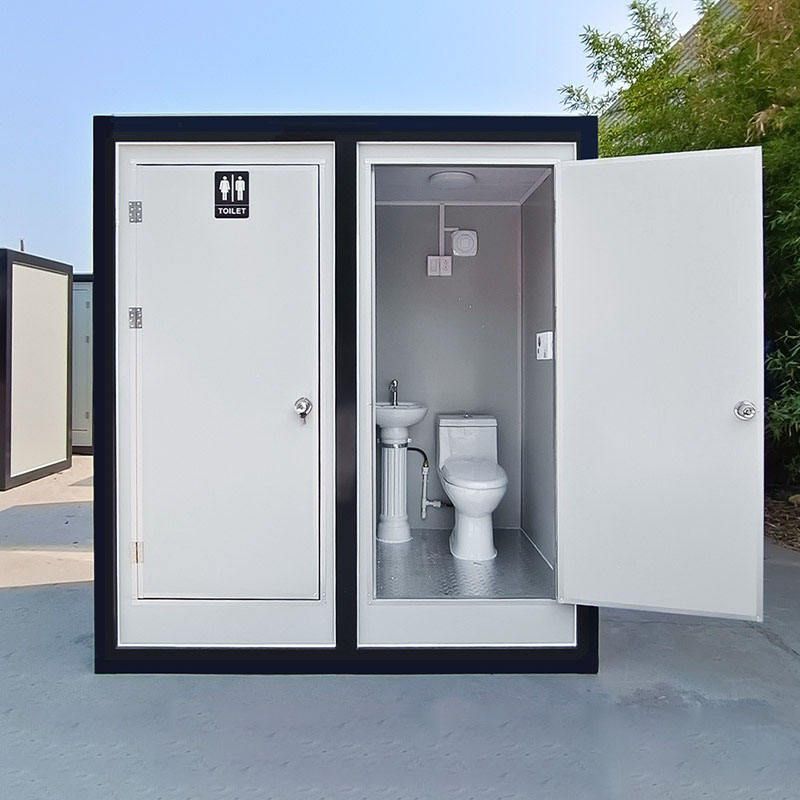
Mobile restrooms, on the other hand, serve public or group settings, needing to meet the demands of multiple people using them simultaneously or in rotation. Their design emphasizes durability and capacity, usually equipped with fecal and sewage storage tanks or disposal devices. Some high-end models also include flushing systems and deodorization devices, suitable for long-term or high-frequency use scenarios.
Usage Scenarios
The usage scenarios of travel portable toilets mainly focus on outdoor activities such as camping, hiking, and fishing. They can also be used for family emergencies or during travel. Their portability makes them an ideal choice for individual or small group travel, especially in scenarios with high hygiene requirements (such as traveling with children).
Mobile restrooms have a wider range of applications, covering public places and temporary events. For example, fixed locations like train stations, docks, and tourist attractions, as well as temporary events such as music festivals and sports events, all require mobile restrooms to meet the sanitation needs of large crowds. Their mobility and modular design enable quick deployment and removal, adapting to the requirements of different venues.
Structural Features
Travel portable toilets prioritize lightweight and foldability, often made of eco-friendly PP material with strong load-bearing capacity, suitable for both adults and children. Their structure is simple, mainly consisting of a seat ring, support frame, and storage bag. Some models are also equipped with shoulder straps or handles for easy carrying.
Mobile restrooms have a more complex structure, usually including components such as fecal storage tanks, floor panels, and sewage pipes. Some models are also equipped with water tanks and power supplies. They come in various classifications, including single-unit and connected types based on structural form; trailer-mounted and self-propelled types based on mobility; and direct-discharge, packaged, and biochemical treatment types based on sewage treatment methods, to meet the needs of different scenarios.



