
Travel Outdoor Portable Toilet
Travel outdoor portable toilets are movable facilities designed to meet the toilet needs during outdoor travel. They are characterized by easy transportation and adaptability to different scenarios, mainly falling into two categories: prefabricated building portable toilets and portable outdoor toilet tents.
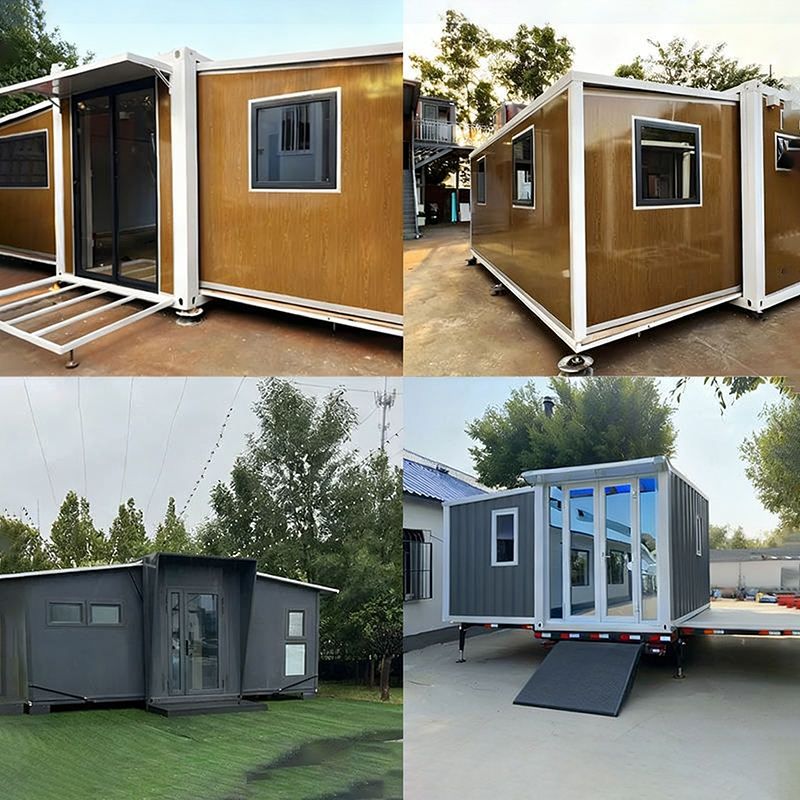
Taking the four-squat-position toilet produced by Dezhou Hongtu Metal Products Co., Ltd. as an example, prefabricated building portable toilets are suitable for public places such as scenic spots and campsites. Its structure features a pointed roof with a length of 4 meters and a width of 2.3 meters. The exterior wall is made of heat-insulating metal carved panels. Inside, there are two squat positions, a urinal, and a basin in the men's toilet, with the overall price being less than 20,000 yuan. These toilets are quickly assembled through modular design. The basic structure includes components such as a fecal sewage storage tank (or disposal device), floor slab, sanitary ware, walls, water tank, and roof. The moving method is usually lifting and handling, relying on professional vehicles for transportation.
Portable outdoor toilet tents are designed for self-drive travel or camping scenarios. Their core configurations include a folding toilet, a solidifying agent, and garbage bags. Their advantage lies in retractability, but strict adherence to the retraction method is required to avoid transportation difficulties. Structurally, they are mainly of a single-unit type, and their moving method relies on manual handling. Sewage treatment adopts a dry-packing type, where the solidifying agent converts feces into harmless solids, and garbage bags are used to achieve waterless treatment, making them suitable for environments with scarce water resources or high environmental protection requirements.
From a technical classification perspective, portable toilets can be divided into single-unit structures (independent units) and composite structures (multi-unit combinations) based on their structural forms; into lifting and handling types (requiring lifting equipment) and powered towing types (connectable to vehicle traction) based on their moving methods; and into water-flush types (dependent on water sources), waterless-flush suction types (regular cleaning of storage tanks), recirculating water-flush types (purification and reuse), and dry-packing types (waterless treatment) based on their sewage treatment methods. Among them, the dry-packing type has become the mainstream choice for outdoor scenarios due to its lack of need for water sources and sewage pipelines.
In practical applications, users need to make a comprehensive choice based on factors such as the usage scenario, the number of people, and the budget. For public places, prefabricated building portable toilets are recommended, taking into account both capacity and durability. For individual or small-group travel, portable tents are recommended, emphasizing portability and flexibility.



