Materials for Internet-Famous Mobile Toilets
The selection of materials for internet-famous mobile toilets emphasizes portability, durability, and hygiene standards, typically comprising multiple components such as the main structure, walls, interior decoration, sewage systems, and hardware fittings.

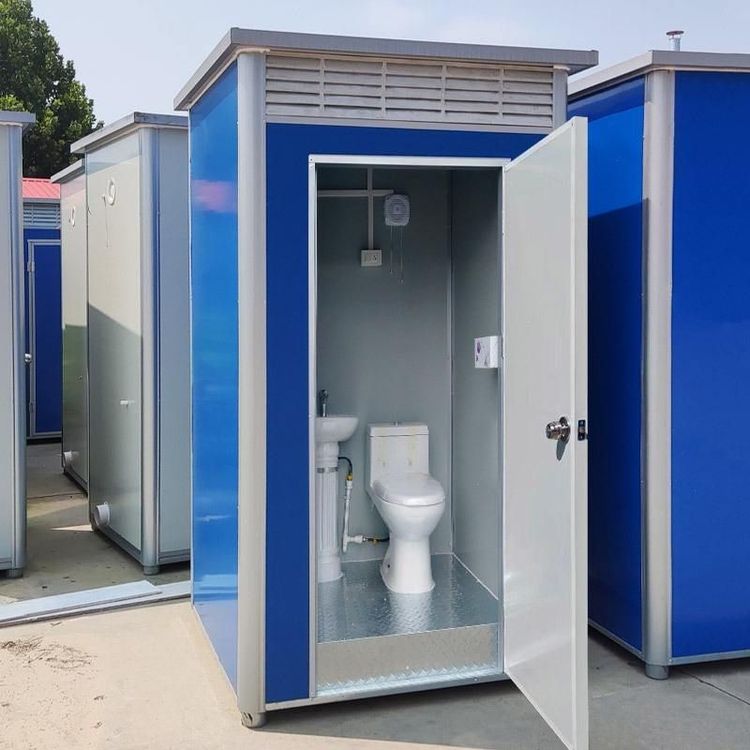
The main structure serves as the supporting framework for mobile toilets and must possess high strength and corrosion resistance. Common materials include high-quality galvanized square tubes and galvanized steel plates, which are welded to form a sturdy framework. The surface is treated with high-temperature spraying to create a dense protective layer that effectively isolates air and moisture, significantly enhancing corrosion and rust resistance to adapt to complex outdoor environments.
Wall materials need to balance lightness and functionality. The mainstream choice is sandwich panels, such as color-coated steel sandwich panels or composite panels, which consist of two layers of metal sheets (color-coated steel sheets or aluminum sheets) sandwiching an intermediate filling layer (polystyrene, rock wool, or polyurethane foam). This design ensures lightweight walls for easy transportation and installation while achieving thermal insulation through the filling layer to enhance user comfort.
Interior decoration materials prioritize hygiene and durability. The floor typically uses anti-slip patterned aluminum plates or rubber flooring. The former enhances friction through surface texture to reduce slipping risks, while the latter provides a soft texture and waterproof properties. Wall materials are mostly high-density PVC panels or stainless steel panels. PVC panels have a smooth surface that is easy to clean, while stainless steel panels are suitable for high-frequency use scenarios due to their corrosion resistance and impact resistance. Some high-end models incorporate a fiberglass-reinforced plastic (FRP) anti-corrosion layer on the chassis, forming a dense, leak-proof layer through a composite structure of glass fibers and resin to effectively prevent sewage leakage and protect the ground environment.
Sewage system materials must meet requirements for chemical corrosion resistance and sealing. Water tanks and pipes commonly use PE (polyethylene) material, which has a stable molecular structure, excellent resistance to acids, alkalis, and salts, and good flexibility for easy bending and installation, reducing connection gaps and lowering leakage risks.
Hardware fittings materials are oriented towards durability and ease of maintenance. Components such as door panels and locks are mostly made of engineering plastics or stainless steel. Engineering plastics (such as ABS and PC) are lightweight and cost-effective, suitable for basic configurations, while stainless steel is used in high-end models for its high strength and corrosion resistance, extending service life.