
Deformation of the Four Corners of a 3x6 Container House Frame
When a 3x6-meter container house is supported only at its four corners, the four corners and the overall structure may deform due to uneven force distribution, design flaws, or material issues. Comprehensive improvements are required in terms of support methods, structural design, material selection, and foundation construction.
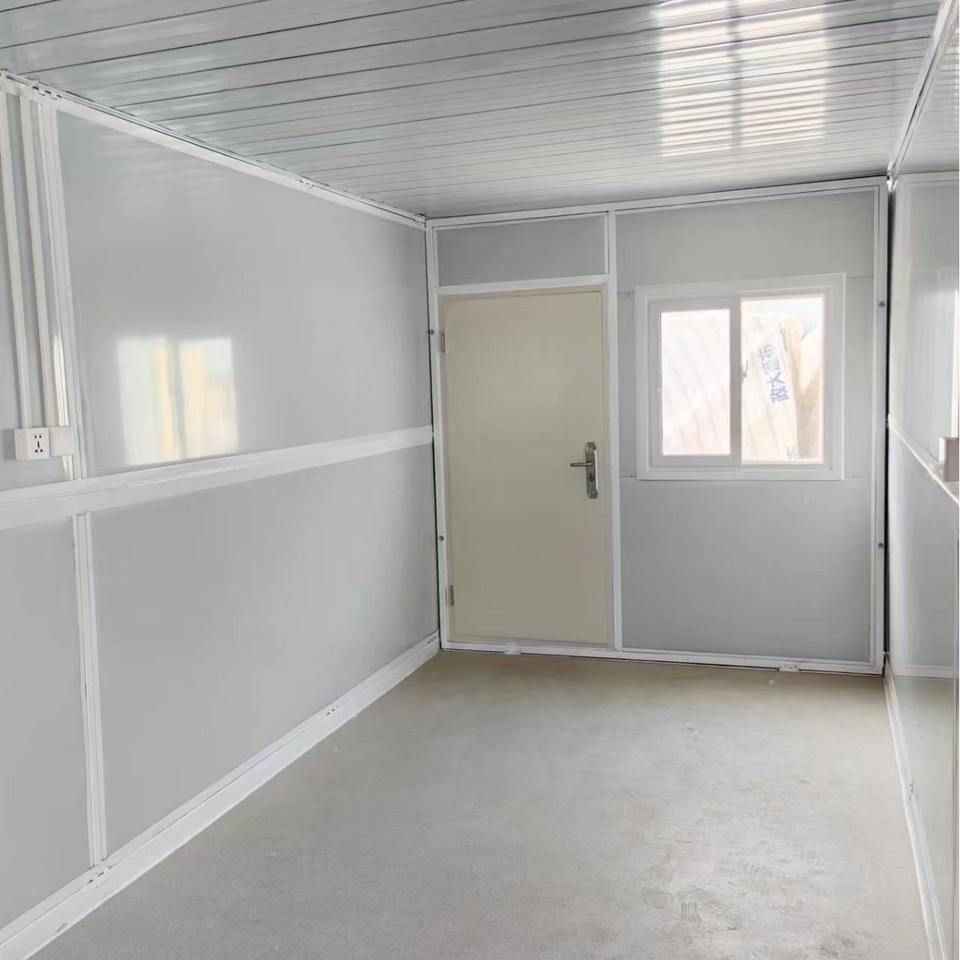
1. Unreasonable support methods lead to local stress concentration
If support points are set only at the four corners, the middle area at the bottom of the container will be suspended due to a lack of support. When upper loads (such as personnel, equipment, or stacked items) are applied, the middle area will sag downward due to gravity, causing bending deformation of the bottom steel plate or frame. Long-term uneven force distribution may cause the four corners to slightly expand outward due to reverse tension, further reducing structural stability. It is recommended to use evenly distributed support points, such as setting a support pier every 2-3 meters along the length of the container, to ensure even force distribution at the bottom.
2. Structural design flaws amplify deformation risks
If the spacing between frame columns and beams is too large (e.g., exceeding 1.5 meters), or the thickness of the main frame steel is insufficient (less than 1.5mm), the overall stiffness of the structure will be significantly reduced. Under concentrated loads, the frame is prone to local buckling or twisting deformation. For example, if a 3x6-meter container relies solely on the columns at the four corners for support, with no horizontal bracing members in the middle area, the frame may deform due to insufficient bending resistance when the load exceeds the design value (usually 2.0kN/m²). The structural design needs to be optimized by reducing the column spacing to within 1 meter and adding horizontal diagonal braces or cross braces to enhance overall structural integrity.
3. Insufficient material thickness reduces load-bearing capacity
The thickness of the main frame steel is a key factor affecting structural strength. If the steel thickness is less than 1.5mm, its bending section modulus will decrease significantly, resulting in a substantial increase in deformation under the same load. For example, steel with a thickness of 1.2mm may have more than twice the deformation of steel with a thickness of 1.5mm when subjected to a load of 1.5kN/m². Steel with a thickness of no less than 1.5mm, such as Q235 or Q345, should be selected, and the welding quality should meet standards to avoid stress concentration caused by weld defects.
4. Unstable foundation construction exacerbates deformation
If a concrete strip foundation is not poured or anchor bolts are not embedded, the connection strength between the container and the ground will be insufficient. Under wind loads or horizontal impact forces, the container may slide or tilt as a whole, causing the four corners to deform due to repeated forces. A concrete strip foundation of C20 or higher with a depth of no less than 300mm should be poured, and anchor bolts of M16 or larger should be embedded to firmly connect the container to the foundation. In addition, during use, heavy objects should not be stacked in local areas to ensure even load distribution.



