
Training Room Container House
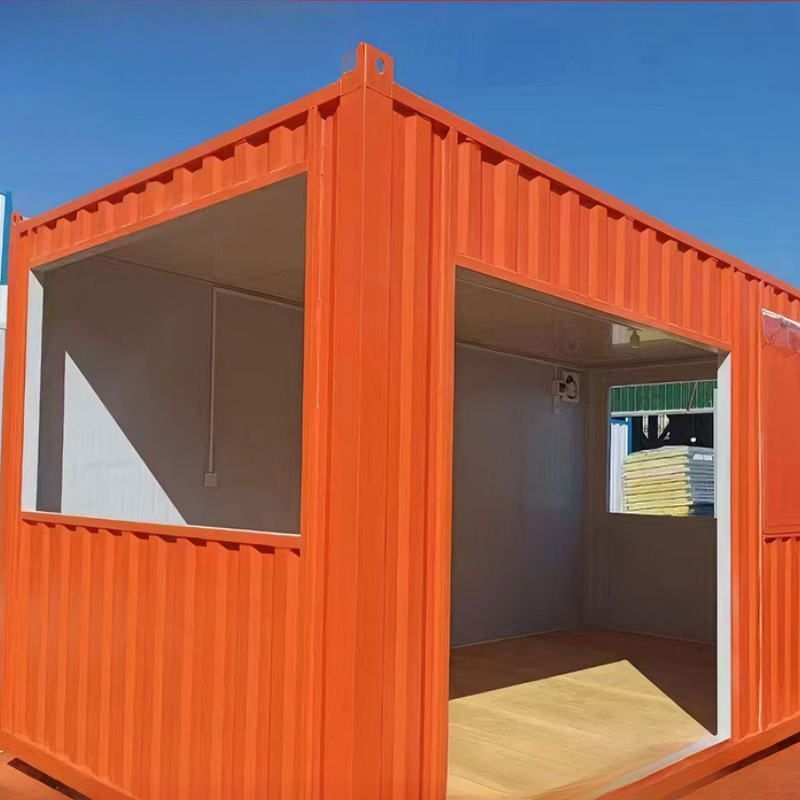
Container houses are temporary or permanent buildings that are renovated or constructed based on containers as the basic modules. They have the characteristics of easy mobility, rapid construction, and relatively low cost, and are widely used in various scenarios such as temporary accommodation, offices, and commercial spaces.
I. Structural and Material Characteristics
Container houses use standard shipping containers as the basic units, typically made of high-strength steel, which makes them sturdy, durable, wind-resistant, and earthquake-resistant. To meet residential needs, container houses undergo structural optimization, such as adding C-shaped steel purlins between the bottom beams to enhance the floor's load-bearing capacity and solve the problem of insufficient stiffness caused by the large spacing between the longitudinal beams of the original container's bottom frame. In terms of thermal insulation, the use of a broken-bridge lining structure (filling rigid polyurethane foam between the steel frame and the interior wall panels) and rubber thermal insulation pads reduces the cold-bridge effect of the metal container walls, lowering the indoor-outdoor heat exchange efficiency by about 40%. In winter without heating, the indoor temperature can be 8-10 degrees Celsius higher than the outside.
II. Functions and Application Scenarios
Temporary Accommodation: In large-scale events, disaster relief, or construction scenarios, container houses can be quickly erected as temporary dormitories. For example, the 2026 Nagoya Asian Games used container houses to accommodate participants, with three people per room and equipped with basic sanitary facilities. Their advantage lies in the modular design that supports rapid assembly and disassembly, and the materials can be recycled, with the disassembly and assembly loss rate controlled within 5%, significantly reducing construction waste.
Commercial and Office Spaces: Container houses can be combined through splicing to form shops, offices, or event exhibition halls. For example, Xi'an Tengdaxing Company offers customized container shop services, supporting personalized designs such as glass curtain walls and creative shapes to meet commercial display needs.
Environmental Protection and Sustainability: The core environmental value of container houses lies in the full life-cycle recycling of materials. A single standard 20-foot container consumes about 1.2 tons of steel, while the carbon emissions of a concrete temporary building of the same area are 2.3 times higher. In addition, container houses can be lifted and relocated as a whole, avoiding material waste after the demolition of traditional buildings.
III. Regional Practice Cases
In Xi'an, Shaanxi, and its surrounding areas, container houses have formed a complete industrial chain. For example, Xi'an Tengdaxing Housing Engineering Co., Ltd. provides one-stop services including design, manufacturing, leasing, and sales, with products covering residential containers, equipment containers, guard rooms, etc., with a service life of over 20 years and supporting customized needs.



