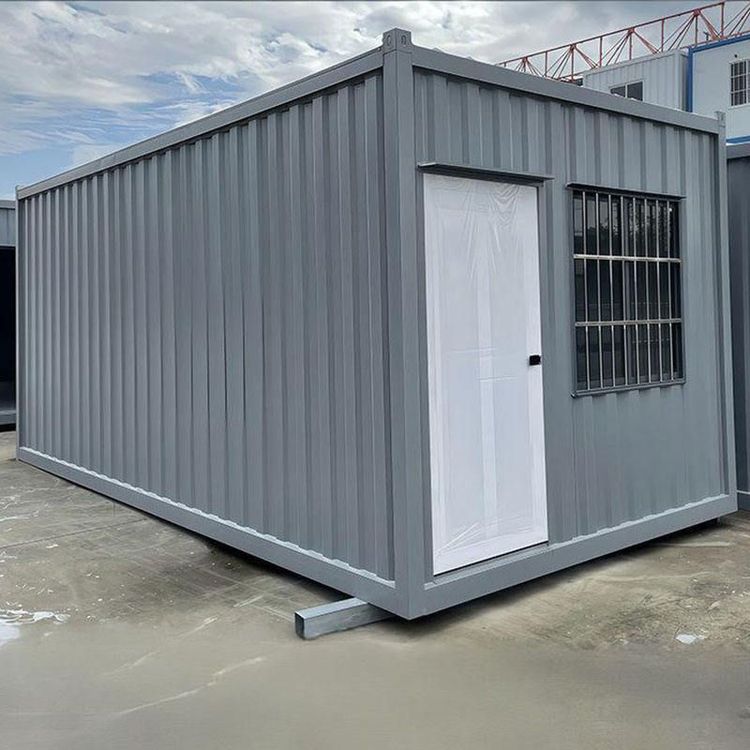
Trailer-mounted Mobile Toilet
A trailer-mounted mobile toilet is a relocatable independent sanitation facility module that achieves flexible mobility through a steel chassis and a towing system, suitable for public health needs in temporary or mobile scenarios.

I. Physical Composition and Mobility
The core structure of a trailer-mounted mobile toilet is a reinforced steel chassis, equipped with standardized towing hooks, indicator lights, and a braking system, allowing it to be towed to designated locations by ordinary vehicles. Its enclosure is made of lightweight high-strength materials (such as fiberglass and aluminum alloy), balancing weather resistance and transportation stability. The enclosure is not completely sealed, with ventilation ducts, light windows, and pipeline channels reserved to ensure internal air circulation and ease of equipment installation.
II. Modular Internal Function Design
- Toilet System: It adopts water-saving or waterless designs, with sewage discharge interfaces precisely connected to the sewage storage tank or biochemical treatment device at the bottom of the enclosure. The sewage storage tank is a removable module, with its capacity calculated and matched according to the usage scenario and cleaning cycle. For example, high-traffic scenic spots require larger capacities to reduce maintenance frequency.
- Water Circulation System: It integrates a clean water tank, pressure pump, pipelines, and a sink, with a layout that balances water efficiency with freeze-proof and leak-proof requirements. In cold northern regions, insulated pipelines or electric tracing technology are used to prevent freezing and cracking.
- Auxiliary Function Modules: Lighting and ventilation are driven by low-voltage circuits, with some models integrating solar panels for supplementary energy. In special environments (such as extremely cold or hot regions), small HVAC systems can be installed, with their energy consumption and enclosure insulation performance needing to be designed in coordination to reduce operating costs.
III. Market Price and Configuration Differences
Prices vary significantly depending on brand, functionality, and configuration:
- Basic models (such as simple straight-discharge types) can be as low as ¥43.43, suitable for short-term temporary events;
- Standard public models cost around ¥17,000, equipped with a complete water circulation and sewage storage system;
- High-end cross-border models (such as those for the disabled) can reach ¥120,000, equipped with barrier-free facilities, intelligent monitoring, and large-capacity treatment devices.
IV. Rental and Service System
The value realization of trailer-mounted mobile toilets relies on a dynamic service system: Service providers determine the model, quantity, and layout plan for deployment based on the spatial layout, foot traffic, and usage duration of the scenario, and complete transportation, placement, and pipeline connections. During use, periodic inspections, consumable replenishment, and emergency maintenance are carried out to ensure normal functionality, such as regular sewage tank cleaning and clean water filter replacement.