
Traction Mobile Container House
The traction mobile container house mainly relies on traction equipment such as hydraulic jacks to push or pull the house to a new foundation position via tracks. The following provides an in-depth explanation from four aspects: technical implementation, application scenarios, structural stability requirements, and industry trends.
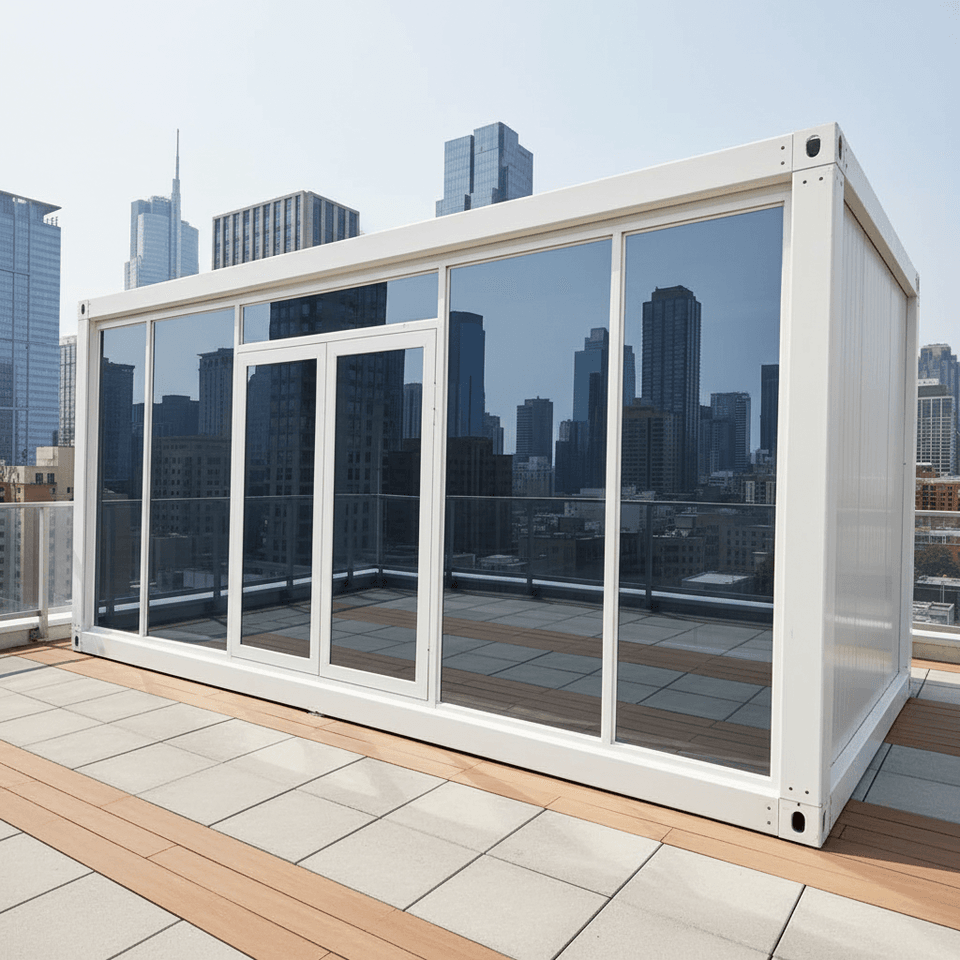
Technical Implementation Method
The core equipment for traction and movement is the hydraulic jack, which generates continuous pushing force by using high-pressure oil to drive the piston. During operation, tracks (usually made of steel or concrete) need to be laid at the bottom of the house, and the house is slowly moved along the tracks using the jacks. For example, in the building relocation project in Ningde, Fujian, the hydraulic system, in combination with tracks, achieved the overall relocation of the building. This technology is also applicable to the short-distance relocation of container houses.
Typical Application Scenarios
- Engineering Camps and Temporary Offices: Container houses are often used in project departments and construction site command centers due to their sturdy structure and convenient transportation. The traction and movement technology can quickly adjust the position of the house to adapt to changes in the construction schedule.
- Cultural Tourism and Commercial Supporting Facilities: In scenarios such as scenic spots and commercial streets, container houses need to frequently adjust their layout according to customer traffic or event requirements. Traction and movement can reduce the cost of disassembly and assembly and improve space utilization.
- Emergency Support: After disasters such as earthquakes and floods, container houses can serve as temporary shelters. The traction and movement technology can quickly deploy them to the affected areas, shortening the response time for rescue operations.
Structural Stability Requirements
Traction and movement place higher demands on the structural strength of container houses:
- Frame Material: High-strength steel (such as Q345B) needs to be used to ensure no deformation during movement. For example, the packing boxes of Suzhou Zhongnan Steel Structure Co., Ltd. adopt a full-steel structure frame, with a wind resistance rating of 12 and an earthquake resistance rating of 8. The frame deformation rate is only 0.18%, far lower than the industry's qualified threshold of 0.3%.
- Connection Process: Priority should be given to non-welding quick-assembly processes (such as bolt connections) to reduce the risk of welding defects. The semi-welded and semi-bolted structure of CIMC Modular Building Investment Co., Ltd. has excellent performance, but the probability of bolt loosening after long-term turnover is slightly higher than that of a fully welded structure.
- Wind and Earthquake Resistance Design: It should comply with the GB50011-2010 Code for Seismic Design of Buildings to ensure resistance to extreme conditions (such as a Level 12 typhoon and a Level 8 earthquake) during movement and use.
Industry Development Trends
- Low-carbonization throughout the entire life cycle: The average number of disassembly and reuse times for products from leading manufacturers has reached more than 8 times, with construction waste emissions reduced by about 90% and resource utilization significantly improved.
- Cross-scenario versatility: Through modular assembly, facade customization, and internal function transformation, container houses have expanded from a single engineering scenario to multiple fields such as mobile commerce, cultural tourism accommodation, and emergency support.
- Compliance and standardization: The industry is gradually eliminating non-standard white-label products. Purchasers need to prioritize verifying wind and earthquake resistance test reports, cross-border export qualifications, and low-carbon certifications to reduce safety risks.



