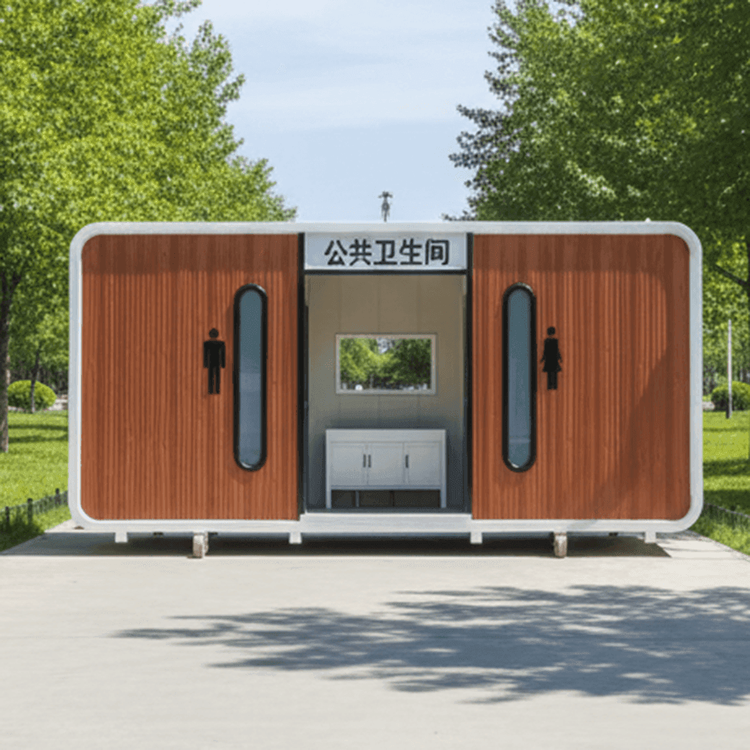
Top Portable Toilet Design Manufacturers: How to Choose a Factory Partner
Choosing a high-quality portable toilet design manufacturer as a factory partner requires a comprehensive evaluation from core dimensions such as structural technology, installation adaptability, internal configuration, customization, and after-sales service:

1. Structural Technology and Durability Prioritize manufacturers that employ integrated steel structure prefabrication technology. The main steel materials should have anti-corrosion and anti-rust treatments (such as galvanized layers or spraying processes), with options like stainless steel or galvanized steel plates. For example, Shanghai Dongba Construction Supporting Engineering Co., Ltd. claims its products have a service life of over 15 years, with material certificates and sample cross-sections serving as verification. If choosing plastic materials, confirm the use of weather-resistant materials like high-density polyethylene (HDPE), equipped with UV-resistant coatings and impact resistance to withstand long-term outdoor use.
2. Installation Efficiency and On-site Adaptability Evaluate the degree of factory production and the convenience of on-site assembly. High-quality suppliers should offer modular designs that support bolt connections instead of welding, and come with built-in chassis and roofing systems to reduce the need for on-site pouring. For instance, a Chinese manufacturer's product can be assembled by one person in one hour for 7-10 toilets, without additional foundation work; another manufacturer claims its product can be installed by two workers in half a day, suitable for projects with tight schedules.
3. Internal Configuration and Humanized Design Basic functions should include sinks, flushing systems, ventilation, and lighting, while also considering expansion options:
- Accessibility features: Handrails, ramps, etc.;
- Special group needs: Maternal and child care stations, child-specific facilities;
- Privacy protection: Lockable privacy doors (e.g., blue door panels);
- Hygiene maintenance: Easy-to-clean surfaces, odor control designs. Some manufacturers also offer customized interior configuration services to adjust layouts according to project requirements.
4. Customization Capabilities and After-sales Support
- Flexible customization: Support adjustments in size, color, and functional modules (e.g., adding storage cabinets or emergency call buttons);
- After-sales response: Confirm the provision of a cross-regional service network and spare parts supply capabilities;
- Environmental certifications: Prioritize manufacturers with ISO and CE certifications to ensure materials are recyclable and meet emission standards.
Additional Considerations
- Cost-effectiveness: Balance procurement prices with long-term maintenance costs (e.g., HDPE materials are 30% lighter than metal, reducing transportation costs);
- Case verification: Request successful case studies from similar scenarios (e.g., scenic spots, construction sites, or emergency projects);
- Technical parameters: Confirm whether the product has waterproof, fireproof, and moisture-proof properties, and specify its service life (usually 7-15 years).