
Tongnan Container House Construction
During the construction of container houses in Tongnan, it is essential to focus on material performance, construction specifications, and approval processes. The key points are as follows:
I. Core Performance and Advantages of Container Houses
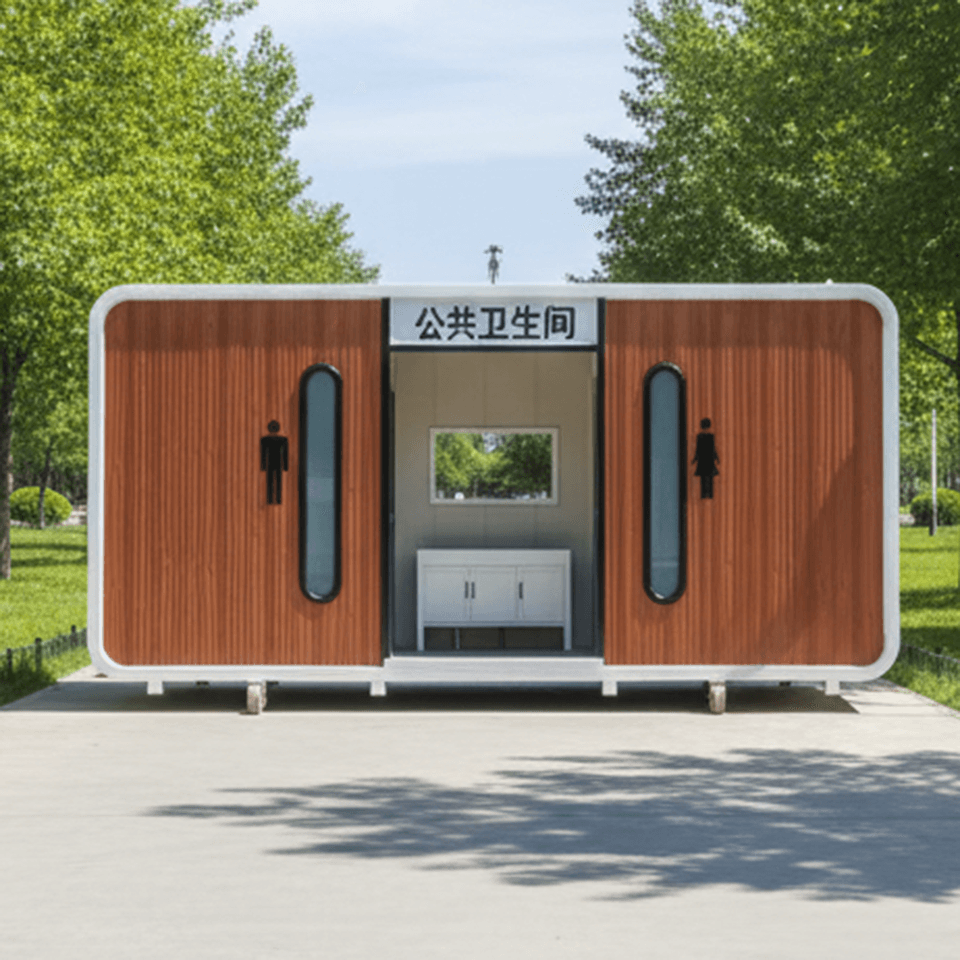
The residential container houses used in Tongnan are primarily modular in design, featuring fast assembly, easy mobility, and low cost. Their main structures are made of high-strength steel, combined with fire-resistant, wind-resistant, and earthquake-resistant materials to meet the safety requirements of temporary buildings. For example, the products of Chongqing Pinjian Integrated Housing Co., Ltd. combine exterior wall painting with design aesthetics, offering both practicality and visual appeal. The materials are corrosion-resistant and have a long lifespan, making them suitable for construction site dormitories, offices, and other scenarios. Additionally, the packing-box units are structurally robust and can be expanded into villas or temporary exhibition halls, meeting the diverse needs of social and living buildings.
II. Construction Specifications and Safety Requirements
- Foundation Treatment: Container houses require a flat and hardened ground surface. For long-term projects or areas with complex geology (such as mining subsidence areas or slopes in Tongnan), techniques such as grouting reinforcement and filling compaction should be employed based on foundation reinforcement project experience to prevent collapse.
- Connection and Fixation: The container units must be firmly connected using bolts or welding to ensure wind resistance meets the requirements of the "General Technical Conditions for Prefabricated Integrated Houses" (JG/T550—2025).
- Fire Protection Isolation: Interior decoration must use fire-retardant materials and be equipped with fire safety facilities to prevent fires caused by circuit aging or open flames.
- Environmental Protection Requirements: Construction waste should be controlled within 1.2kg/㎡, and carbon emissions should be reduced by over 80% compared to traditional brick-and-mortar structures, meeting green construction standards.
III. Approval Process and Compliance
According to the announcement by the Tongnan District Urban Management Bureau, the construction of container houses requires the approval for the erection of temporary buildings (e.g., the 2025 personal project case of Qiu Xin). When applying, design drawings, safety assessment reports, and land use agreements must be submitted. After joint review by the planning, resources, housing, and construction departments, a permit will be issued. If municipal facilities (such as roads or pipelines) are involved, an additional application for municipal facility construction approval is required to ensure that construction does not interfere with public interests.
IV. Supplier Selection and Cost Control
Prioritize manufacturers with third-party safety testing qualifications and bulk delivery capabilities, such as Suzhou Shengshan Integrated Housing Manufacturing Co., Ltd. Their standardized container units can be quickly assembled and support dual compliance certifications for domestic and international standards, reducing long-term operation and maintenance costs. When purchasing, a comprehensive assessment of the full lifecycle cost should be conducted, including purchase price, reuse frequency, residual value, and operation and maintenance expenses, to avoid potential issues caused by selecting low-quality products due to low prices.



