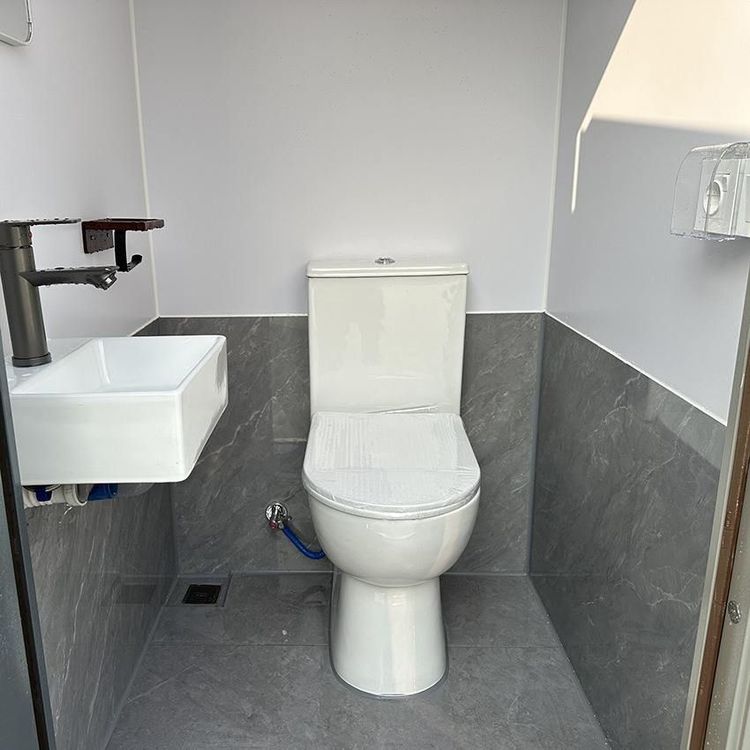
Tongling Mobile Toilet Rotational Molding
Currently, no direct information about 'Tongling Mobile Toilet Rotational Molding' has been found. The following is a popular science analysis from the fields of rotational molding technology and mobile toilets.

Basic Principles of Rotational Molding
Rotational molding, also known as rotomolding or rotational molding, is a method for forming hollow thermoplastic plastic products. The principle involves adding a certain amount of plastic raw material into a mold. The mold rotates around two mutually perpendicular axes while being heated, causing the plastic raw material inside the mold to uniformly coat, melt, and adhere to the entire inner surface of the mold cavity under the action of gravity and heat energy, forming the desired shape. Finally, the product is obtained after cooling and setting. This process has advantages such as low mold cost, the ability to form large and extra-large products, and natural transitions in the thickness of product edges. It is widely used in the manufacture of various hollow plastic products, such as storage tanks, toys, and amusement facilities.
Common Materials and Structures of Mobile Toilets
Mobile toilets usually need to consider factors such as portability, durability, and hygiene. Common materials include metals (such as stainless steel and aluminum alloy), plastics, and fiberglass-reinforced plastics. Metal materials are sturdy and durable but relatively heavy, making them less convenient to move. Plastic materials are lightweight and cost-effective but may have slightly lower strength and durability. Fiberglass-reinforced plastics combine some of the advantages of metals and plastics, offering good strength and corrosion resistance. In terms of structure, mobile toilets generally include components such as the toilet body, fecal treatment systems (such as packing-type, foam-type, and microbial degradation-type systems), ventilation systems, and lighting systems.
Potential Applications of Rotational Molding in the Mobile Toilet Field
Although there is currently no clear information about Tongling mobile toilets using rotational molding, this process has the potential to be applied in the manufacture of mobile toilets. For example, using rotational molding to manufacture the toilet body of a mobile toilet can take advantage of its ability to form large hollow products, creating a reasonably structured and spacious toilet. Moreover, rotational molding products have smooth surfaces that are easy to clean, meeting the hygiene requirements of mobile toilets. At the same time, rotational molding can produce products in various shapes, satisfying the diverse design needs of mobile toilets. However, applying rotational molding to mobile toilet manufacturing also requires solving some technical issues, such as how to ensure the strength and stability of the products and how to effectively connect them with other components like the fecal treatment system.