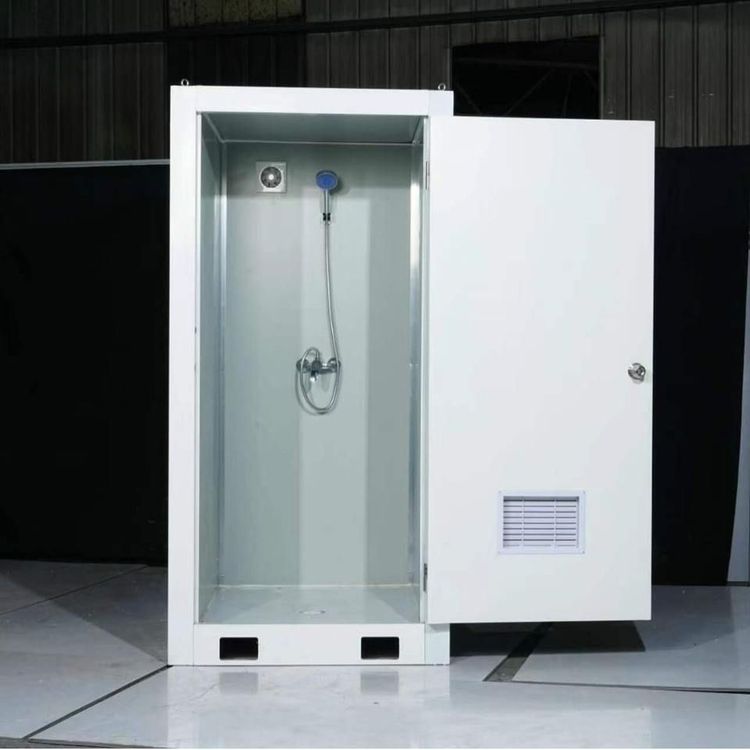
Portable Toilet for Home Use
Portable toilets for home use mainly come in two types: portable commodes and portable toilets. Additionally, portable toilets can be classified in various ways based on their overall structure, structural form, mobility method, and sewage treatment approach.

Common Types of Portable Toilets for Home Use
- Portable Commodes: These commodes are highly suitable for the elderly or pregnant women at home. They have a super-strong load-bearing capacity, ensuring the safety of users. The commode bucket is designed to be relatively deep and comes with a handle and a lid, making it extremely convenient to use. The deep bucket reduces the frequency of cleaning, the handle facilitates easy carrying, and the lid effectively prevents odor from escaping.
- Portable Toilets: These can be placed in multiple locations such as the living room, bedroom, and bathroom. They feature a bench-style flip-top design, which not only provides comfortable use but also has excellent odor-prevention capabilities. They are easy to clean and can be used with garbage bags, further simplifying the cleaning process.
Overall Structure of Portable Toilets
Portable toilets are generally composed of multiple parts, including a fecal sewage storage tank (or fecal sewage treatment device) for collecting and treating fecal sewage; a floor for providing a stable standing and moving surface; sanitary ware to meet basic hygiene needs; walls for separation and protection; washing facilities for users to wash up; a water tank to supply water for flushing and other operations; a roof to shield against wind, rain, and sunlight; and a mobility device to facilitate the overall movement of the toilet.
Other Classifications of Portable Toilets
- By Structural Form: They can be divided into single-unit structure portable toilets and composite-structure portable toilets. Single-unit structures are relatively simple and independent, while composite structures may be composed of multiple parts and may have more complex and diverse functions.
- By Mobility Method: There are lifting and carrying-type portable toilets, which may require lifting equipment or manual carrying for movement; and powered and towed-type portable toilets, which are equipped with power devices or can be moved by towing, offering more convenient and efficient mobility.
- By Sewage Treatment Method: They can be classified as water-flush and waterless-suction portable toilets. Water-flush types use water flow for flushing, while waterless-suction types treat feces through suction. There are also circulating water-flush portable toilets that recycle water resources, making them more environmentally friendly and water-saving; and dry-packing portable toilets that package feces in a dry form for easy subsequent cleaning and transportation.