
Installation of Mobile Sink in Toilet
The installation of a mobile sink in a toilet should be planned in combination with the requirements of the scene and basic installation logic. The specific key points are as follows:
I. Applicable Scenarios and Advantages of Mobile Sinks
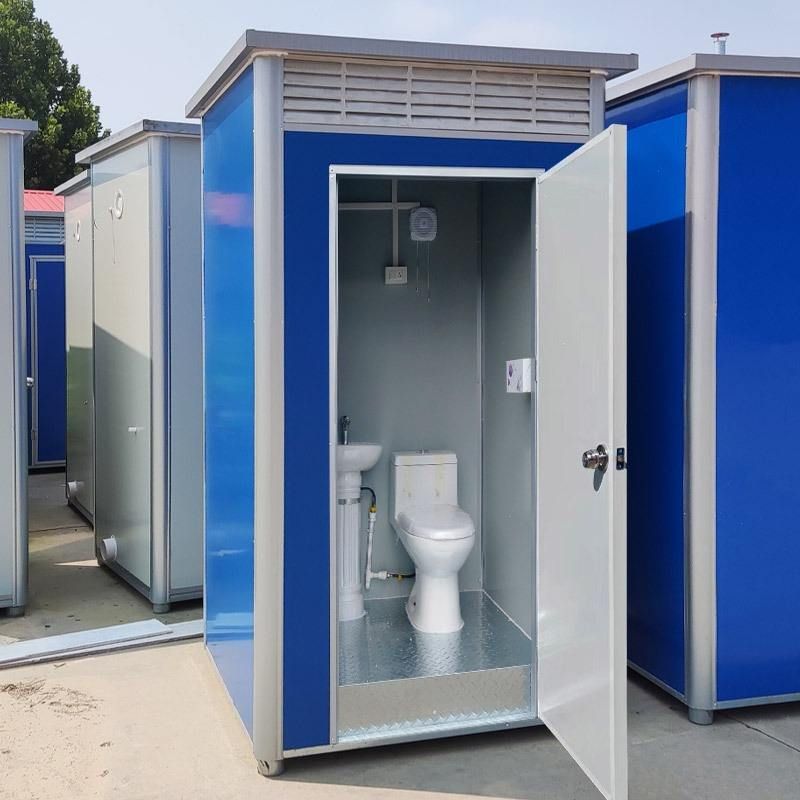
The design of a mobile sink needs to be adjusted according to the usage scenario. In public toilet scenarios, mobile toilets often adopt a modular design of 'two toilet stalls + one sink'. The exterior walls use metal carved panels for fire prevention and thermal insulation. The sink, as an independent functional area, facilitates simultaneous use by multiple people and is easy to maintain. In home scenarios, the core advantage of a mobile sink lies in space optimization: moving the sink from the toilet to areas such as the foyer or hallway can alleviate congestion inside the toilet, avoid conflicts between washing, using the toilet, and showering functions, and reduce damage to the sink cabinet caused by a humid environment. For example, in the renovation of a 60㎡ old house in Hongkou District, Shanghai, a 1.5㎡ area was set aside outside the toilet door for the sink, which not only freed up space inside the toilet but also optimized the flow of movement.
II. Installation Key Points for Mobile Sinks in Home Scenarios
When installing a mobile sink at home, special attention should be paid to plumbing layout and space adaptability:
- Plumbing Embedding: The positions of cold and hot water inlet pipes and drainage pipes should be planned in advance. If the sink is moved to an area without drainage, the drainage problem can be solved by raising the floor or using a wall-mounted drainage system. Angle valves should be installed on the inlet pipes to control water flow and facilitate future maintenance.
- Structural Fixing: Referring to the installation process of an ordinary sink, a mobile sink needs to be fixed to the wall or floor using expansion bolts or special brackets to ensure stability. For high-legged sinks, a level should be used to adjust the levelness to prevent water accumulation on the countertop due to tilting.
- Moisture-proof Treatment: If the sink is close to a humid area (such as the junction between the foyer and the toilet), a waterproof aluminum foil should be added at the bottom of the cabinet or moisture-proof panels should be selected to extend the service life.
III. Modular Installation of Mobile Sinks in Public Scenarios
The sinks in public mobile toilets are usually prefabricated modules, and the installation process is more standardized:
- Foundation Fixing: Place the sink module at the preset position and connect it to the ground with bottom bolts to ensure wind and earthquake resistance.
- Pipe Connection: Quickly connect the inlet hose and the drainage elbow. Sealant or Teflon tape should be applied at the joints to prevent leakage.
- Function Debugging: Check the water pressure of the faucet, the drainage speed, and the smoothness of cabinet door opening and closing to ensure they meet the usage standards.
Conclusion: The installation of a mobile sink should select strategies according to the scenario—home scenarios focus on space reconstruction and plumbing renovation, while public scenarios emphasize modularity and efficiency. Regardless of the scenario, priority should be given to ensuring structural stability, plumbing safety, and moisture-proof treatment to achieve a balance between function and aesthetics.



