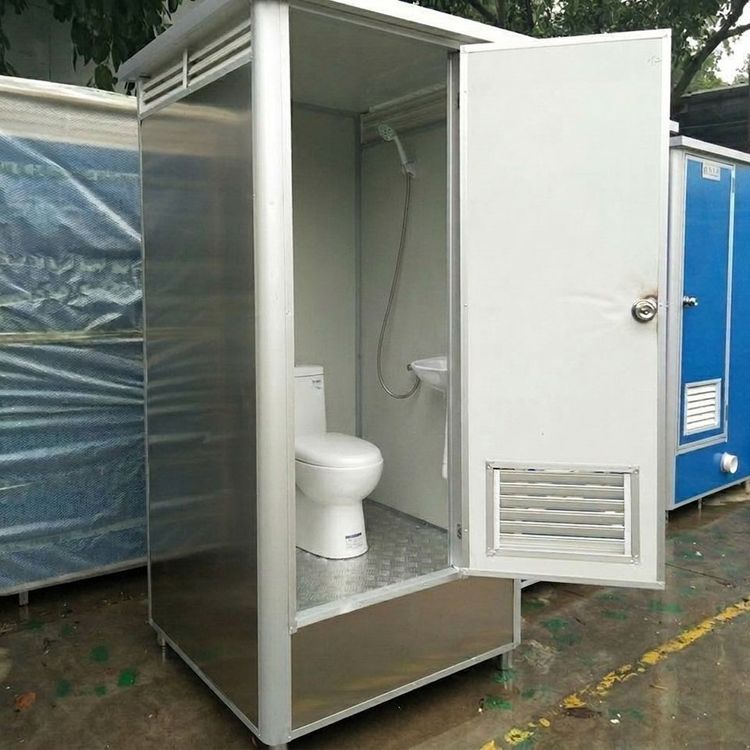
Tips for Choosing Mobile Toilets
When selecting mobile toilets, it is essential to consider various factors such as usage scenarios, material and craftsmanship, sewage disposal methods, odor and slip resistance designs, as well as after-sales customization capabilities. Here are some specific considerations:

1. Choose Models Based on Usage Scenarios
The functional requirements for mobile toilets vary significantly across different scenarios. For construction sites, temporary construction areas, or short-term events, it is advisable to opt for simple steel-structured mobile toilets, which are sturdy, easy to assemble and disassemble, can be transported repeatedly, and require minimal maintenance, offering high cost-effectiveness. For long-term outdoor scenarios such as scenic spots and parks, assembled landscape mobile toilets are suitable, featuring a simple and elegant appearance, good sealing, and resistance to odor accumulation. For off-grid locations like rural outdoors and camping bases, off-grid ecological mobile toilets are necessary, eliminating the need for complex civil engineering construction, with reasonable sewage disposal designs and anti-leakage features to reduce later maintenance costs. For large-scale temporary events such as sports competitions and exhibitions, multi-compartment mobile public toilets are recommended, providing an adequate number of squatting positions, high personnel turnover efficiency, and strong capacity to accommodate large crowds.
2. Focus on Material and Craftsmanship
Material and craftsmanship directly affect the durability and user experience of the toilets. The main frame should be made of hot-dip galvanized square steel welded frames, which offer good stability, wind and sun resistance, and strong corrosion resistance, making them less prone to paint peeling or rusting during long-term outdoor placement. Among exterior wall panels, metal carved panels excel in overall performance and are suitable for municipal and scenic spot scenarios; color steel panels are lightweight and cost-effective, suitable for short-term use on construction sites; and landscape-shaped panels have high aesthetic appeal, suitable for gardens and cultural tourism scenic spots. The internal configuration should be complete, including slip-resistant and wear-resistant floors, odor-resistant ceramic sanitary ware, and ventilation equipment. Special attention should be paid to sealing techniques and odor control designs to prevent backflow of odors or mosquito breeding.
3. Select Sewage Disposal Methods Based on Site Conditions
The sewage disposal method should match the site's piping conditions. If the site has a complete piping system, water-flush sewage disposal can be chosen; for off-grid sites, foam or packaged sewage disposal methods should be selected to avoid difficulties in later operation and maintenance.
4. Pay Attention to Odor and Slip Resistance Design
Odor control design should focus on the ventilation system (such as exhaust fans and vents), sewage disposal methods (the odor handling capabilities of water-flush, foam, and packaged methods), and the sealing of the internal structure. Slip resistance design should ensure that the floor material is slip-resistant or that slip-resistant mats are laid, and that the floor slope is reasonable to prevent water accumulation.
5. Consider After-sales and Customization Capabilities
It is advisable to choose original manufacturers that offer nationwide warranty and 24-hour after-sales service response, and confirm whether they have a spare parts inventory. Additionally, examine whether the manufacturer has customization capabilities such as modifying dimensions, designing according to renderings, and pre-burying pipelines to meet personalized needs.