Colors of Tibetan-Style Container Houses
The colors of Tibetan-style container houses typically feature red, white, and yellow as the primary hues, often complemented by black and blue, with specific choices influenced by cultural symbolism, usage scenarios, and design requirements.
Red, white, and yellow are the core colors of Tibetan architecture, carrying profound cultural meanings. In Tibetan culture, red symbolizes auspiciousness, power, and divine protection, commonly used in the decoration of religious buildings and important residential structures, such as the Red Palace of the Potala Palace. White represents purity and auspiciousness; ordinary Tibetan-style residences are often painted white as the base color, reflecting aesthetic pursuits and relating to the belief in the 'White Sect' in religious culture. Yellow signifies solemnity and sanctity, frequently used as the main color for religious buildings or places for storing scriptures and books, like the yellow rooms in the Potala Palace.
Colors such as black and blue play auxiliary decorative roles in Tibetan architecture. Black is often used on roof beams, windows, and both sides of door lintels, symbolizing majesty and strength. Blue is regarded as a symbol of mystery; some buildings create a vivid and bright effect through color painting on door frames and window frames. The combination of these colors not only enriches the visual hierarchy of the architecture but also reflects the symbolic expressions of the Tibetan culture regarding the universe and space (e.g., white, green, and red pointing to the southeast, northwest respectively).
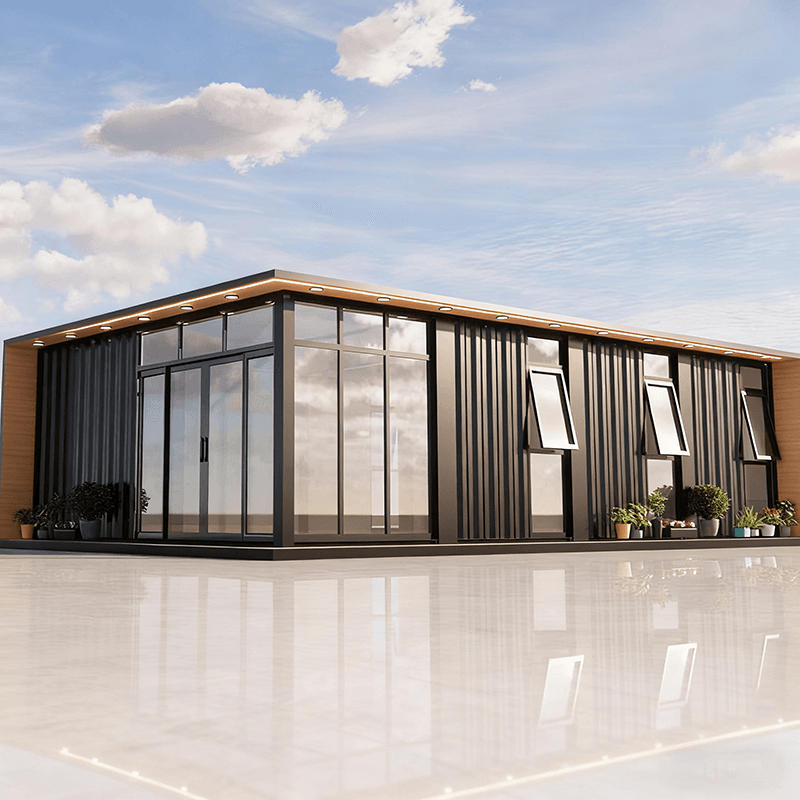
The color selection for Tibetan-style container houses should consider functionality and scenarios. For religious or cultural exhibition scenarios, red, white, and yellow can be prioritized to highlight traditional characteristics. For homestays or commercial spaces, modernity can be enhanced by adding touches of blue and black while retaining the red and white as the main colors. Additionally, container houses offer high flexibility in color matching; the exterior wall colors can be adjusted according to the surrounding environment (such as rice fields, lakes, and hillsides) to achieve harmony with the natural landscape.