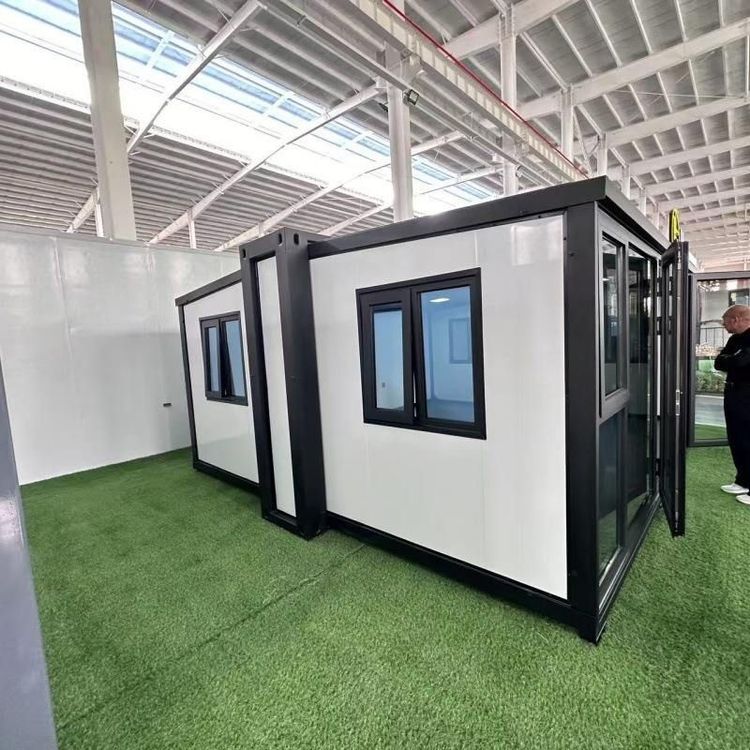
Tibet Water-Flush Mobile Toilet
The Tibet water-flush mobile toilet has undergone multiple key technical adaptations designed for the plateau environment to ensure stable operation and environmental performance under extreme conditions.

1. Optimized Pipeline and Water Pump Design
In plateau regions, low atmospheric pressure reduces the boiling point of water, causing conventional flushing systems to suffer from insufficient water flow pressure and reduced flushing efficiency. The Tibet water-flush mobile toilet addresses this by adjusting pipeline parameters and selecting appropriate water pumps. It increases pipeline cross-sections to reduce water flow resistance while boosting pump output power to compensate for the effects of low pressure, ensuring effective water seals and flushing force under low-pressure conditions. Additionally, pressure buffering devices are installed to prevent pipeline abnormalities caused by pressure fluctuations, ensuring system stability.
2. Environmentally Resistant Shell Material Design
The large temperature variations between day and night in plateau regions can cause material expansion and contraction, leading to structural cracking. The toilet shell adopts a multi-layer composite structure: the outer layer is a UV-stable polymer coating to resist strong ultraviolet radiation; the middle layer incorporates a glass fiber-reinforced grid to enhance impact resistance; the inner layer uses freeze-resistant and impact-resistant materials to reduce the risk of low-temperature embrittlement. These three layers work together to maintain structural integrity despite dramatic temperature changes.
3. Efficient Thermal Insulation Layer Configuration
To minimize internal heat loss, the insulation layer uses closed-cell foam material with precisely controlled thermal conductivity, ensuring insulation performance without excessive equipment weight. This design effectively maintains internal temperatures, preventing sewage freezing or reduced efficiency in treatment units.
4. Physical-Chemical Synergistic Process in Sewage Treatment Unit
After primary sedimentation removes large particles, sewage enters a flocculation reaction zone where environmentally friendly flocculants are added to accelerate solid separation. Subsequent disinfection uses electrolysis or ozone oxidation to kill pathogens and degrade organic matter. The treated effluent meets non-contact flushing standards or can be directly discharged, enabling resource recycling.
5. Multi-Source Complementary Energy Supply System
The photovoltaic power generation system uses monocrystalline silicon solar panels paired with low-temperature optimized battery packs, and the inverter operates across a wide temperature range to ensure stable power supply in low-temperature conditions. Some designs integrate thermoelectric generation modules that utilize the temperature difference between the equipment's interior and exterior to generate auxiliary power, further improving energy self-sufficiency.
6. Anti-Settlement Structure for the Load-Bearing Base
Given the characteristics of plateau permafrost, the chassis adopts a floating design with adjustable support feet. Large-area bearing plates are installed at the foot ends to distribute pressure and prevent equipment sinking due to permafrost thawing in summer. An air circulation layer between the chassis and ground reduces heat conduction interference with the permafrost, ensuring long-term equipment stability.
7. Differentiated Operation and Maintenance Management Plan
In plateau environments, special attention must be paid to low-temperature elastic changes in seals, ice blockage prevention in drainage pipelines, and condensation protection for electrical components. Maintenance cycles are tailored based on altitude and usage frequency, such as shortening seal inspection intervals at high altitudes and adding pipeline heating measures in winter to ensure reliable system operation.