Tibet Mobile Toilet with Related Services
The Tibet region offers mobile toilet-related products and services, covering product supply, customization services, and special designs.

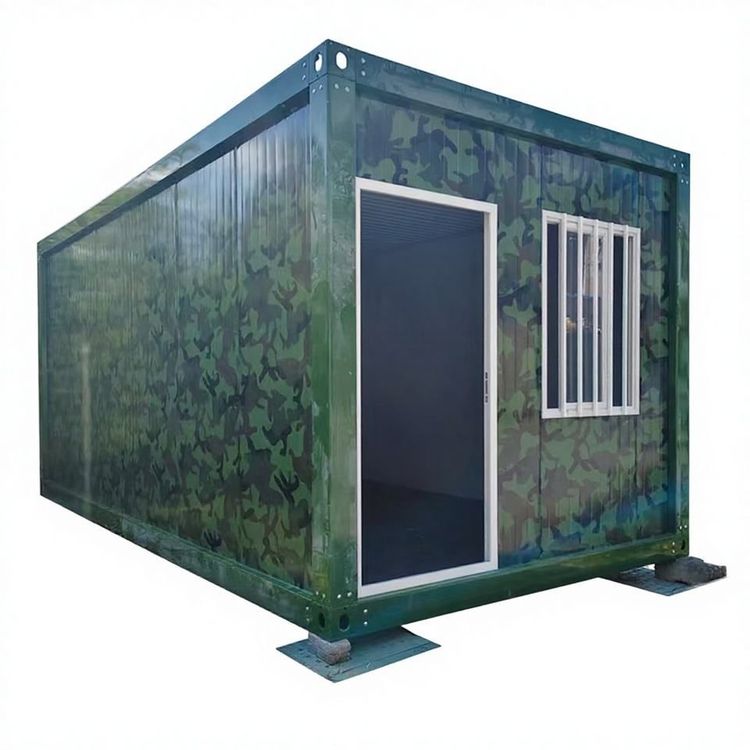
In terms of product supply, outdoor finished mobile public toilets are available in Lhasa, Tibet. The product price is 1200 yuan per unit, with a delivery time of 5 days and a total supply of 780 units. The minimum order quantity is 1 unit, and it is sold directly by the manufacturer. The freight cost needs to be negotiated. The product materials can be customized as needed, with a complete range of specifications. It can be shipped nationwide and can also be customized with various models and colors available. The external dimensions are made according to the drawings and are suitable for multiple fields. The type is prefabricated, with sound insulation function, equipped with squat toilets, hand washing basins, door locks, light bulbs, exhaust fans, etc. The floor is anti-slip. The supply covers areas such as Lhasa, Qamdo, Ngari, Nyingchi, Nagqu, Shigatse, and Shannan in Tibet, as well as Chengguan District, Lhundrup County, Damxung County, Nyemo County, Qushui County, Doilungdeqen District, Dazi District, and Medrogongkar County.
In terms of customization services, there have been cases of Tibetan customers customizing mobile toilets, outdoor restrooms, and prefabricated building mobile toilets suitable for scenic spots, parks, and camping bases. They can also customize suite-style toilets and public restrooms to meet different scenarios and personalized needs.
In terms of special designs, Tibetan mobile restrooms fully consider the special high-altitude environment. They consist of a waste collection system, a deodorization unit, and a structural framework. The waste collection uses sealed storage tanks; the deodorization unit often employs microbial degradation or physical adsorption methods; the structural framework usually selects aluminum alloy materials and adds fixing devices. Most facilities use waterless or micro-water flushing technologies. Some high-altitude sites are equipped with solar heating devices, and the power supply relies on a combination of photovoltaic panels and batteries. The cleaning and maintenance cycle is shorter than in plain areas, using biological enzyme cleaners instead of chemical disinfectants. In addition, the latest models have begun to integrate air quality sensors and thermo-hygrometers, with data transmitted to research institutions via low-power networks to better adapt to the high-altitude environment and achieve intelligent management.