
Installation Steps for Mobile Toilets in Tibet
The installation steps for mobile toilets in Tibet mainly include four stages: main body assembly, ground adaptability adjustment, internal facility connection, and functional inspection and debugging. The entire process can be completed within 72 hours without generating construction waste.
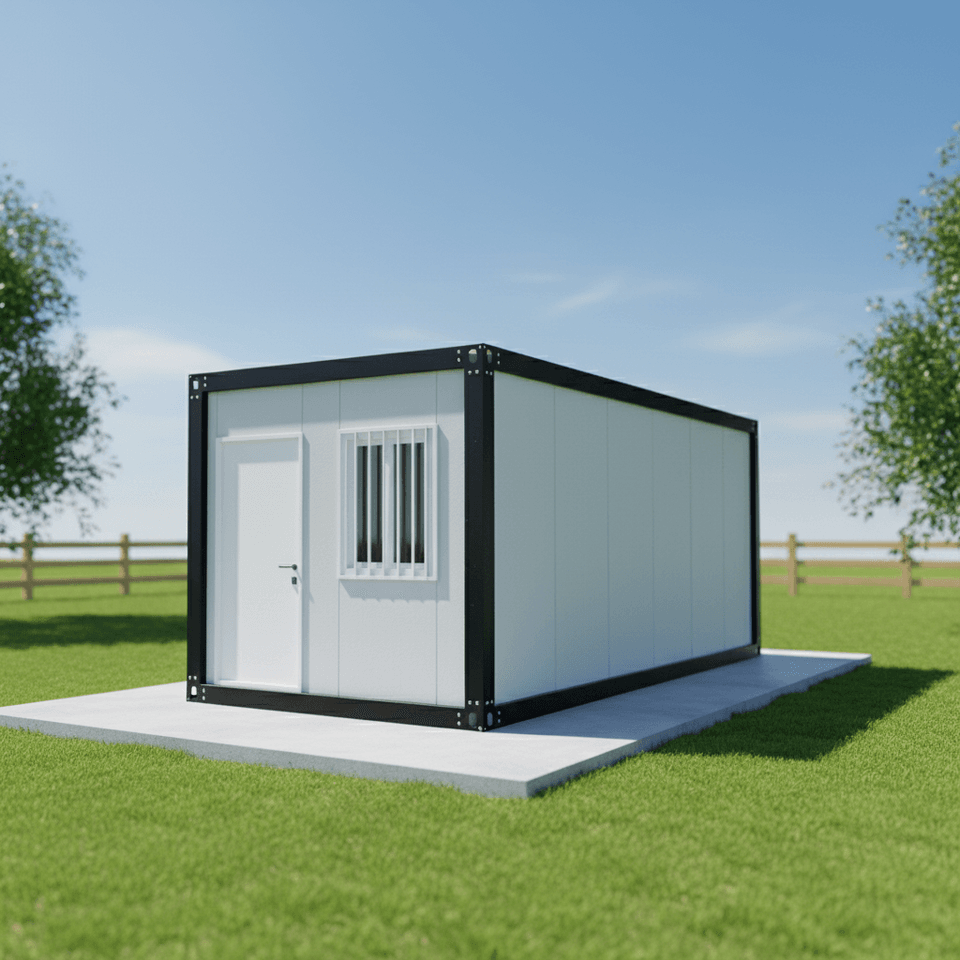
1. Main Body Assembly
Before installation, ensure that all units (anti-corrosion galvanized steel frame, rock wool sandwich color steel plate box, integrated fecal treatment system, and solar power supply device) have been prefabricated in the factory. Assemble on-site using standardized interfaces. The steel frame is connected to the ground with adjustable anchor bolts, eliminating the need for deep excavation. This design avoids disturbing the common permafrost in Tibet and adapts to the complex geological conditions of the plateau. During assembly, check the interface sealability and ensure that the frame verticality error does not exceed ±2mm to prevent structural deformation during subsequent use.
2. Ground Adaptability Adjustment
The installation team uses portable geological radar to detect underground conditions at the installation point, focusing on identifying data such as permafrost thickness and rock distribution. Adjust the height of the anchor bolts based on the stratum feedback to ensure that the box horizontal error is ≤1%. Finally, lay anti-slip access panels made of a composite material that is resistant to low temperatures and ultraviolet rays, with a surface friction coefficient ≥0.6, to cope with strong winds, rain, and snow on the plateau. Seal the connection between the access panels and the box with waterproof glue to prevent melted snow from infiltrating the foundation.
3. Internal Facility Connection
Install internal partitions, toilets, flushing systems, sinks (optional), lighting, and ventilation equipment in sequence. The connection of water and electricity pipelines should follow the principle of 'priority protection': electricity is supplied first to the lighting and ventilation systems, with the remainder used for the insulation device of the fecal treatment system. In the environment of large temperature differences between day and night in Tibet, the fecal treatment system needs to maintain microbial activity through an electric auxiliary heating device, with a temperature control range of 5-15°C. All pipelines should be made of frost-resistant materials and wrapped with insulation cotton to prevent pipe freezing and cracking due to low temperatures.
4. Functional Inspection and Debugging
After assembly, three core tests are required:
- Flushing Test: Simulate different water volumes (3-6L/time) to check the drainage speed and the treatment efficiency of the fecal treatment system;
- Circuit Inspection: Use an insulation resistance tester to check the insulation of the circuit and ensure there is no risk of electric leakage;
- Sealability Inspection: Conduct air tightness tests on the box seams and pipeline connections, with a pressure retention value of ≥0.05MPa.
During the debugging phase, focus on testing the adaptability to low-temperature environments to ensure that the electric auxiliary heating device can start normally at -30°C and maintain system stability.



