Installation of Mobile Eco-Toilets in Tibet
The installation of mobile eco-toilets in Tibet requires comprehensive design considering the unique plateau environment, encompassing materials, foundations, pipelines, site selection, technology, maintenance, and aesthetics to achieve a balance between environmental protection and practicality.

Material and Structural Design
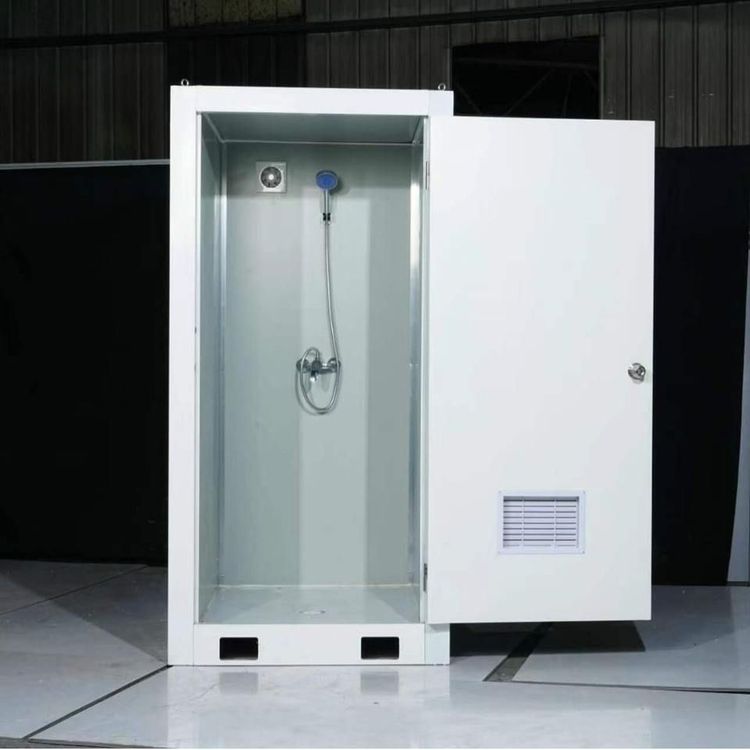
The main body employs a combination of colored coated steel sheets and light steel keels, with the coating treated for corrosion resistance to withstand strong ultraviolet rays and extreme weather conditions on the plateau. The high reflectivity design reduces heat absorption, adapting to the significant temperature variations between day and night. Structural connection points utilize bolt fastening instead of welding, facilitating easy disassembly and transportation, minimizing land disturbance during on-site construction, and meeting plateau ecological protection requirements.
Foundation Treatment
Differentiated solutions are adopted for permafrost and non-permafrost areas: in permafrost regions, a shallow foundation + insulation layer is used to prevent structural deformation caused by freeze-thaw cycles; in non-permafrost areas, prefabricated concrete block foundations are employed to avoid large-scale earth excavation and reduce damage to surface vegetation.
Pipeline Connections
Sewage pipelines are wrapped with insulation layers to prevent freezing in winter; power supply relies on solar photovoltaic panels + battery packs for energy self-sufficiency. Pipelines feature quick-connect designs for easy installation and subsequent maintenance, reducing construction difficulty in the complex plateau environment.
Installation Site Selection
Sites must avoid geologically unstable areas, wildlife migration paths, and water source buffer zones. Before installation, soil permeability tests are conducted to ensure no groundwater contamination. The bottom adopts an elevated design, forming an air isolation layer of at least 15 centimeters to minimize interference with the thermal balance of the permafrost layer.
Integrated Environmental Protection Technologies
Vacuum or micro-flush toilet technologies are used, consuming only 1/10 of the water of traditional toilets. Fecal treatment combines biodegradation with sealed storage, accelerating organic matter decomposition by adding bacterial agents, with the final product serving as a soil conditioner for vegetation restoration. Storage units feature a dual-chamber isolation design, separately storing solids and liquids to reduce odor diffusion.
Operation and Maintenance
Cleaning and maintenance follow a zoned and tiered process: the solid storage area is cleaned monthly, while the liquid storage area is disinfected weekly. Cleaning agents are selected with high biodegradability formulas to avoid secondary pollution; waste is transported to designated treatment stations in dedicated sealed containers for harmless disposal.
Aesthetic Harmony
The exterior color is chosen in dark tones to reduce visual intrusion and avoid startling wildlife with light-colored surfaces, harmonizing with the natural plateau environment.