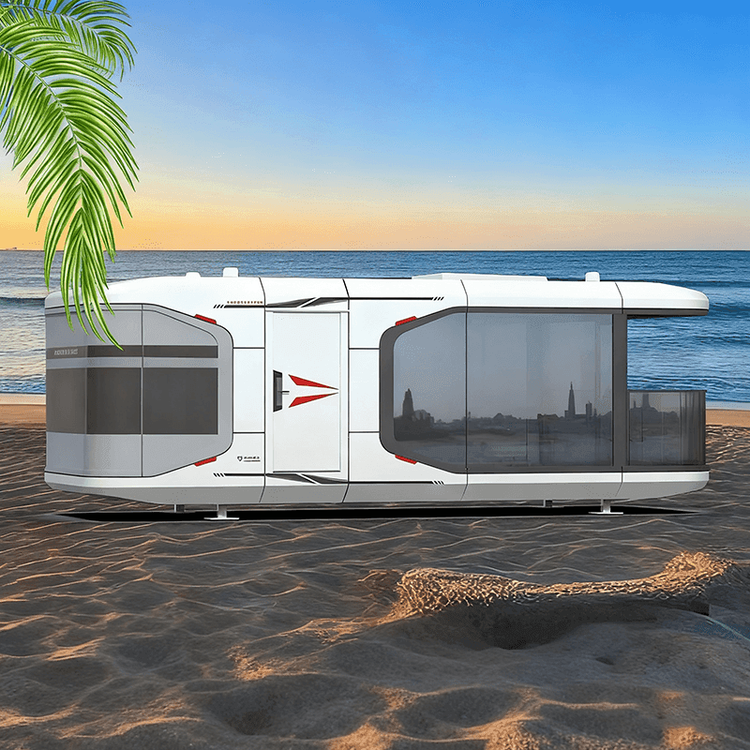
Tianjin Mobile Smart Toilet Operation
The operation of Tianjin's mobile smart toilets focuses on technological integration, flexible deployment, and human-centered services, constructing an efficient and environmentally friendly public sanitation service system through modular design, intelligent management, and adaptation to diverse scenarios.

Technological Integration: Emphasis on Modularity and Intelligence
Tianjin's mobile smart toilets adopt modular design, ensuring structural stability and facilitating rapid assembly and disassembly. For instance, the new public toilets near the Tianjin Concert Hall in Heping District are constructed using lifting techniques, allowing for flexible relocation to accommodate changes in pedestrian traffic. Their energy systems integrate photovoltaic power generation and energy storage technologies, with solar panels installed on roofs and walls to achieve self-sufficiency in power supply. Excess electricity is stored in supporting equipment, and during rainy days, the system automatically switches to external power sources to ensure continuous operation. Internally, they are equipped with water-saving flushing systems, ventilation and deodorization devices, and non-slip floors. Some high-end models also incorporate biodegradation and vacuum suction technologies to reduce sewage discharge; intelligent induction lighting and remote monitoring systems enable real-time monitoring of usage frequency, cleanliness status, and remaining consumables, supporting remote scheduling and maintenance to enhance management efficiency.
Flexible Deployment: Meeting Diverse Scenario Demands
Mobile smart toilets are primarily deployed in urban public spaces, large event venues, construction sites, and scenic areas—temporary or semi-fixed locations—effectively compensating for the inadequate layout of fixed public toilets. For example, in industrial clusters such as Binhai New Area and Wuqing Development Zone, they serve as supporting infrastructure, while the new public toilets in Heping District scientifically divide functional areas. In addition to standardized restroom spaces, they include barrier-free restrooms and independent nursing rooms to meet the special needs of disabled individuals and those traveling with infants, reflecting refined service delivery.
Operational Model: Full-Process Services and Intelligent Management
Tianjin's mobile toilets support long-term leasing services, with professional factories certified under the ISO quality management system providing full-process services from design and production to installation. For example, an environmental protection equipment factory in Jinghai District relies on the local industrial chain to achieve full-process control, ensuring product durability and delivery stability, and participates in formulating local industry standards. The intelligent management system optimizes cleaning and maintenance plans through real-time data monitoring, reducing labor costs and enhancing operational efficiency.
Policy and Market Drivers: Upgrading Environmental Protection and Governance Needs
With the advancement of the Beijing-Tianjin-Hebei coordinated development and the construction of "zero-waste cities," Tianjin's demand for flexible and environmentally friendly public sanitation solutions has increased. Mobile smart toilets, through functional integration, environmental performance, and digital management, have become an important support for enhancing urban governance capabilities. In the future, they will optimize their layout based on the pedestrian flow characteristics of business districts and scenic areas, providing refined services to enhance the sense of gain for citizens and tourists.