
Tiandu Container House
Whether Tiandu container houses are considered illegal constructions depends on the situation, primarily hinging on their purpose, installation method, and local regulations. Using them for residence or business without approval is highly likely to be deemed illegal. Here's a detailed analysis:
I. Legal Nature of Container Houses
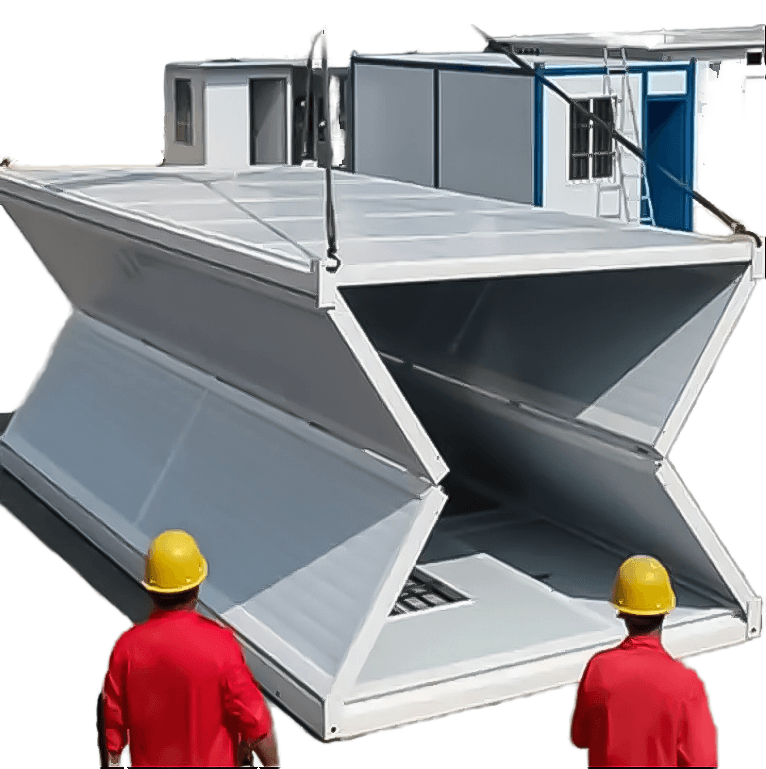
Containers are essentially movable metal structures, falling under the category of prefabricated buildings. Their uniqueness lies in the flexibility of their use and installation methods. According to the Urban and Rural Planning Law, the core criteria for determining illegal constructions are 'failure to obtain planning permission' or 'violation of land use purposes'. If a container house is merely used as a temporary container for storing agricultural materials and tools (such as a farm watch house), without damaging the plow layer, hardening the ground, connecting to water and electricity, and without altering the agricultural use of the land, it is generally not considered an illegal construction. However, if it is used for long-term residence, business operations, or the construction of permanent foundations (such as hardened ground and fixed piles), it may be deemed as substantially altering the land use purpose and thus classified as an illegal construction.
II. The Leading Role of Local Policies
Different regions have varying definitions of container houses. Some cities regard them as temporary buildings, allowing short-term use under conditions such as fire safety and security (such as construction site dormitories and disaster relief shelters) without the need for planning permission. However, other regions explicitly prohibit container houses from being used as permanent residences, especially prohibiting their construction on cultivated land and basic farmland. For example, in the case of a container house on farmland investigated by the Chongming Urban Management Newhai Town Brigade, the party involved, due to a lack of legal awareness, used the container for residence without obtaining approval and was ultimately required to dismantle it within a specified time.
III. Key Conditions for Compliant Use
- Purpose Restrictions: Container houses are only for temporary use and cannot be used for business operations or long-term residence to avoid being deemed as 'substantially altering the land use purpose'.
- Installation Method: It is necessary to avoid hardening the ground and constructing permanent foundations (such as concrete piles) to prevent being identified as illegal constructions due to damage to the land structure.
- Approval Process: Even as temporary buildings, it is essential to consult local planning and urban management departments for specific requirements, clarifying the usage period, purpose, and safety standards. For example, building a container on rural homestead land requires obtaining construction approval and providing structural drawings; on leased land, only temporary structures are allowed, and the contract must specify the nature of use.
IV. Risks and Recommendations
Unauthorized construction of container houses may face the risk of dismantlement and financial losses, especially when involving sensitive land uses such as cultivated land and forest land, where the penalties are more severe. It is recommended that individuals or enterprises with such needs consult local planning and urban management departments in advance to clarify policy boundaries and follow the approval process to ensure legal compliance.



