
Three Container Houses
Three container houses have a wide range of practical applications, covering family homes, temporary buildings, modular camps, and related fields, as detailed below:
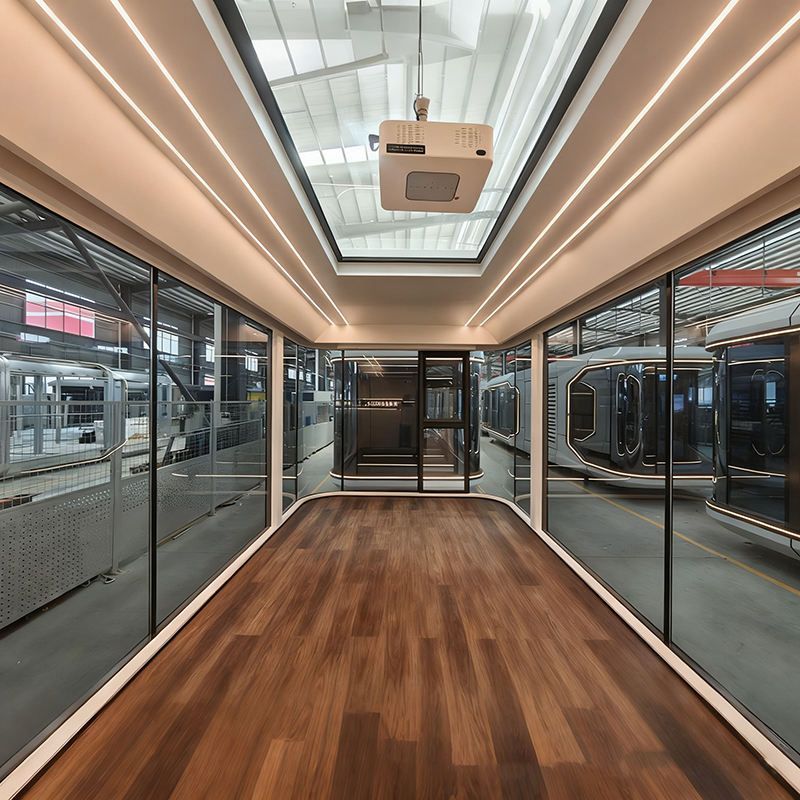
1. Family Home Conversion In some cases, individuals purchase standard shipping containers and remodel their structure to meet low-cost living needs. For example, after resigning from his job, one man bought three containers and, through cutting, welding, reinforcement, and other processes, converted them into a three-bedroom, one-living-room home. The interior was divided into bedrooms, a living room, a kitchen, and other functional zones, with plumbing, electrical systems, and insulation installed. Such conversions must focus on structural stability, waterproofing, moisture control, and ventilation. Rock wool boards or polyurethane foam are commonly used as insulation, and an anti-rust coating is sprayed on the exterior to extend service life. Remodeled homes combine an industrial look with practicality, with costs typically about 30%-50% lower than traditional brick-concrete construction, but they must comply with local building codes and obtain approval.
2. Temporary Buildings and Prefabricated Panel Houses Container houses are widely used in temporary construction, with three-story prefabricated panel houses as a representative type. These products are often mass-produced by manufacturers, use standardized modular designs, and can be assembled and dismantled quickly. For example, the Tangshan area of Hebei offers three-story container prefabricated panel houses at $108/sqm, while Weifang in Shandong has packing-box dormitory units at $750/set. Price differences mainly stem from material thickness, door and window specifications, and the level of interior finishing. Such buildings are typically used as construction-site dormitories, post-disaster housing, or commercial exhibition spaces. Their advantages include easy transport and reusability, but they require regular maintenance to prevent rust, and thermal performance depends on added materials; heating equipment is needed in winter.
3. Modular Camps and Ecological Buildings In higher-end applications, container houses are upgraded through system integration. A company in Baotou used secondary design to turn steel box units into stable building modules that can be stacked up to three stories, with high-strength bolt connections at the joints to ensure seismic performance. These buildings focus on thermal insulation by filling a double-wall structure with aerogel or vacuum panels, combined with a ground-source heat pump system for energy savings. They also integrate a self-circulating sewage system that treats domestic wastewater through biodegradation, reducing reliance on external infrastructure. Material selection emphasizes full life-cycle recycling: retired boxes can be dismantled and recovered, meeting green building standards. They are suitable for remote camps, tourism resorts, and similar settings.
4. Temporary Accommodation for Sports Events At large events such as sports competitions, container houses are often used as modular temporary lodging. For example, during the Chinese Men's Basketball Team's stay in Nagoya for a competition, the container-converted housing consisted of 400 modular units in a three-person-per-room layout, with standardized design enabling fast assembly and removal. Interiors were fitted with basic furniture, air conditioning, and private bathrooms, while exterior corridors linked units into a closed community that balanced privacy with ease of management. After the event, modules can be dismantled and transported to other sites for reuse, effectively reducing resource waste.



