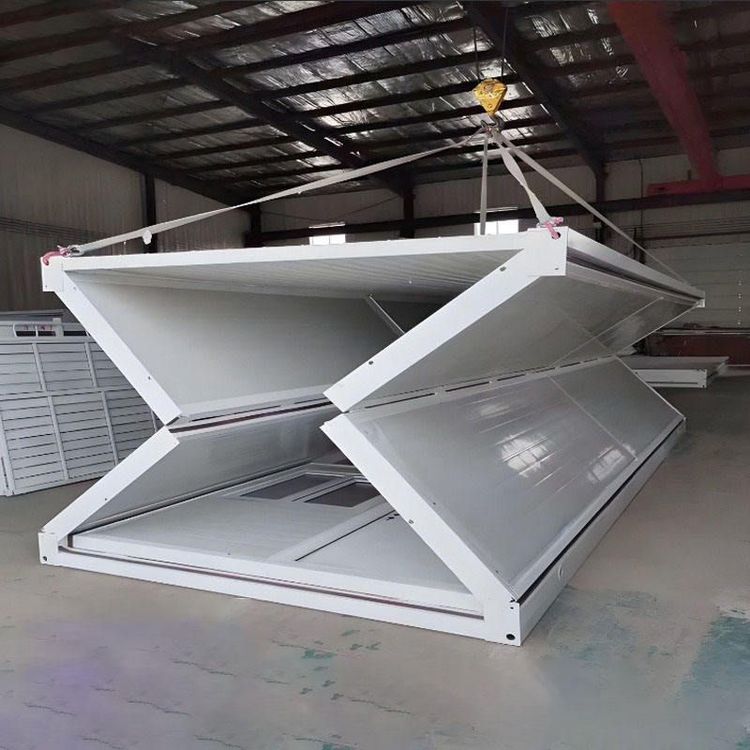
Three-Bedroom One-Living-Room Prefabricated House
A three-bedroom one-living-room prefabricated house is a type of residential building that is constructed using factory-prefabricated components and assembled on-site. With cement as its primary material, it offers advantages such as structural stability, short construction periods, and environmental protection and energy efficiency, making it suitable for various living scenarios.

I. Structural and Material Characteristics
The three-bedroom one-living-room prefabricated house uses cement as its core material. The walls are composed of C5 concrete reinforced with finger-thick threaded steel bars, with a thickness of 2 centimeters. It can withstand rare earthquakes of magnitude 9 (suitable for areas with seismic intensity above 8 degrees), with only 3 centimeters of seismic displacement. The main structure has a lifespan exceeding 90 years, with a fire resistance time of 1-4 hours. The exterior wall provides sound insulation of 65 dB, while the interior wall offers 45 dB. The thermal resistance of a 200mm-thick composite wall is 11 times that of a brick wall of the same thickness, demonstrating significant thermal insulation performance. The steel structural materials are recyclable, with a recycling rate of over 80% for supporting materials. Construction waste is reduced by more than 50%, and the later maintenance cost is only half that of a brick house.
II. Functional and Layout Design
The house typically includes three bedrooms and one living room, meeting the living needs of small to medium-sized families. Taking a 75.78㎡ single-story rural villa as an example, it features north-south ventilation and four-sided lighting design, along with an independent bathroom. The plumbing system is pre-embedded in the factory with an error margin of no more than 5 millimeters, effectively preventing water leakage. Additionally, light steel integrated houses can increase usable area by 5%-13%, with a construction period that is two-thirds shorter than that of traditional structures.
III. Performance and Safety Standards
The house can withstand hurricanes with wind speeds of 70m/s (wind resistance rating above level 12), with a fire resistance limit of 1-4 hours and superior sound insulation compared to traditional buildings. Its production process involves mold making, concrete pouring, curing, and on-site assembly. The molds can be used 200-300 times, ensuring cost-effectiveness and efficiency. For example, the starting price for a single-story house with basic decoration is 50,000 yuan, highlighting its excellent cost-performance ratio.
IV. Application Scenarios and Advantages
It is suitable for scenarios such as temporary housing, post-disaster reconstruction, rural self-built houses, homestay development, and construction site dormitories. Its environmental advantages are significant, with heating and cooling energy consumption 65% lower than that of traditional buildings. Additionally, it features a short construction period and controllable quality, making it particularly suitable for areas with high seismic intensity or projects requiring rapid deployment.