
How Thick Should the Foam Board Be for Container Houses
The thickness of foam boards for container houses generally ranges from 20 to 100 millimeters, with the specific thickness determined by factors such as the usage environment, insulation requirements, material type, and cost.
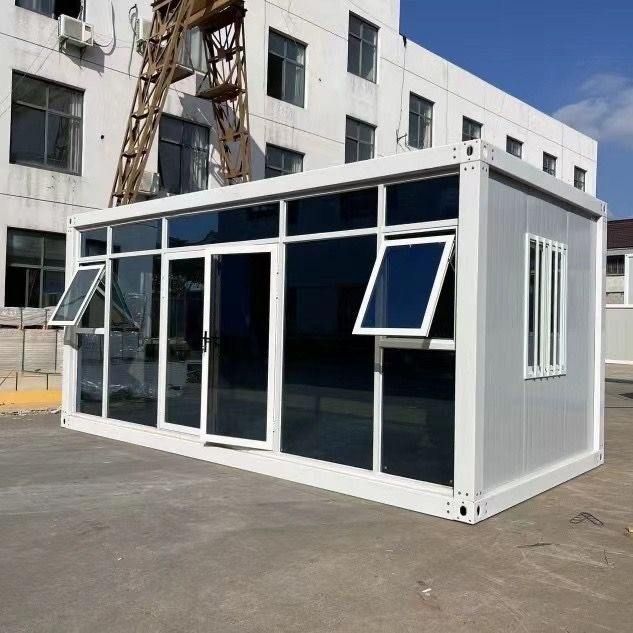
Conventional Thickness Range
The common thickness specifications for foam boards in container houses are 20 to 50 millimeters, covering the needs of most ordinary scenarios. For example, specifications like 20mm, 25mm, 30mm, and 35mm are often used in temporary buildings in mild climate regions or those with low insulation requirements, meeting basic heat insulation needs while controlling material costs.
Special Environmental Requirements
In extreme climatic conditions, the thickness of foam boards needs to be significantly increased. Cold regions (such as high-latitude or high-altitude areas) typically require 40 to 50 millimeters or even thicker insulation layers to reduce indoor heat loss and maintain a comfortable temperature. For instance, Arctic research stations or buildings in alpine regions may use polyurethane foam boards thicker than 50 millimeters. Hot regions, although having lower insulation requirements, may also choose foam boards 30 to 40 millimeters thick to enhance heat insulation performance and block external high temperatures.
Impact of Material Type
The performance differences among various insulation materials directly affect thickness selection. Polyurethane insulation boards, with a low thermal conductivity (approximately 0.022-0.028 W/(m·K)), can achieve efficient insulation with a thickness of 100 millimeters and are commonly used in permanent buildings with high energy efficiency requirements. Foam purification boards (such as polystyrene EPS boards), with a higher thermal conductivity (approximately 0.038-0.042 W/(m·K)), require greater thickness (such as 50/75/100 millimeters) to achieve the same insulation performance and are mostly used in temporary or low-cost projects.
Balancing Cost and Practicality
Increasing thickness raises material costs and construction complexity. For example, the price of a 100-millimeter foam board may be 3 to 5 times that of a 20-millimeter board and occupies more indoor space. Therefore, when designing, it is necessary to weigh insulation effectiveness against cost-effectiveness: Mild climate regions can choose 20 to 30 millimeters to reduce costs; Severe cold or hot regions should prioritize functional requirements and accept higher costs.
Conclusion
The thickness selection of foam boards for container houses should comprehensively consider climatic conditions, material performance, usage scenarios, and budget. For ordinary scenarios, 20 to 50 millimeters is recommended, while for extreme environments or high-efficiency insulation requirements, it can be extended to 100 millimeters. At the same time, adjustments should be made based on specific material characteristics to achieve optimal cost-effectiveness.



