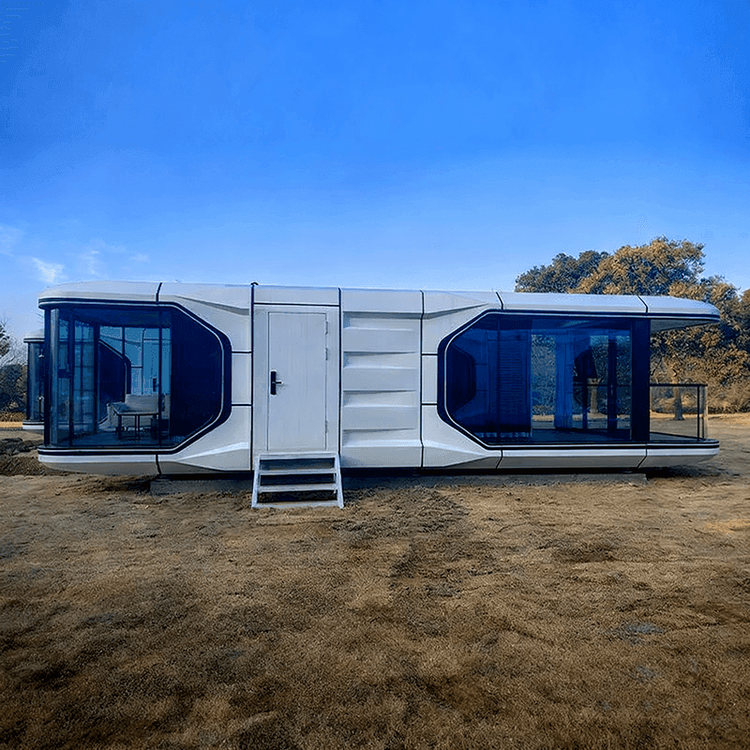
Thermal Insulation of Container Houses
The thermal insulation of container houses is mainly achieved through material selection, structural design, and auxiliary technologies, enabling their performance to meet usage requirements under different climatic conditions.

Material Selection and Structural Optimization
The thermal insulation performance of container houses primarily depends on the choice of wall materials. High-density polyurethane insulation layers are a common solution. For example, Apple Pod containers are sprayed with this material throughout the house, combined with a composite sandwich panel structure (such as an outer layer of anti-corrosion color-coated steel plate, a middle layer of polyurethane foam, and an inner layer of fire-resistant gypsum board), forming a multi-layer protective system. This structure can reduce the heat transfer coefficient to as low as K-value ≤ 0.28 W/㎡·K, meeting ultra-low energy consumption building standards. Additionally, rock wool as a filling material also provides significant thermal insulation effects, with low thermal conductivity and excellent fire resistance, suitable for scenarios with high safety requirements.
Door and Window and Sealing Design
Doors and windows are key points for heat transfer. Container houses commonly use double-glazed tempered glass, which blocks heat conduction through a vacuum layer while improving sound insulation performance. For example, Jieyu Creative Container Buildings effectively address the issues of stuffiness and poor sound insulation in traditional containers by combining double-glazed windows with sealing strips. Additionally, the interfaces between walls and doors/windows require enhanced sealing to prevent thermal bridge effects and ensure overall airtightness.
Auxiliary Technologies and System Integration
Under extreme climatic conditions, container houses need to incorporate active temperature control systems. For example, Apple Pods use a floor heating + air conditioning dual heating system combined with heat pump auxiliary heating technology to maintain a constant indoor temperature of 22°C in environments as cold as -20°C. In summer, reflective coatings reduce direct sunlight absorption, while ventilation layer designs accelerate the expulsion of hot air, lowering indoor temperatures. Some products also integrate moisture barriers to prevent condensation from degrading the performance of thermal insulation materials.
Performance Verification and Standards
The thermal insulation performance of container houses must be verified through practical testing. For example, residential container houses must comply with the national Technical Standard for Steel Structure Integrated Houses, requiring a wall heat transfer coefficient of ≤ 0.45 W/(㎡·K). Tests show their insulation efficiency is 1.8 times that of traditional brick-and-mortar walls. Additionally, Qingdao Jiecheng Hongye's refrigerated containers adhere to shipping standards, with insulation layer thickness and material thermal conductivity verified for stability in cold chain logistics.