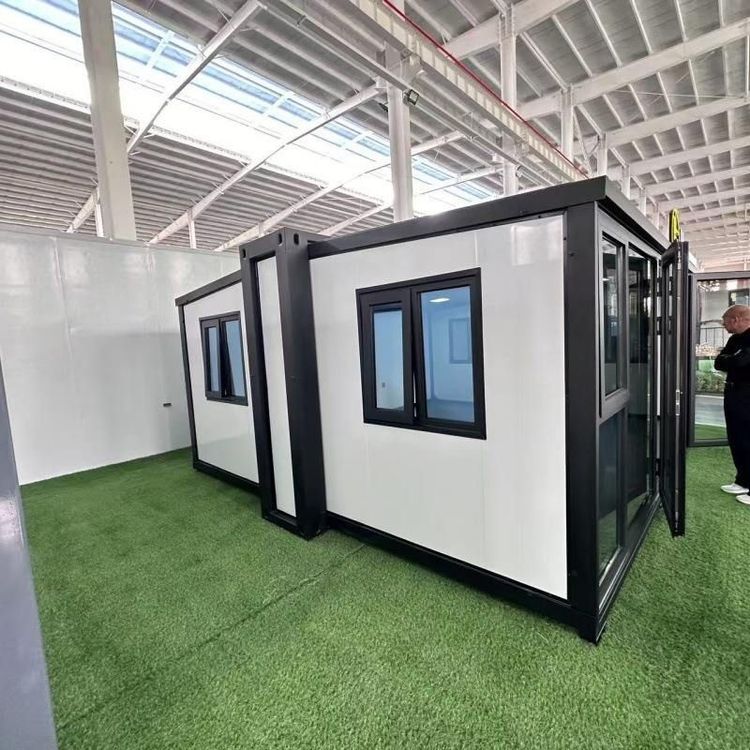
Thermal Insulation Effect of Mobile Toilets
The thermal insulation effect of mobile toilets is influenced by a combination of materials, design, and usage scenarios. Overall, it can meet the needs of most outdoor settings, but active temperature control equipment is required under extreme weather conditions.

Materials and Structure as the Foundation of Thermal Insulation
Common mobile toilets adopt a sandwich panel structure, where the outer metal layer is responsible for waterproofing, corrosion resistance, and support, while the intermediate thermal insulation core material is crucial. Polyurethane foam, with its high density, high closed-cell ratio, and low thermal conductivity, can effectively block the conduction of cold air from the outside. In summer, it can significantly reduce external heat radiation, keeping the internal temperature fluctuations small and creating a noticeable temperature difference from the outside. Extruded polystyrene (XPS) also has good thermal insulation properties. Some thermally insulated mobile toilets use metal carved panels on the outer layer, with a composite of fireproof boards and thermal insulation materials inside, and also incorporate rock wool insulation layers, allowing normal use in environments as low as -40℃ to -50℃.
Passive Thermal Insulation and Active Temperature Control Have Their Own Characteristics
The thermal insulation and heat resistance of conventional mobile toilets mainly rely on the material's own structure to slow down the heat exchange rate, which is a passive attribute. In winter, the internal temperature of a mobile toilet with excellent thermal insulation is only a few degrees higher than the outside when unoccupied, with the core function being to "delay cooling." Many high-specification products reserve installation interfaces for electric heaters. In summer, the thermal insulation layer can reduce the feeling of sun exposure from direct sunlight, keeping the internal temperature 5 - 10 degrees Celsius lower than the outside.
Detail Handling Affects Thermal Insulation Effectiveness
The connections in the structure have a significant impact on the thermal insulation effect. For example, if the sealing strips at the joints age or deform, or if there are large gaps in the hinges and door frames, cold air or heat waves can directly enter. High-quality mobile toilets have thick panels and meticulous sealing techniques, and they install thermal insulation dampers at the exhaust fans, which are usually closed to reduce heat loss.
Special Designs for Water Body and Pipeline Thermal Insulation
In thermally insulated mobile toilets, the 50 - 60℃ gas generated during the operation of the aeration fan can be used to heat aerobic water bodies, reducing energy consumption and avoiding environmental pollution. To ensure that the pipelines do not freeze in winter, an electric tracing heating system is used, consisting of heating cables, thermal insulation materials, and temperature sensors. It can automatically adjust the heating state according to the real-time temperature and automatically start when the outdoor temperature is below 20℃.
Comprehensive Evaluation is Required for Actual Use
The current mainstream sandwich panel mobile toilets have thermal insulation properties that can cope with most outdoor usage scenarios, providing a much more comfortable experience than open-air environments for temporary events. However, for long-term use under extreme weather conditions (such as continuous sub-zero 20 degrees or 40-degree high temperatures), passive thermal insulation alone is not enough, and active heating or cooling equipment is required. Evaluating the thermal insulation effect requires considering factors such as usage time, regional climate, and whether electric heating will be used. For long-term fixed usage needs, products with thicker panels and tighter seals can be chosen.