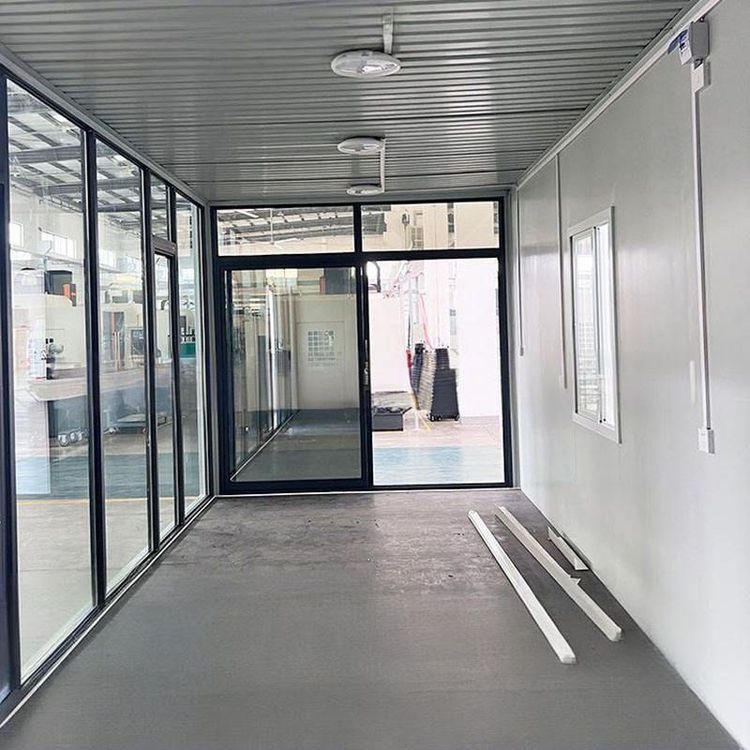
Thermal Insulation Concrete Prefabricated House
A thermal insulation concrete prefabricated house is a type of dwelling where components are prefabricated in a factory and integrated with thermal insulation materials, then assembled on-site. It features efficient construction, excellent thermal insulation, durability, adaptability, and cost-effectiveness.

Manufacturing Process
Components of thermal insulation concrete prefabricated houses, such as wall panels, floor slabs, and roofs, are produced in factories through standardized processes using one-time concrete pouring technology with steel reinforcement. This ensures precision and quality of the components. After production, the components are transported to the site and rapidly assembled to complete the main structure, reducing the construction period to a few weeks, significantly shorter than the several months required for traditional concrete houses.
Thermal Insulation Materials and Performance
The houses incorporate thermal insulation materials such as polystyrene foam or rock wool to form an insulation layer. These materials have low thermal conductivity (e.g., 1.28 watts per meter-degree in the example), effectively reducing heat exchange between indoors and outdoors, maintaining stable temperatures, and reducing reliance on air conditioning or heating, thereby saving on energy costs.
Key Features
- High Construction Efficiency: Combining factory prefabrication with on-site assembly significantly shortens the construction period, making it ideal for emergency housing or rapid construction needs.
- Excellent Thermal Insulation Performance: The built-in insulation layer and low thermal conductivity materials work together to achieve efficient energy conservation, reducing long-term energy costs.
- Durability and Strong Adaptability: Concrete components offer high strength and good fire resistance, capable of withstanding strong winds (e.g., wind resistance up to level 8) or minor earthquakes, suitable for various terrains such as plains and mountains. However, additional protection is needed in extremely humid or corrosive environments.
- Cost-Effectiveness: Although the initial investment is slightly higher than traditional simple structures, the fast construction and low maintenance costs result in lower overall long-term costs. For example, prices range from tens of thousands to hundreds of thousands of yuan, depending on size and material grade.
Application Scenarios
Thermal insulation concrete prefabricated houses have a wide range of applications, including residential homes, villas, dormitories, office buildings, temporary housing, and shops. In rural or suburban areas, they are often chosen as self-built housing solutions due to their cost-effectiveness and convenient construction.
Example Reference
The cement prefabricated houses in Baigou New City feature thermal insulation, multiple lifting capabilities, starting prices of 260 yuan per square meter, roof thickness of 12 centimeters, lifespans exceeding 50 years, customizable specifications, logistics transportation, one-time concrete pouring technology with steel reinforcement, and weights up to 18 tons, demonstrating the practicality and advantages of large-scale production for such houses.