
Are Mobile Toilets Prone to Damage?
Mobile toilets are not absolutely prone to damage; their durability is influenced by multiple factors, resulting in significant variations. Here is a detailed analysis:
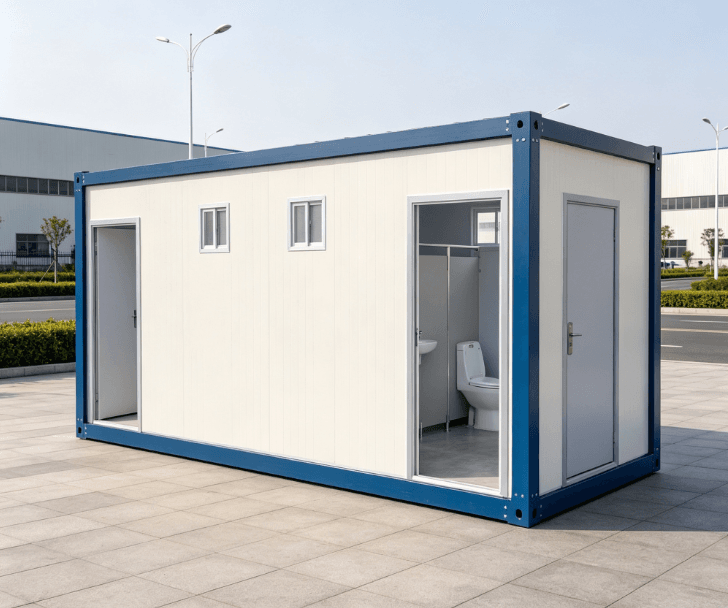
1. Material and Craftsmanship Determine Basic Lifespan
Low-end products often use simple materials like fiberglass reinforced plastic. Under long-term outdoor sun exposure, they may develop cracks or leaks within about 3 years. In contrast, high-end products utilize national standard hot-dip galvanized steel frames and high-quality anti-corrosion wall panels, combined with precise craftsmanship. With proper maintenance, their lifespan can reach 10 to 15 years, or even exceed 20 years. Material weather resistance, structural strength, and processing precision are the core factors affecting durability.
2. Usage Environment and Intensity Accelerate Wear and Tear
High temperatures, high humidity, coastal saline-alkali land, or extreme low-temperature environments can accelerate material aging, leading to paint fading and metal rusting. In scenarios with high foot traffic, such as tourist attractions and transportation hubs, mechanical components (e.g., door locks, flush valves) wear out faster. The severity of the environment and the frequency of use are directly related to the rate of wear and tear.
3. Regular Maintenance Extends Lifespan
Maintenance measures such as regular cleaning, checking seals, lubricating mechanical components, and anti-corrosion treatments can extend the lifespan of mobile toilets by 3 to 5 years. For example, removing rust and applying paint to metal components annually and cleaning the ventilation system quarterly can significantly slow down corrosion. Without maintenance, the lifespan may be shortened to 5 to 8 years. The frequency and quality of maintenance are key variables determining the actual lifespan.
4. Corrosion Issues Require Special Prevention and Control
After 5 years of use, metal frames, flush systems, and other components may develop rust due to oxidation, leading to a decrease in structural strength, equipment failure, or seal failure. Extremely cold environments (e.g., below -30°C) may cause material embrittlement, and sandstorms can block ventilation openings. In extreme environments, special protective materials should be used or maintenance frequency should be increased.
5. Overhaul Cycle and Lifespan Management
With regular maintenance, mobile toilets can be used for 10 to 15 years. After that, it is necessary to focus on inspecting load-bearing structures such as the chassis and walls, as well as vulnerable components. If maintenance is inadequate or the environment is harsh, it is recommended to conduct a major overhaul every 5 to 10 years to replace aging components. Scientific planning of the overhaul cycle can avoid sudden failures and reduce long-term costs.
Summary: The durability of mobile toilets depends on the combined effects of materials, environment, and maintenance. High-end products can operate stably for a long time through reasonable material selection and standardized use, while low-end products or those in harsh environments are more prone to damage. Users should choose appropriate products based on actual needs and establish a regular maintenance system to maximize their lifespan.



