
Back to blog
Article
The Current Situation of Prefabricated Houses in the United States
Admin September 18, 2026
Prefabricated houses in the United States have developed rapidly in recent years, becoming an important supplement to traditional construction methods. Their popularity is driven by multiple factors such as cost, efficiency, policies, and changes in consumer attitudes. They offer significant advantages in terms of construction speed, cost, and quality, and the market is witnessing parallel trends of export growth and breakthroughs in 3D printing technology.
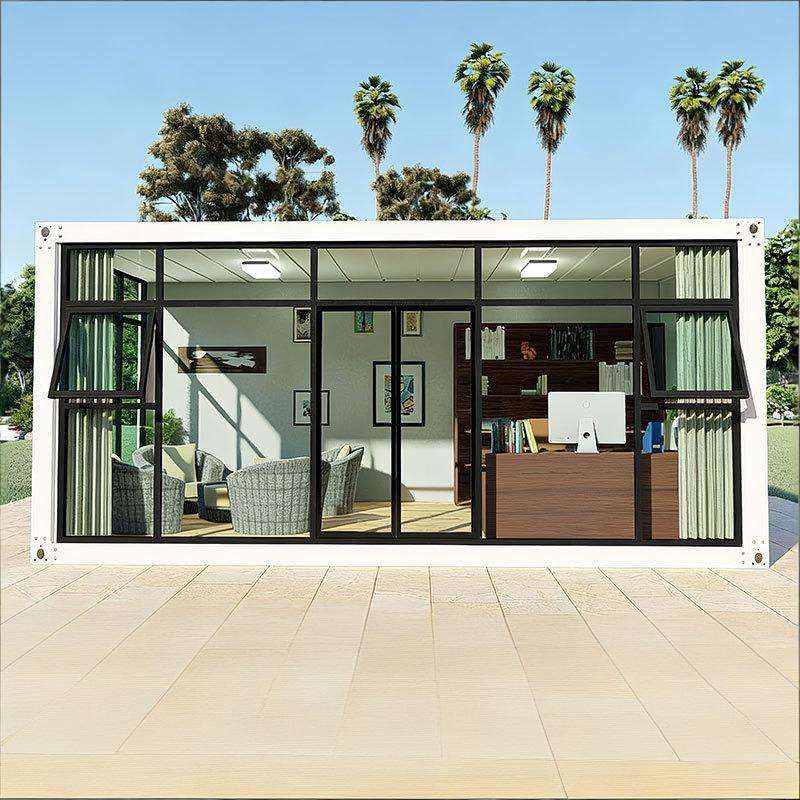
Reasons for Popularity
- Pressure from Traditional Construction Methods: A shortage of skilled construction workers in the United States has led to rising labor costs, along with long construction periods and high expenses for traditional house building. For example, the landed cost of a 70-square-meter prefabricated house shipped from China to the United States is less than $30,000, which is equivalent to the labor cost for a house of the same size in the United States. In the first nine months of 2024, the number of newly manufactured mobile homes in the United States increased by 16% year-on-year.
- Policy and Industry Promotion: The government is accelerating the construction of affordable housing through modular buildings. For instance, Berlin, Germany, completed 1,500 social housing units within 18 months, with unit costs 50% lower than the average in the city center. Some states in the United States have also supported the development of prefabricated houses through policies.
- Changes in Consumer Attitudes: Millennials and Generation Z have emerged as new buyers. They pursue a minimalist lifestyle, low maintenance costs, and modern design. The flexibility and cost-effectiveness of prefabricated houses align with their needs.
Advantages and Characteristics
- Fast Construction Speed: Traditional suburban homes typically take an average of 55 weeks to build, while the average delivery time in the prefabricated housing industry is shortened to 16 weeks, with construction periods being only one-third or even shorter than those of traditional construction.
- Cost Control: The quoted price is close to the final bill, offering high certainty. For example, a fully furnished 70-square-meter prefabricated house from China costs less than $30,000 to be fully installed in the United States, which may be comparable to the labor cost in the United States.
- Stable Quality: The factory environment is unaffected by weather conditions, and standardized processes ensure precision. For example, houses manufactured in Japanese factories are of comparable quality to those built traditionally.
- Flexibility and Environmental Protection: Modules can be stacked and combined, and mobile homes can be relocated as a whole. Factory-based production reduces on-site construction waste and material waste.
Market Situation
- Growth in Chinese Prefabricated House Exports: China's prefabricated building exports increased from $1.472 billion in 2015 to $4.339 billion in 2025, with a growth rate of 45% in the first quarter of 2026. There are more cases of American buyers purchasing prefabricated houses from China. For example, a couple in the United States bought a 70-square-meter expandable container house with a total landed cost of about 200,000 yuan.
- Development of 3D Printed Buildings: In August 2026, a community of 100 3D printed residential buildings was completed on the outskirts of Austin, Texas, in the United States, built by ICON with the aim of providing affordable housing for low- and middle-income families. 3D printed buildings offer fast construction, low labor requirements, and design freedom, but their costs are still relatively high, with selling prices ranging from $200,000 to $300,000. The U.S. Department of Housing and Urban Development has released a draft guideline, and California and Florida have approved multiple projects, while New York City is piloting their use for affordable housing.
Related



