Terrace Mobile Toilet Sewage Disposal
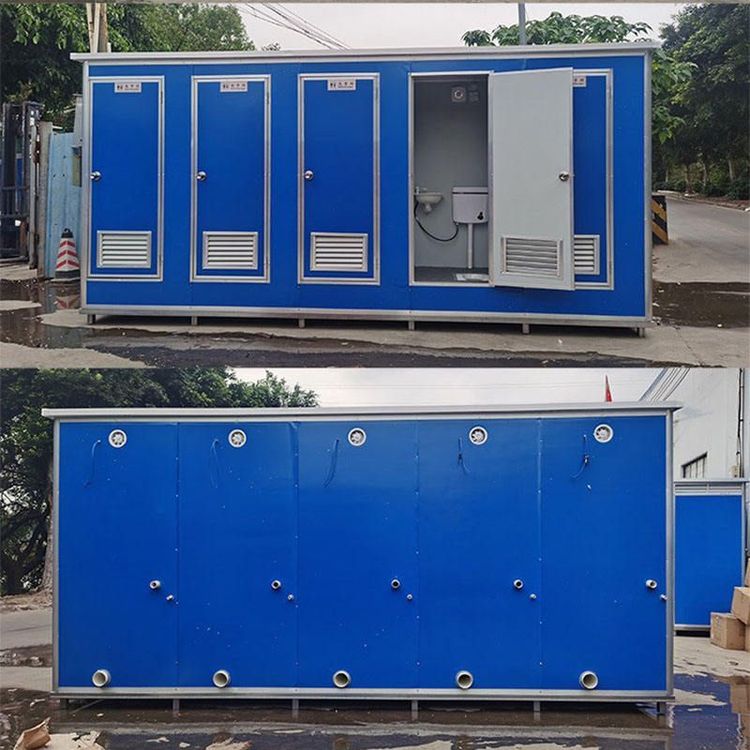
There are various sewage disposal methods for terrace mobile toilets, which can be selected according to the actual scenario and requirements. Common methods include conventional flushing, vacuum sewage systems, water-storage sewage systems, biodegradation technology, direct discharge, packaged disposal, microbial degradation, and vacuum collection systems, etc..

Conventional flushing: This method requires connecting to upper and lower water pipes, with sewage being discharged manually or automatically via sensors, ultimately flowing into a septic tank or municipal sewage network. It is suitable for terraces with a water supply and pipe connection conditions, offering low construction costs but relying on a stable water supply and drainage system.
Vacuum sewage systems: Utilizing negative pressure principles, a vacuum pump sucks sewage and waste into a collection container, automatically initiating disposal when the sewage reaches a preset level. Its advantages include high efficiency, low water consumption, and effective prevention of leaks and odor diffusion, making it suitable for terrace scenarios with high hygiene requirements.
Water-storage sewage systems: Waste is flushed into a storage tank via water, and when the tank reaches a preset level, sewage is automatically flushed into an external storage tank, requiring manual cleaning and replacement when full. This method is suitable for terraces with an adequate water supply and easy regular cleaning, but requires space for the storage tank and incurs cleaning costs.
Biodegradation technology: Microorganisms decompose organic matter in sewage, converting it into harmless substances for discharge. This method is highly environmentally friendly, reducing pollution, and is suitable for terraces with high environmental requirements and inconvenient water access, but requires regular maintenance of microbial flora activity.
Direct discharge: Sewage is directly connected to the municipal sewage network via pipes for centralized treatment by the urban sewage treatment system. This method has low construction and operational costs but relies on the coverage of the municipal sewage network, only suitable for terraces close to the network.
Packaged disposal: Feces are compressed into blocks and stored in a toilet tank, with sewage discharged through drainage pipes. This method reduces odor diffusion and is suitable for terraces with high foot traffic but inconvenient frequent cleaning, although equipment costs are high, requiring regular replacement of the toilet tank.
Microbial degradation: Microbial flora decompose feces into water, carbon dioxide, and a small amount of residue, achieving pollution-free discharge. This method is simple to maintain and environmentally friendly, suitable for terraces with inconvenient water access and high environmental requirements, but its treatment effect is greatly affected by temperature, requiring control of the ambient temperature.
Vacuum collection systems: Sewage and feces are quickly collected into a storage tank via a vacuum pump, with rapid disposal and effective prevention of odor overflow. This method is suitable for terraces with high foot traffic and hygiene requirements, but has high equipment costs and operational energy consumption, requiring regular cleaning of the storage tank.