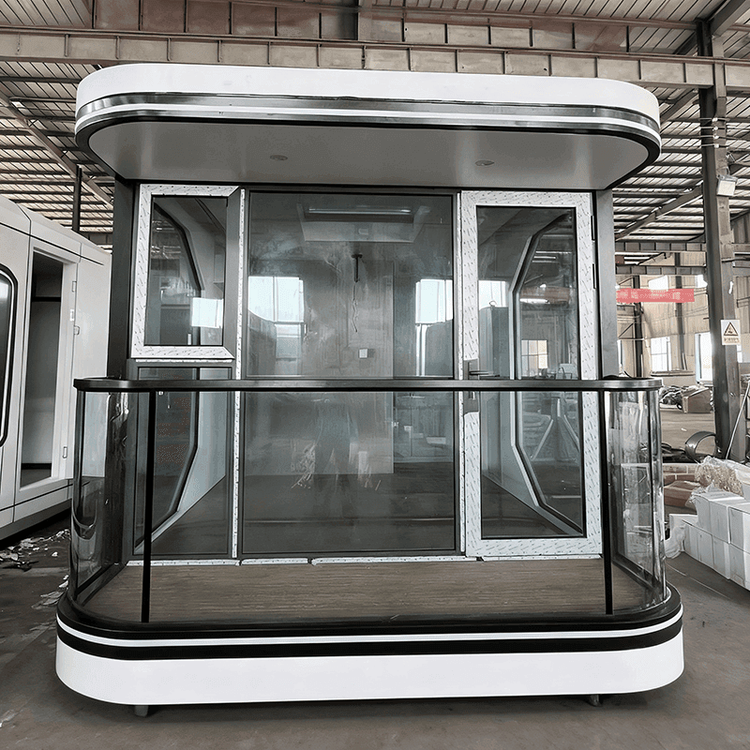
Temporary Mobile Toilet with Shower
A temporary mobile toilet with shower is a movable facility that partially includes shower functionality, suitable for various temporary or fixed-demand scenarios. The following provides a detailed introduction from four aspects: product types, material specifications, functional configurations, and structural classifications.

Product Types and Material Specifications
Mobile toilets with showers produced by different companies feature differentiated designs. For example, Henan Hemai Industrial Co., Ltd. offers products such as waterless packing toilets, temporary restrooms, and movable shower rooms. These are made of color steel plates or metal carved plates, with specifications including 1.3×1.3×2.35 meters and 1.1×1.1×2.35 meters, meeting the spatial needs of construction sites, scenic spots, parks, and other scenarios. Xinjiang Xinyueqiang Metal Products Co., Ltd. primarily uses color steel plates, emphasizing waterproof and anti-drop characteristics, and supports customization of multiple seats and sinks, mainly targeting outdoor construction sites. These materials are lightweight, durable, and easy to clean, suitable for short-term or long-term mobile use.
Functional Configurations and Facility Details
Some high-end mobile toilet shower rooms feature more comprehensive functional designs. For instance, certain products are equipped with wood veneers and stone plastic floors to enhance the user experience, using S-bend odor-proof squat toilets, sinks, flush tanks, and other basic sanitary facilities, along with shelves, mirrors, water storage tanks, and electric water heaters. The water storage tank solves the issue of no external water source, while the electric water heater ensures shower water temperature, suitable for cold regions or nighttime use. Additionally, the integrated design of the sink and storage space further enhances the facility's practicality.
Structural Classifications and Applicable Scenarios
Mobile toilets can be classified into single-unit and composite structures based on their form: single-unit structures are highly independent and suitable for scattered arrangements; composite structures consist of multiple units combined, suitable for high-traffic scenarios. Based on mobility, they can be divided into hoisting, portable, and powered towing types: hoisting types rely on mechanical equipment for transportation, portable types can be moved manually, and powered towing types are towed by vehicles, offering high flexibility. Based on sewage treatment methods, they can be classified into water flush, waterless suction, recirculating water flush, and dry packing types: water flush types require an external water source, waterless suction types use vacuum pumps to treat waste, recirculating water flush types can reuse water resources, and dry packing types use biodegradable materials to package waste, reducing environmental pollution.
These facilities, through modular design, can flexibly adjust functions and scale according to actual needs, becoming important sanitary guarantee equipment for outdoor operations, large-scale events, emergency rescue, and other scenarios.